Content Summary
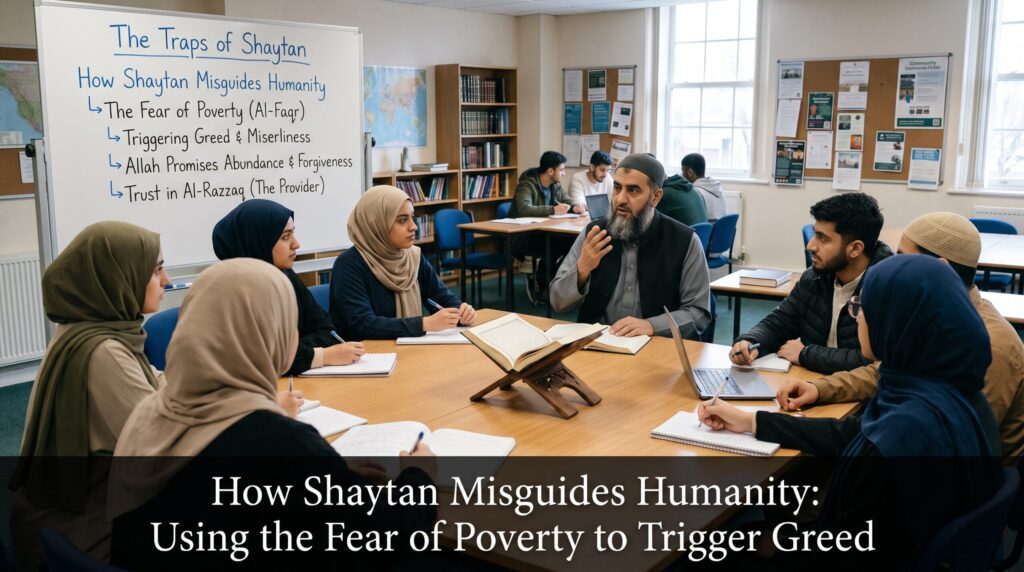
How Shaytan Misguides Humanity: Human beings naturally desire security, stability, and enough resources to take care of their families. However, this natural desire for financial safety is frequently hijacked by our greatest unseen enemy. According to the profound psychological and spiritual insights found in the document “Humanity By Quran,” Shaytan (Satan) does not possess the physical power to force humans to commit sins. Instead, he operates through manipulation, triggering our deepest emotions. One of his most effective and destructive weapons is planting the “fear of poverty” into the human mind. In this post, we will explore how Shaytan uses the illusion of scarcity to trigger greed, how this fear destroys social justice, and how true reliance on the Creator cures the human heart of financial anxiety.
Table of Contents
| Section Title | Key Questions Addressed |
|---|---|
| The Weakness of Shaytan: Manipulation Over Power | How does Satan influence humans if he cannot control them? |
| The Illusion of Scarcity: The Whisper of Poverty | Why do we constantly fear losing our wealth and resources? |
| From Fear to Greed: The Path to Immorality | How does the fear of poverty push humans to commit injustice? |
| The Divine Antidote: Zakat and True Reliance | How does Islam’s economic system cure the disease of greed? |
| Gratitude and Abundance: Defeating the Whisper | How does thanking the Creator expand our worldly blessings? |
The Weakness of Shaytan: Manipulation Over Power
To understand how Shaytan misguides us, we must first understand his true nature and his limits. A common misconception is that Satan is a powerful, dark force that can hijack the human brain or force people into evil.
“Humanity by Quran” completely shatters this myth. Shaytan is a Jinn, created from smokeless fire, who chose to disobey the Creator out of pure arrogance. Because of his rebellion, he vowed to misguide humanity. However, the Creator did not give him absolute authority over us. Shaytan’s plot is actually incredibly weak; his only weapon is the “whisper” (waswasah).
“…Indeed, the plot of Shayțān is weak.” (Surah An-Nisa’ 4:76)
He operates by studying human psychology. He knows that humans are born physically weak and dependent on their environment for survival. By triggering our natural emotions—such as fear, anger, pride, and jealousy—he manipulates our thoughts. He does not force us to sin; he simply suggests that sinning is the safest, most logical, or most beneficial option, waiting for our free will to accept the suggestion.
The Illusion of Scarcity: The Whisper of Poverty
One of the most powerful emotions Shaytan triggers is fear, specifically the fear of losing our worldly resources. In a world where money dictates shelter, food, and social status, the fear of poverty is a primal anxiety.
Shaytan exploits this anxiety brilliantly. When you are about to give to charity, help a family member, or make an honest but less profitable business choice, he whispers a terrifying illusion into your mind: If you give this away, you will not have enough. If you don’t hoard this wealth, you will be ruined.
The Qur’an exposes this exact psychological tactic:
“Satan threatens you with poverty and commands you to immorality….” (Surah Al-Baqarah 2:268)
He creates an illusion of absolute scarcity. He makes you forget that the Creator is the Ultimate Provider (Ar-Razzaq) who sustains every living creature. By amplifying your fear of tomorrow—a future that is completely unseen and unknown to you—Shaytan traps your mind in a state of constant panic and insecurity.
From Fear to Greed: The Path to Immorality
What happens when a person truly believes Shaytan’s threat of poverty? Fear instantly transforms into greed.
When you believe that resources are scarce and that you are the sole protector of your destiny, you begin to hoard. You stop giving charity. You become stingy with your family. As “Humanity By Quran” points out, when society loses its moral anchor, the focus shifts entirely to materialism and survival of the fittest.
This fear-driven greed is the root of massive immorality. It is what drives a business owner to cheat their customers, a worker to accept a bribe, or a leader to exploit the vulnerable. They do these immoral acts because Shaytan has convinced them that honesty will lead to poverty and that deception is the only way to secure their future.
“…Satan made their deeds appear beautiful to them…” (Surah An-Naml 27:24)
By making hoarding and selfishness look like “smart business” or “self-protection,” Shaytan successfully destroys social trust, creates massive economic imbalance, and pulls the human soul away from the light of divine accountability.
The Divine Antidote: Zakat and True Reliance
If the disease is the fear of poverty, the cure is the Islamic system of economic regulation and true reliance on the Creator (Tawakkul).
“Humanity By Quran” highlights that acts of worship in Islam are not just empty rituals; they are a comprehensive human management system. Zakat (mandatory charity) is the ultimate divine antidote to Shaytan’s whispers of greed. By mandating that 2.5% of unused wealth be given to the poor, Islam forces the believer to physically break the chains of hoarding.
When you give charity, you actively reject Shaytan’s threat of poverty. You declare with your actions that you trust the Creator’s promise of abundance over Satan’s promise of ruin. While Satan threatens poverty, the Qur’an offers a beautiful counter-promise:
“…while Allah promises you forgiveness from Him and bounty. And Allah is all-encompassing and knowing.” (Surah Al-Baqarah 2:268)
Giving charity trains the heart in empathy and reminds us that our wealth is a test, a temporary blessing meant to circulate and heal society, rather than stagnate and corrupt the soul.
Gratitude and Abundance: Defeating the Whisper
The ultimate defense against all of Shaytan’s psychological traps is gratitude. When a person is constantly ungrateful, they focus only on what they lack, making them highly vulnerable to the fear of poverty.
“Humanity By Quran” teaches that gratitude (Shukr) expands blessings and cures arrogance. When you look at the food on your table, the health in your body, and the roof over your head, and sincerely thank the One Unseen Creator, the whisper of scarcity loses its power.
“…If you are grateful, I will surely increase you…” (Surah Ibrahim 14:7)
Defeating Shaytan does not require magical rituals; it requires mental clarity and spiritual sincerity. The next time you feel a sudden, gripping fear about your finances that pushes you toward stinginess or dishonesty, recognize it for what it is: a weak whisper from a defeated enemy. Ignore the whisper, trust in the Creator’s perfect provision, and choose to be a source of safety and generosity for humanity.
Guidance Section
| Topic / Concept | Common Misconception or Ignorance | The Practical Truth (Based on Quranic Guidance) |
|---|---|---|
| Fear of Poverty | Hoarding wealth and refusing to give charity is the best way to secure my future and protect my family from poverty. | The fear of poverty is a direct whisper from Shaytan to trigger greed. True security comes from trusting the Creator, and giving charity actually purifies and increases your wealth. |
| Satanic Power | Satan can control my mind and force me to make greedy or corrupt financial decisions against my will. | Shaytan has absolutely no authority over you; his plot is weak. He can only suggest the fear of poverty. Your free will chooses whether to believe him or trust Allah. |
| Source of Wealth | My wealth is solely the result of my own hard work, intellect, and physical effort; I don’t owe anyone anything. | Wealth is a divine test and a blessing provided by the Creator. Recognizing it as a gift builds gratitude, prevents arrogance, and encourages you to help the vulnerable. |
Disclaimer
The insights shared in this blog post are intended for educational and reflective purposes, drawing upon the concepts from the provided knowledge files and Islamic teachings. They aim to promote harmony, logical thinking, and moral responsibility. Readers are encouraged to seek knowledge, reflect upon nature, and consult qualified scholars for deeper theological studies.
A Sincere Invitation
True understanding comes from direct reflection and an open heart. We warmly invite you to read the Holy Quran at least once in your lifetime, in a language you fully understand. Let your own mind observe the wisdom, logic, and profound peace it offers to humanity.
Frequently Asked Questions (FAQs)
1. How does Shaytan use poverty to misguide people? Shaytan plants an irrational fear of poverty in the human mind. When people fear losing their wealth, they become stingy, refuse to help others, and are easily tempted to engage in fraud, bribery, or corruption to “secure” their future.
2. Does Satan actually have the power to make me poor? No. Shaytan has no power over your destiny or your provisions. The Qur’an states that he only “threatens” or whispers the fear of poverty. Ultimate provision and sustenance belong entirely to the Creator (Allah).
3. What does the Qur’an say about giving charity despite this fear? The Qur’an contrasts Satan’s threat with Allah’s promise. While Satan threatens poverty and commands immorality, Allah promises forgiveness and bounty. Giving charity is an act of trust that actively defeats Satan’s psychological trap.
4. How does “Humanity By Quran” explain the cure for greed? The document explains that Zakat (charity) is a divine economic regulation designed to break the habit of hoarding. Combined with a deep sense of gratitude for present blessings, it cures the heart of greed and builds social compassion.
5. How can I stop worrying about my financial future? You can cure financial anxiety by practicing Tawakkul (true reliance on the Creator). Work hard, plan responsibly, but leave the ultimate outcome to Allah. Whenever the fear of poverty strikes, recognize it as a whisper, seek refuge in Allah, and focus on gratitude.