Content Summary
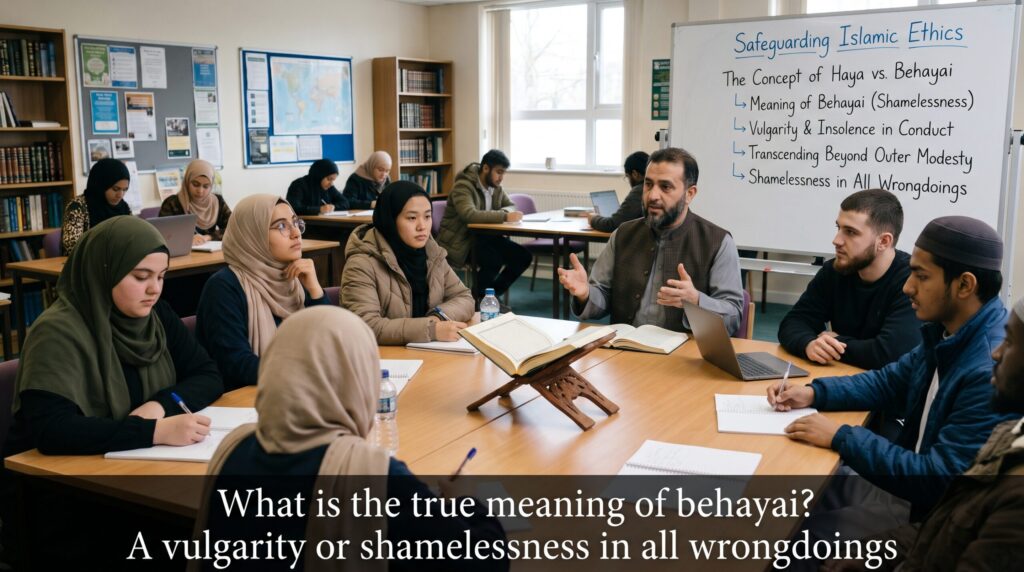
What is the true meaning of “Behayai”?: The term “behayai” is often translated simply as “vulgarity,” “immodesty,” or “shamelessness.” However, in the Islamic worldview, its meaning runs much deeper than just physical appearance. Behayai represents a state of mind where a person loses their natural sense of moral boundaries, engaging in wrongdoings without feeling guilt or remorse. According to the profound insights detailed in the document “Humanity By Quran,” human life is a sacred trust, and maintaining modesty (Haya) is essential for personal peace and social stability. In this post, we will explore the true meaning of behayai, how the lack of discipline in speech and desires destroys society, and how Islam provides the perfect framework to protect humanity from the psychological and social harm of shamelessness.
Table of Contents
| Section Title | Key Questions Addressed |
|---|---|
| The Core of Behayai: Beyond Physical Immodesty | What does shamelessness truly mean in a broader Islamic context? |
| The Two Greatest Trials: The Tongue and Desires | Why are unchecked speech and unlawful desires so destructive? |
| The Psychological Reality of Shamelessness | How does exposure to vulgarity permanently impact the human brain? |
| The Social Destruction Caused by Behayai | What happens to a society that normalizes unlawful relationships? |
| Modesty (Haya): The Divine Cure for Humanity | How does Islam protect individuals and families through modesty? |
The Core of Behayai: Beyond Physical Immodesty
When people hear the word “behayai” (shamelessness), they often think exclusively of inappropriate clothing or physical indecency. While physical modesty is a crucial part of Islam, true behayai is a comprehensive spiritual disease. It is the normalization of wrongdoing.
A person exhibits “behayai” when they lie without hesitation, mock others openly, engage in corrupt business practices, or consume unlawful wealth without feeling a pinch in their conscience. It is the death of the inner moral compass (Fitrah).
As highlighted in “Humanity By Quran,” humans are honored above all creatures and are uniquely equipped with intellect, speech, and free will. Because we have free will, our choices carry moral weight. When a person abandons the fear of divine accountability and lives solely to satisfy their own desires, they fall into a state of shamelessness. They no longer care if the Creator is watching, nor do they care if their actions harm others in society.
The Two Greatest Trials: The Tongue and Desires
To understand how behayai infiltrates human life, we must look at the two most vulnerable areas of human behavior: our speech and our physical desires.
“Humanity by Quran” points out that human society cannot be built on instinct or unchecked freedom alone. It requires deep moral discipline. Prophet Muhammad (peace be upon him) perfectly summarized the ultimate test of human character when he said:
“Whoever guarantees me what is between his jaws (kind and wise use of the tongue) and what is between his legs (lawful use of private parts), I guarantee him Paradise.” (Sahih al-Bukhari)
Vulgarity of the tongue—using foul language, backbiting, spreading rumors, and mocking others—is a severe form of behayai. It destroys social trust and plants seeds of hatred. Similarly, the undisciplined pursuit of physical desires leads to the corruption of the family unit. When a person fails to control these two aspects, they open the door for shamelessness to dominate their life.
The Psychological Reality of Shamelessness
One of the most profound dangers of behayai is its permanent impact on the human mind. The modern world often promotes vulgarity as “freedom of expression” or harmless entertainment. However, Islam recognizes the deep psychological reality of human experiences.
According to “Humanity by Quran,” the human brain acts as a permanent recorder. Memory is a part of the human body that cannot simply be erased.
Immoral acts, exposure to indecency, and participation in vulgarity leave deep emotional and mental imprints. This exposure causes spiritual unrest, chronic anxiety, and heavy feelings of guilt. When society normalizes behayai, it forces individuals—especially the youth—to grow up in a toxic environment where their natural sense of purity is constantly attacked. This is why Islam commands believers to protect their minds by lowering their gaze and avoiding environments where shamelessness is celebrated.
The Social Destruction Caused by Behayai
Behayai is never a victimless crime. When individuals practice shamelessness, the entire social fabric suffers. “Humanity by Quran” places a massive emphasis on the education of human reproduction and the safety of the human lifecycle.
When male-female relationships are formed without discipline, commitment, or lawful boundaries (marriage), the results are devastating. The normalization of unlawful intimacy leads to broken families, single parenting without support, unwanted pregnancies, and severe emotional distress.
“And do not approach unlawful sexual intercourse. Indeed, it is ever an immorality and is evil as a way.” (Surah Al-Isra 17:32)
When behayai spreads, people become “wrong examples.” Careless or unlawful behavior normalizes immorality for the next generation. Each person carries a social responsibility, and promoting shamelessness—whether through actions, media, or speech—corrupts the hearts of the community and destroys the stable foundation required to raise healthy, morally grounded children.
Modesty (Haya): The Divine Cure for Humanity
If behayai is the disease, then Haya (modesty and bashfulness) is the ultimate divine cure. Modesty in Islam is not merely a dress code; it is a comprehensive state of mind that governs how a person speaks, interacts, and behaves both in public and in private.
To protect society, the Creator established clear boundaries for modesty.
“Tell the believing men to lower their gaze and guard their private parts. That is purer for them… And tell the believing women to lower their gaze, guard their modesty…” (Surah An-Nur 24:30-31)
“O children of Adam, we have bestowed upon you clothing to cover your private parts and as adornment. But the clothing of righteousness that is best…” (Surah Al-A’raf 7:26)
“Humanity By Quran” clarifies that these boundaries minimize temptation, prevent unwanted attention, and preserve mutual respect. Furthermore, Islam provides the institution of lawful marriage to safely and honorably fulfill human desires, providing identity, security, and emotional care. By adopting the “clothing of righteousness,” believers protect their inner peace, honor their divine trust, and ensure that their society remains a safe and dignified place for all.
Guidance Section
| Topic / Concept | Common Misconception or Ignorance | The Practical Truth (Based on Quranic Guidance) |
|---|---|---|
| The Meaning of Behayai | Behayai only refers to wearing inappropriate clothing; if I dress modestly, I cannot be shameless. | Behayai includes vulgar speech, dishonest actions, and a lack of guilt when sinning. True modesty requires purity of the tongue, heart, and actions. |
| Freedom vs. Indecency | I have the freedom to watch, speak, and engage in whatever I want; it doesn’t harm anyone else. | The human brain records every experience. Exposure to vulgarity causes psychological harm and anxiety and normalizes bad behavior, which ultimately corrupts society. |
| Gender Relationships | Casual, undisciplined relationships are a normal part of modern life and self-discovery. | Unlawful relationships destroy families and cause deep emotional trauma. Islam mandates lawful marriage to protect human dignity, emotional health, and future generations. |
Disclaimer
The insights shared in this blog post are intended for educational and reflective purposes, drawing upon the concepts from the provided knowledge files and Islamic teachings. They aim to promote harmony, logical thinking, and moral responsibility. Readers are encouraged to seek knowledge, reflect upon nature, and consult qualified scholars for deeper theological studies.
A Sincere Invitation
True understanding comes from direct reflection and an open heart. We warmly invite you to read the Holy Quran at least once in your lifetime, in a language you fully understand. Let your own mind observe the wisdom, logic, and profound peace it offers to humanity.
Frequently Asked Questions (FAQs)
1. What does the word “behayai” mean in Islam? Behayai translates to shamelessness, vulgarity, or indecency. In Islam, it encompasses any behavior—whether physical immodesty, foul speech, or open sinning—that lacks a sense of moral boundary or guilt before the Creator.
2. How does the tongue contribute to behayai? The tongue is one of the greatest tests of human character. Using foul language, insulting others, gossiping, and spreading unverified rumors are forms of verbal shamelessness that destroy social trust and relationships.
3. Why is physical modesty so important in Islam? According to “Humanity by Quran,” physical modesty protects individuals from unwanted attention and temptation. It maintains mutual respect between genders and serves as an external reflection of internal righteousness and self-discipline.
4. What are the social consequences of normalizing vulgarity? When a society normalizes behayai and unlawful relationships, it leads to the breakdown of the family unit, emotional trauma, and the corruption of future generations. People become “wrong examples,” spreading harm rather than safety.
5. How can a person cure themselves of shamelessness? The cure lies in cultivating Haya (modesty/bashfulness) by remembering divine accountability. Lowering the gaze, guarding one’s speech, establishing lawful relationships, and constantly seeking forgiveness purifies the heart and restores the natural moral compass.