Content Summary
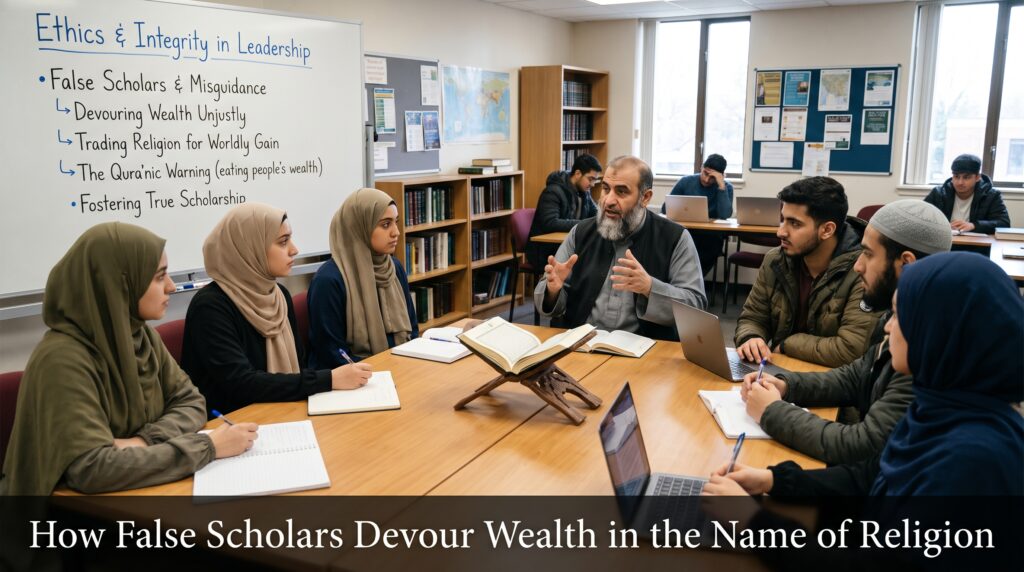
How False Scholars Devour Wealth in the Name of Religion: Religion is intended to be a source of peace, justice, and pure connection with the Creator. However, throughout human history, one of the greatest tragedies has been the hijacking of faith for financial gain and worldly power. When vulnerable people face hardship, sickness, or fear of the unknown, they naturally seek divine help. Unfortunately, false scholars and corrupt religious leaders have often exploited this desperation, turning the sacred act of worship into a profitable business. According to the profound insights detailed in the document “Humanity By Quran,” Islam strictly exposes and condemns this spiritual exploitation. In this post, we will explore how false scholars devour wealth in the name of religion, the psychological traps they use, and how the Qur’an liberates humanity from this profound injustice.
Table of Contents
| Section Title | Key Questions Addressed |
|---|---|
| The True Purpose of Faith vs. Human Greed | Why is religion so often manipulated for personal gain? |
| The Business of False Hope: Creating Intermediaries | How do false scholars monetize the unseen and block direct prayer? |
| Exploiting Fear: The Ultimate Psychological Trap | Why do innocent people surrender their wealth to religious leaders? |
| The Quranic Warning: Devouring Wealth Unjustly | What does Islam explicitly say about corrupt scholars and monks? |
| Restoring Dignity Through Pure Monotheism | How does believing in One Unseen Creator protect your wealth and mind? |
The True Purpose of Faith vs. Human Greed
To understand how religion is exploited, we must first understand its true purpose. The Creator’s actual demand upon humanity is incredibly simple and liberating: to believe in One Unseen Creator, to serve humanity with justice, and to prepare for ultimate accountability.
“Humanity By Quran” clarifies that the Creator is completely free of all needs. He does not require our wealth, our offerings, or our physical sacrifices to sustain His majesty. Every single act of worship prescribed in Islam—such as prayer or charity (Zakat)—is designed entirely to discipline the human soul and maintain social and economic balance within the community.
However, human greed often distorts this pure message. Instead of guiding people toward self-discipline and serving humanity, corrupt individuals use the name of the Creator to fulfill their own personal desires. They transform faith from a path of spiritual purification into a mechanism for extracting wealth, influence, and power from the masses.
The Business of False Hope: Creating Intermediaries
One of the most effective ways false scholars devour wealth is by convincing people that the Creator is unreachable without a “middleman.” They project worldly, human bureaucratic structures onto the Divine, suggesting that just as you need a VIP connection to speak to a king, you need a “holy person,” a saint, or a specific religious symbol to have your prayers heard by God.
“Humanity by Quran” exposes this tactic clearly. It highlights that the perception of the Creator has been distorted by practices such as:
- Creating artificial statues, idols, or religious symbols (holy objects).
- Promoting intermediaries or dead saints.
- Practicing fortune-telling and claiming exclusive knowledge of the unseen.
By establishing themselves as the exclusive gatekeepers to divine mercy, false scholars create a spiritual monopoly. Once this monopoly is established, they begin collecting money in the name of worship. They demand financial offerings in exchange for “unseen solutions,” blessings, or forgiveness. This effectively cuts off the pure, direct connection between the human soul and its Maker, replacing it with a transactional business.
Exploiting Fear: The Ultimate Psychological Trap
Why do rational, innocent people hand over their hard-earned wealth to these religious figures? The answer lies in the exploitation of basic human emotions, specifically fear and desperation.
When a person is terrified of poverty, suffering from an incurable illness, or anxious about an unknown future, their logical defenses drop. “Humanity By Quran” points out that false scholars expertly exploit the fear of innocent people for personal or organizational gain.
Instead of teaching people to place their trust (Tawakkul) directly in the Creator and to take practical, logical steps to solve their problems, false scholars offer a “magical” shortcut. They promise that a specific financial donation to a shrine, a payment for a special prayer, or the purchase of a holy amulet will instantly solve the believer’s worldly problems. This is a severe form of psychological and spiritual abuse that preys upon the most vulnerable members of society.
The Quranic Warning: Devouring Wealth Unjustly
The Qur’an does not shy away from exposing the corruption that can exist within religious institutions. It issues a direct, severe, and uncompromising warning to those who use the cloak of piety to steal from the public.
Fourteen centuries ago, the Qur’an specifically called out the corrupt practices of religious authorities who hoarded wealth rather than using it to serve humanity.
“O you who have believed, indeed many of the scholars and the monks devour the wealth of people unjustly and avert [them] from the way of Allah. And those who hoard gold and silver and do not spend it in the way of Allah—give them tidings of a painful punishment.” (Surah At-Tawbah 9:34-35)
This powerful verse confirms that a person’s title—whether they are called a scholar, a monk, or a saint—does not grant them immunity from divine justice. If they devour people’s wealth unjustly and lead them away from pure monotheism, they are committing a massive sin. True religious leadership in Islam is defined by humility, poverty of ego, and a commitment to protecting the wealth and dignity of the vulnerable, not exploiting them.
Restoring Dignity Through Pure Monotheism
The ultimate cure for spiritual and financial exploitation is the restoration of pure monotheism (Tawheed). When a person truly understands the message of Islam, they realize that they do not need to pay anyone to reach the Creator.
“Humanity By Quran” emphasizes that the declaration “There is no Creator but Allah” is the ultimate act of liberation. It frees the human mind from being enslaved to false scholars, superstitions, and manipulative intermediaries. The Creator is closer to you than your own thoughts. He hears the silent prayer of a desperate person in the middle of the night just as clearly as He hears the loud sermon of a scholar.
By connecting directly to the Unseen Creator, humans reclaim their dignity. They learn to give their wealth as lawful charity (Zakat) to the poor, the orphans, and the needy—which actually heals society—rather than handing it over to religious figures who hoard it for themselves. Pure Islam protects both your soul from misguidance and your wealth from exploitation.
Guidance Section
| Topic / Concept | Common Misconception or Ignorance | The Practical Truth (Based on Quranic Guidance) |
|---|---|---|
| Accessing the Creator | I need to pay a religious scholar or make a financial offering at a shrine for my prayers to be accepted. | The Creator is all-hearing and requires absolutely no intermediaries. Charging money for “unseen solutions” is a form of spiritual exploitation completely forbidden in Islam. |
| Religious Offerings | Giving money to “holy” leaders or institutions guarantees me divine blessings and protection from worldly harm. | Wealth should be spent in the way of Allah as charity (Zakat) for the poor, orphans, and needy. False scholars who hoard people’s wealth face severe divine punishment. |
| True Scholarship | A true religious scholar demands absolute, unquestioning obedience and financial loyalty from their followers. | True scholars guide people directly to the Qur’an and the Creator. They serve humanity with humility and never exploit the fears or desperation of innocent people for personal gain. |
Disclaimer
The insights shared in this blog post are intended for educational and reflective purposes, drawing upon the concepts from the provided knowledge files and Islamic teachings. They aim to promote harmony, logical thinking, and moral responsibility. Readers are encouraged to seek knowledge, reflect upon nature, and consult qualified scholars for deeper theological studies.
A Sincere Invitation
True understanding comes from direct reflection and an open heart. We warmly invite you to read the Holy Quran at least once in your lifetime, in a language you fully understand. Let your own mind observe the wisdom, logic, and profound peace it offers to humanity.
Frequently Asked Questions (FAQs)
1. What does the Qur’an say about scholars who take people’s wealth? The Qur’an issues a severe warning in Surah At-Tawbah (9:34-35), explicitly stating that many scholars and monks devour the wealth of people unjustly and hoard gold and silver. It promises a painful punishment for those who exploit religion for financial gain.
2. How do false scholars use fear to make money? False scholars target vulnerable people experiencing illness, poverty, or anxiety about the future. By claiming exclusive access to “unseen solutions” or divine protection, they manipulate this fear, convincing innocent people to pay for prayers, amulets, or blessings.
3. Does Islam allow the use of intermediaries to reach Allah? No. Islam strictly prohibits the use of intermediaries, dead saints, or artificial symbols to reach the Creator. “Humanity By Quran.pdf” highlights that establishing intermediaries breaks the pure, direct connection between humans and Allah, opening the door to exploitation.
4. How can I tell the difference between a true scholar and a false one? A true scholar empowers you to connect directly with the Creator, encourages you to read the Qur’an for yourself, and uses their knowledge to serve society. A false scholar makes you dependent on them, asks for financial offerings for spiritual favors, and promotes unverified innovations.
5. What is the correct way to spend wealth for religious purposes in Islam? The correct and divinely mandated way to spend wealth is through Zakat (mandatory charity) and Sadaqah (voluntary charity). This wealth must be directed toward the poor, the needy, orphans, and those in actual distress, rather than enriching religious figures or building opulent shrines.