Content Summary
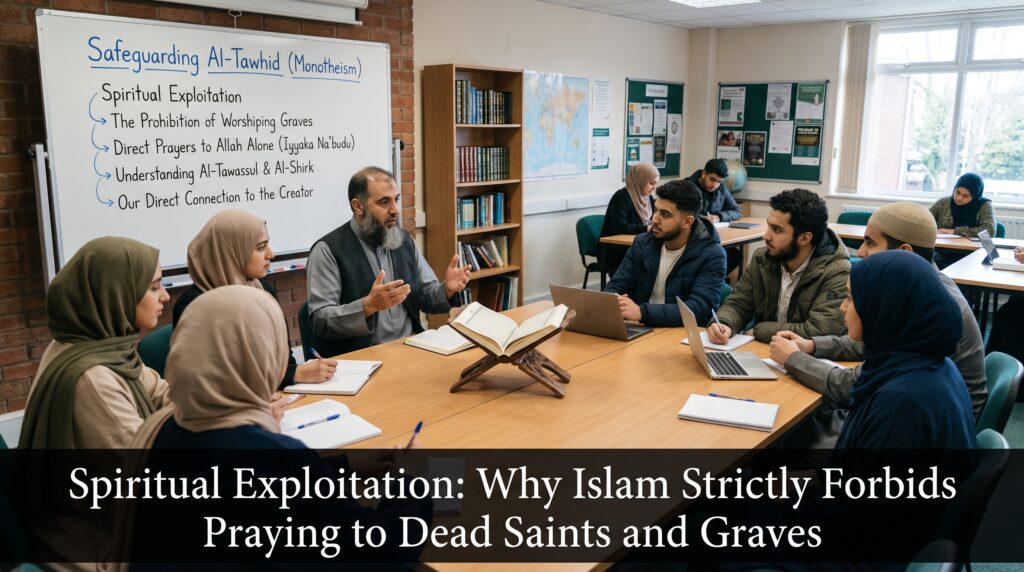
Spiritual Exploitation: When human beings face severe hardships, illness, or financial ruin, they naturally seek spiritual relief and divine help. Unfortunately, throughout history, this vulnerability has been heavily targeted by those seeking power and wealth. One of the most common forms of this manipulation is teaching people to pray to dead saints, visit graves for blessings, or use human intermediaries to reach the Creator. According to the profound insights found in the document “Humanity By Quran,” this practice is not just a theological error; it is a dangerous form of spiritual exploitation. In this post, we will explore why Islam strictly forbids praying to the dead, how this practice destroys personal accountability, and how pure monotheism liberates humanity from religious manipulation.
Table of Contents
| Section Title | Key Questions Addressed |
|---|---|
| The Direct Connection: Why Intermediaries Are Unnecessary | Does the Creator need “channels” or VIPs to hear our prayers? |
| The Illusion of Intercessors: Can the Dead Hear or Help? | What does the Qur’an say about praying to saints and graves? |
| The Business of Spiritual Exploitation | How is the fear of innocent people monetized by religious figures? |
| The Loss of Personal Accountability | Does relying on a saint give people a false sense of security? |
| Restoring Human Dignity Through Pure Monotheism | How does worshipping One Creator free us from human exploitation? |
The Direct Connection: Why Intermediaries Are Unnecessary
In many worldly systems, if you want to speak to a powerful king or a high-ranking official, you cannot simply walk through their front door. You need a middleman, a VIP connection, or an intermediary to pass your message along. Because humans are used to this worldly structure, they often project this same limitation onto the Creator.
However, “Humanity By Quran” clarifies that the Creator is the Ever-Living, the Sustainer of all existence. He is completely free of human limitations. He does not suffer from fatigue, nor does He require secretaries, channels, or intermediaries to hear the prayers of His creation.
Islam establishes a direct, pure, and unbreakable connection between the human soul and its Maker. The Creator is closer to us than our own thoughts. To believe that we must go through a deceased saint, a specific grave, or a holy figure to have our prayers answered is an insult to the infinite hearing and mercy of the One Unseen Creator.
The Illusion of Intercessors: Can the Dead Hear or Help?
A common justification for praying at graves is the belief that these deceased holy people (saints) will act as “intercessors.” People assume that because these individuals were righteous in their lifetimes, praying to them will convince the Creator to grant favors.
The Qur’an firmly and logically rejects this practice, labeling it as a distortion of true belief. The document “Humanity By Quran” highlights that praying to anyone other than the Creator is a profound injustice to the human intellect. The dead, no matter how righteous they were, cannot alter the destiny of the living.
“And they worship besides Allah that which neither harms them nor benefits them, and they say, ‘These are our intercessors with Allah.’ Say: Do you inform Allah of that which He knows not in the heavens or on the earth?… ” (Surah Yunus 10:18)
When people direct their worship, their tears, and their hopes toward a grave, they are asking for help from a creation that is completely powerless. Only the Creator has the keys to the unseen, and He alone holds the power to heal the sick, provide wealth, and grant peace.
The Business of Spiritual Exploitation
Why do these practices continue to exist if they contradict the pure teachings of the Qur’an? The answer often lies in power and economics.
“Humanity By Quran” points out a dark reality: throughout history, religious figures have exploited the fear and desperation of innocent people. By creating artificial symbols, elevating certain graves, and convincing people that a specific saint is the only way to reach the Creator, these leaders create a spiritual monopoly.
They collect money in the name of worship, demand offerings for unseen solutions, and exploit vulnerable people for personal or organizational gain. The Qur’an issues a severe warning to those who devour the wealth of the public through fake religious authority:
“O you who have believed, indeed many of the scholars and the monks devour the wealth of people unjustly and avert [them] from the way of Allah. And those who hoard gold and silver and do not spend it in the way of Allah—give them tidings of a painful punishment.” (Surah At-Tawbah 9:34-35)
Islam strictly forbids these activities because they corrupt the pure religion of nature, turning the sacred act of worship into a manipulative business.
The Loss of Personal Accountability
Beyond the financial exploitation, praying to dead saints causes massive psychological and spiritual harm. It destroys the concept of personal accountability.
In pure Islam, every human being is tested, and every individual is directly responsible for their own actions. If you make a mistake, you must sincerely repent directly to the Creator and correct your behavior. However, when people rely on intermediaries, it creates a false sense of security.
As noted in “Humanity By Quran,” wrong believers often feel that if they bring enough offerings to a shrine or praise a dead saint enough, that saint will “fix” or “forgive” their wrongs on the Day of Judgment. This weakens the inner conscience. People begin to rely on the deceased to save them, rather than relying on their own righteous deeds, honesty, and direct repentance. It replaces genuine moral discipline with empty, superstitious rituals.
Restoring Human Dignity Through Pure Monotheism
The ultimate goal of Islam is to liberate the human mind and soul. When a person bows down to a grave, fears a deceased saint, or begs a human being for divine help, they degrade their own human dignity.
“Humanity By Quran” beautifully explains that declaring “There is no Creator but Allah” is the ultimate act of mental and social liberation. By acknowledging that there is only One Unseen Creator, a person is instantly freed from worshipping their desires, wealth, powerful leaders, and dead saints.
“Follow, [O mankind], what has been revealed to you from your Lord, and do not follow other than Him any allies. Little do you remember.” (Surah Al-A’raf 7:3)
By returning to pure monotheism, humanity cuts off the chains of spiritual exploitation. We learn to stand directly before the Creator with our own sincere intentions, asking Him alone for guidance, and taking full responsibility for our own actions in this beautiful, temporary test of life.
Guidance Section
| Topic / Concept | Common Misconception or Ignorance | The Practical Truth (Based on Quranic Guidance) |
|---|---|---|
| Intermediaries in Prayer | I am too sinful to pray directly to God. I must ask a pure, dead saint to pass my message to the Creator. | The Creator is closer to you than anyone else and commands you to call upon Him directly. Using dead saints as intermediaries is strictly forbidden and powerless. |
| Graves and Shrines | Visiting the graves of holy people and giving money will bring me good luck, healing, and success. | Only the Creator controls destiny, health, and wealth. Giving money to shrines is often a form of spiritual exploitation that devours people’s wealth unjustly. |
| Forgiveness of Sins | If I am devoted to a specific saint, they will intercede for me and save me from accountability, even if I sin. | No soul bears the burden of another. This creates a false sense of security. You are personally accountable for your actions, and you must repent directly to the Creator. |
Disclaimer
The insights shared in this blog post are intended for educational and reflective purposes, drawing upon the concepts from the provided knowledge files and Islamic teachings. They aim to promote harmony, logical thinking, and moral responsibility. Readers are encouraged to seek knowledge, reflect upon nature, and consult qualified scholars for deeper theological studies.
A Sincere Invitation
True understanding comes from direct reflection and an open heart. We warmly invite you to read the Holy Quran at least once in your lifetime, in a language you fully understand. Let your own mind observe the wisdom, logic, and profound peace it offers to humanity.
Frequently Asked Questions (FAQs)
1. Why does Islam forbid praying to dead saints? Islam teaches absolute monotheism (Tawheed). Praying to anyone other than the One Unseen Creator—including deceased saints or prophets—is considered associating partners with Him (Shirk). The dead cannot hear prayers, nor can they benefit or harm the living.
2. What is spiritual exploitation according to “Humanity by Quran”? Spiritual exploitation occurs when religious figures manipulate the fears and hopes of innocent people, convincing them to give money, offerings, or extreme devotion to graves and shrines in exchange for “unseen solutions” or divine favors.
3. Don’t we need someone pure to present our prayers to the Creator? No. This is a human concept projected onto the Creator. The Qur’an repeatedly states that Allah is all-hearing and all-knowing. He invites every individual, no matter how sinful, to ask Him directly for forgiveness and guidance without any middleman.
4. How does relying on saints weaken personal accountability? When people believe a saint will “save” them on the Day of Judgment, they often stop taking responsibility for their own daily actions. They replace true moral discipline, justice, and direct repentance with superstitious rituals and offerings.
5. What is the correct way to respect deceased righteous people in Islam? We respect righteous people by learning from their good examples, reading about their ethical lives, and asking the Creator to have mercy on them. We do not worship them, pray to them, or build shrines to seek blessings from their graves.