Samenvatting van de inhoud
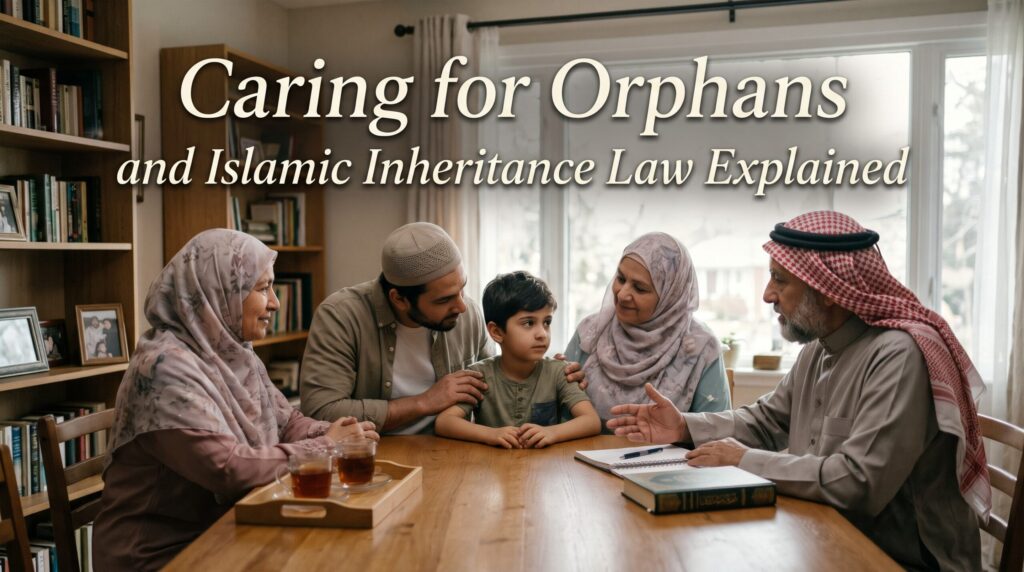
Zorg voor wezen en islamitisch erfrecht uitgelegd: Goddelijke gerechtigheid en sociale bescherming: In elke samenleving wordt de kwetsbaarheid van kinderen vergroot wanneer een vader of primaire kostwinner overlijdt. Omdat een wees geen natuurlijke voogd heeft, loopt hij ernstige risico's op financiële uitbuiting, emotioneel isolement en sociale verwaarlozing. De Heilige Koran behandelt deze menselijke realiteit met een compromisloos moreel en juridisch raamwerk. Door de heilige plicht van weeszorg (Kafalah) met een wiskundig nauwkeurig, verplicht overervingssysteem (Wonder), heeft de islam roofzuchtige stamgebruiken definitief ontmanteld. Deze gids onderzoekt het mandaat van de Koran voor de bescherming van weeskinderen, de strenge ethiek van het beheer van hun eigendommen en de fundamentele wijsheid achter het islamitische erfrecht bij het beschermen van gezinnen over generaties heen.
Inhoudsopgave
| Sectietitel | Belangrijke vragen beantwoord |
|---|---|
| 1. De kwetsbaarheidstest: waarom weeszorg het ware geloof definieert | Waarom stelt de Koran het mishandelen van een wees gelijk aan het ontkennen van de Dag des Oordeels zelf? |
| 2. Fiduciair vertrouwen: Koranische waarborgen voor verweesde rijkdom | Welke strikte financiële grenzen legt de Islam op aan de voogden die de nalatenschap van een wees beheren? |
| 3. De architectuur van de islamitische erfenis (Mirath) | Waarom heeft Allah vaste erfdelen in wetgeving vastgelegd, in plaats van de verdeling van de bezittingen aan menselijke vooringenomenheid over te laten? |
| 4. Inzicht in proportionele aandelen: financieel evenwicht en verantwoordelijkheid | Wat is de economische logica achter de verdeling van aandelen tussen mannelijke en vrouwelijke familieleden |
| 5. De wil (Wasiyyah), bescherming van de afstamming en moderne adoptie | Hoe werkt islamitische voogdij (Kafalah) verschillen van wettelijke adoptie, en hoe kunnen niet-erfgenamen wezen in een testament worden beschermd |
1. De kwetsbaarheidstest: waarom weeszorg het ware geloof definieert
Mensen komen het leven binnen in totale fysieke kwetsbaarheid. In tegenstelling tot wezens die zich uitsluitend laten leiden door rauwe overlevingsinstincten, heeft een mensenkind jaren van doelbewuste onderdak, voeding en ethische training nodig om te overleven en te gedijen. Wanneer een kind zijn vader of beide ouders verliest voordat hij volwassen is, wordt dat essentiële schild verbrijzeld.
In seculiere en historische samenlevingen die geregeerd werden door “survival of the fittest”, werden weeskinderen routinematig onteigend, tot slaaf gemaakt of naar de marge van de samenleving geduwd. De Koran maakte een einde aan deze wreedheid en stelde vast dat de maatstaf van elke beschaving ligt in de manier waarop zij haar meest machteloze leden behandelt.
In het wereldbeeld van de Koran is vriendelijkheid voor wezen geen optionele filantropie; het is een existentiële lakmoesproef van oprecht geloof en geloof in goddelijke verantwoordelijkheid.
De Schepper verklaart:
“Heb je degene gezien die de beloning ontkent? Want dat is degene die de wees wegjaagt en het voeden van de armen niet aanmoedigt.” — Soera Al-Ma'un (107:1-3)
De Koran herinnert de Profeet Mohammed ﷺ – en via hem de hele mensheid – rechtstreeks aan de universele verplichting om onze eigen kwetsbaarheden te gedenken:
“Heeft Hij u niet als wees gevonden en [u] onderdak gegeven? En Hij vond u verloren en leidde [u]? En Hij vond u arm en maakte [u] zelfvoorzienend? Dus wat de wees betreft, onderdruk hem niet.” — Soera Ad-Duha (93:6-9)
De Profeet Mohammed (vzmh) benadrukte de ongeëvenaarde spirituele status die wordt toegekend aan iedereen die naar voren stapt om een ouderloos kind te beschermen:
“Ik en de persoon die voor een wees zorgt en voor hem zorgt, zullen zo in het paradijs zijn,” en hij gebaarde met zijn wijs- en middelvinger en hield ze dicht bij elkaar. — Sahih al-Bukhari (Hadith 6005)
De zorg voor een weeskind zorgt voor emotionele warmte, morele opvoeding en sociale verbondenheid. Door weeskinderen in huis te nemen of consequent in hun behoeften te voorzien, voorkomen gelovigen de psychologische vervreemding en wrok die ontstaan wanneer kwetsbare jongeren aan ontberingen worden overgelaten.
2. Fiduciair vertrouwen: Koranische waarborgen voor verweesde rijkdom
Als een ouder sterft, laten ze vaak eigendommen, land, vee of spaargeld achter dat bedoeld is om de toekomst van hun kinderen veilig te stellen. Historisch gezien hebben corrupte voogden vaak de bezittingen van de wees op hun eigen rekeningen gezet, inferieur vee vervangen door eersteklas bezittingen, of de rijkdom verkwist voordat het kind opgroeide.
Surah An-Nisa confronteert deze economische uitbuiting met strenge wettelijke verboden:
“En geef de wezen hun eigendommen, en vervang het gebrekkige [van jezelf] niet door het goede [van hen], en consumeer hun eigendommen niet voor die van jou. Dat is inderdaad altijd een grote zonde.” — Soera An-Nisa (4:2)
De Schepper waarschuwt dat het verduisteren van het geld van een wees geen witteboordencriminaliteit zonder slachtoffers is; het is een daad van geestelijke zelfvernietiging:
“Inderdaad, degenen die de eigendommen van wezen op onrechtvaardige wijze verslinden, consumeren alleen maar vuur in hun buik. En zij zullen in een vuurzee worden verbrand.” — Soera An-Nisa (4:10)
Because of its catastrophic severity, the Prophet Muhammad ﷺ categorized consuming an orphan’s wealth among the seven gravest sins:
“Avoid the seven destructive sins…” The people asked: “O Messenger of Allah, what are they?” He said, “Associating partners with Allah, practicing magic, taking a life unjustly, consuming usury (riba), devouring the property of an orphan, turning back on the battlefield, and slandering chaste, believing women.” — Sahih al-Bukhari (Hadith 2766), Sahih Muslim (Hadith 89)
The Quranic Protocol for Transferring Property
Islam does not hand an inheritance to an immature youth recklessly, nor does it allow a guardian to withhold assets indefinitely under the excuse of “protection.” The Quran provides an objective, two-step transition:
“And test the orphans [in their abilities] until they reach marriageable age. Then if you perceive in them sound judgment, release their property to them. And do not consume it wastefully and hastily [fearing] that they will grow up. And whoever [when acting as guardian] is rich should refrain, and whoever is poor may consume according to what is reasonable. Then when you release their property to them, bring witnesses over them, and sufficient is Allah as an accountant.” — Surah An-Nisa (4:6)
This verse establishes four indispensable governance rules:
- Practical Financial Testing: Guardians must gradually train and test the orphan in budgeting and financial transactions to develop their maturity (Rushd).
- Age of Discernment: Full asset control is transferred once physical maturity coincides with mental and financial competence.
- Guardian Compensation Limits: A wealthy guardian is forbidden from taking a single penny for their guardianship. A needy guardian may only deduct a modest, customary allowance strictly covering actual administrative care.
- Transparent Accounting: Assets must be formally inventoried and handed over before reliable witnesses, closing any door to suspicion or family disputes.
3. De architectuur van de islamitische erfenis (Mirath)
In many ancient and modern legal frameworks, inheritance is subject to the subjective whims, emotional favoritism, or prejudices of the deceased. Before the revelation of the Quran, pre-Islamic Arabian culture operated on a brutal principle: wealth was given only to those who could ride horses and wield swords in battle. As a result, women, young daughters, and infant orphans were completely disinherited and often treated as inheritable property themselves.
The Quran disrupted this injustice by establishing that human beings do not possess absolute ownership of their wealth. Material property is a temporary trust granted by Allah. Consequently, the Creator Himself legislated the exact shares of the deceased’s estate, permanently stripping relatives of the ability to disinherit lawful heirs out of anger, personal preference, or misogyny.
The foundation was laid with universal legal clarity:
“For men is a share of what the parents and close relatives leave, and for women is a share of what the parents and close relatives leave, be it little or much—an obligatory share.” — Surah An-Nisa (4:7)
Systemic Objectives of Islamic Inheritance:
- Preventing Wealth Concentration: By dividing estates among multiple generations (parents, spouse, children, and siblings where applicable), Islam prevents wealth from accumulating into massive, monopolistic family dynasties.
- Preserving Dignity Across Generations: Grandparents and parents who poured their life strength into raising their children are guaranteed an automatic share of their deceased child’s estate (Surah An-Nisa 4:11), ensuring they are never abandoned in their old age.
- Eliminating Sibling Rancor: When inheritance rules are recognized as divine mandates (Fara’id), surviving family members cannot blame one another for their respective shares, neutralizing feuds that frequently destroy extended families.
4. Inzicht in proportionele aandelen: financieel evenwicht en verantwoordelijkheid
One of the most frequently discussed elements of Islamic inheritance is the general rule that, among children, a son receives twice the share of a daughter:
“Allah instructs you concerning your children: for the male, what is equal to the share of two females…” — Surah An-Nisa (4:11)
When viewed through a secular lens disconnected from the broader Islamic economic framework, this provision is often misunderstood. However, in the Quranic social architecture, rights are strictly balanced against obligations.
Economic Burdens in Islamic Law
| Factor | The Muslim Woman | The Muslim Man |
|---|---|---|
| Personal Wealth Ownership | Enjoys 100% financial autonomy. Her earnings, inheritance, and gifts belong exclusively to her. | Possesses private property, but his wealth is legally bound by mandatory family expenditures. |
| Obligation of Maintenance (Nafaqah) | Carries zero legal obligation to spend on food, rent, medical bills, or children, even if she is significantly wealthier than her spouse. | Legally obligated to provide complete financial maintenance for his wife, children, aging parents, and unmarried female relatives. |
| Marriage Financial Outlay | Receives a mandatory marital gift (Mahr) directly from the husband for her sole possession. | Obligated to pay the marital gift (Mahr) and bear all expenses of establishing the marital home. |
| Inherited Wealth Utility | Her inheritance represents pure financial surplus that she can invest, save, or spend entirely as she sees fit. | His inheritance must be actively utilized to support dependants, including orphaned nephews or nieces if he acts as guardian. |
When a daughter inherits half of what her brother inherits, she enters adulthood with an asset that requires no mandatory expenditure toward anyone else. Meanwhile, her brother’s larger share is immediately absorbed by legal duties of family shelter, healthcare, schooling, and providing for elderly kin. When examined comprehensively, the Islamic financial system places an immense economic burden upon men while structurally safeguarding female assets.
Furthermore, there are scenarios in Islamic jurisprudence where women receive equal shares to men (such as the father and mother both receiving an exact sixth each when the deceased leaves behind children – Surah An-Nisa 4:11), and specific instances where female heirs inherit more than corresponding male heirs or inherit where males are excluded.
5. De wil (Wasiyyah), bescherming van de afstamming en moderne adoptie
To protect the fixed shares commanded by Allah, the Prophet Muhammad ﷺ placed clear legal boundaries on personal wills (Wasiyyah):
“Allah has appointed for everyone who has a right what is due to him, and no bequest is permissible for an heir.” — Sunan Abi Dawud (Hadith 2870), Jami’ at-Tirmidhi (Hadith 2120)
A Muslim cannot write a private will that gives an additional portion to a favorite son or daughter, nor can they reduce the share of an heir they dislike. The estate is distributed according to divine law first, after clearing two mandatory prior obligations:
- Payment of funeral expenses.
- Complete settlement of all documented debts owed to people or Allah (such as unpaid Zakat).
Only after debt clearance can a discretionary will (Wasiyyah) be executed, and it is strictly capped at a maximum of one-third (1/3) of the total estate, distributed exclusively to non-heirs or charitable causes.
Kafalah vs. Western Adoption
Islam passionately advocates for the lifelong sponsorship and upbringing of orphans, a system known as Kafalah. However, Islam maintains a vital distinction between caring for a child and erasing their biological lineage:
“Call them by [the names of] their fathers; it is more just in the sight of Allah. But if you do not know their fathers, then they are your brothers in religion and your dependents…” — Surah Al-Ahzab (33:5)
In Islamic law, an adopted child does not take the family surname of the adoptive parents as if they were biological offspring. Preserving the true biological name protects genealogical identity (Nasab), prevents inadvertent incestuous marriages among unknown biological siblings, and maintains the integrity of the divine inheritance chain.
How to Financially Protect an Adopted Orphan
Because an adopted child (Makful) does not automatically inherit through bloodline shares, the Quranic system provides the discretionary one-third (1/3) bequest:
- An adoptive parent can allocate up to one-third of their total estate in their written Wasiyyah directly to their adopted orphan.
- The adoptive parent can gift (Hibah) any amount of property, investments, or cash to the adopted child during their own lifetime while in good health.
Through this balance, the adopted child’s financial security is firmly guaranteed without disrupting the lawful rights of biological heirs.
Guidance Section: Misconceptions vs. Quranic Truth
| Area | Misconception / Cultural Habit | True Islamic & Quranic Perspective |
|---|---|---|
| Legal Adoption & Lineage | Changing an adopted orphan’s legal surname to match the adoptive father’s surname to make them “feel biological.” | Strictly forbidden in Surah Al-Ahzab (33:5). Lineage must remain attached to the biological father to preserve identity, truth, and inheritance integrity. |
| Female Inheritance Dispossession | Forcing female relatives to sign away their land or property rights to “keep the family wealth inside the male lineage.” | categorized as severe injustice and theft (Ghasb). Allah mandated specific shares for women in Surah An-Nisa (4:7). Denying them their rightful share incurs divine wrath. |
| Manipulating the Will | Writing a custom will that disinherits a rebellious child or gives the entire estate to one favored heir. | Invalid in Islamic law. The Prophet ﷺ ruled: “There is no bequest for an heir.” Divine distribution supersedes individual emotional preferences. |
| Guardian Mingling of Funds | Treating an orphan’s inheritance as general household income for groceries, vacations, or home renovations. | The Quran compares devouring an orphan’s property to filling one’s stomach with fire (4:10). The orphan’s assets must be strictly ring-fenced, accounted for, and preserved until adulthood. |
Vrijwaring
This publication is created for ethical, spiritual, and educational purposes in light of the Quran and authentic Sunnah. Islamic inheritance calculation involves intricate legal considerations, living heir determinations, and jurisdictional variables. This post does not replace formal legal counsel, estate planning, or an official Islamic ruling (Fatwa) provided by a certified Mufti or specialized Shariah inheritance authority.
An Invitation to Reflect
The legal precision of the Quran regarding estates, orphans, and family preservation demonstrates that divine revelation is not an abstract philosophy; it is a practical blueprint designed by the Creator to protect the weak, balance wealth, and uphold justice. We warmly invite every seeker, parent, and reflective thinker to open the Holy Quran and read it with contemplation in your own language at least once in your life. Witness how its verses establish universal justice, safeguard the defenseless, and bring harmony to human society.
Veelgestelde vragen (FAQ's)
1. Can a Muslim legally adopt an orphan and raise them in their home?
Yes, bringing an orphan into one’s family and nurturing them (Kafalah) is one of the highest rewarded deeds in Islam. The single restriction is that the child’s original biological surname and parentage must not be erased or replaced with the adoptive father’s name, ensuring that truth, identity, and biological kinship boundaries are preserved.
2. How can an adopted orphan receive property if they do not inherit through fixed shares?
Adoptive parents can secure an orphan’s financial future through two permissible methods: by executing a formal bequest (Wasiyyah) granting the child up to one-third (1/3) of their total net estate upon death, or by giving financial gifts (Hibah) during their lifetime while in normal health.
3. What should a family do if poor relatives or orphans are present when inheritance is divided?
The Quran explicitly commands generous charity and gentle communication in such moments: “And when [other] relatives and orphans and the needy are present at the [time of] division, give them [something] out of it and speak to them words of appropriate kindness” (Surah An-Nisa 4:8). Providing a gift softens hearts and prevents feelings of deprivation.
4. Can a guardian invest an orphan’s money into commercial trade?
Yes, scholars encourage guardians to prudently invest and trade with an orphan’s surplus assets so that annual obligatory Zakat does not gradually diminish the principal wealth. However, the investments must be low-risk, ethical, halal, and conducted with extreme caution to protect the orphan’s capital.
5. Why did Allah legislate exact inheritance fractions instead of letting people write their own wills?
Human judgment is prone to temporary emotions, jealousy, manipulation by manipulative relatives, and cultural biases. By establishing clear mathematical fractions (Fara’id) in the Quran, Allah protected the weak, guaranteed rights for women and elderly parents, and eliminated the destructive family litigation that often follows subjective wills.
6. What occurs if an orphan reaches adulthood but lacks mental capacity to manage wealth?
If an individual reaches physical adulthood but suffers from severe cognitive disability or lack of financial discernment, the guardian or an appointed Shariah court conservator continues to oversee the estate responsibly, ensuring the person’s living, housing, and medical needs are met with dignity throughout their life.