Samenvatting van de inhoud
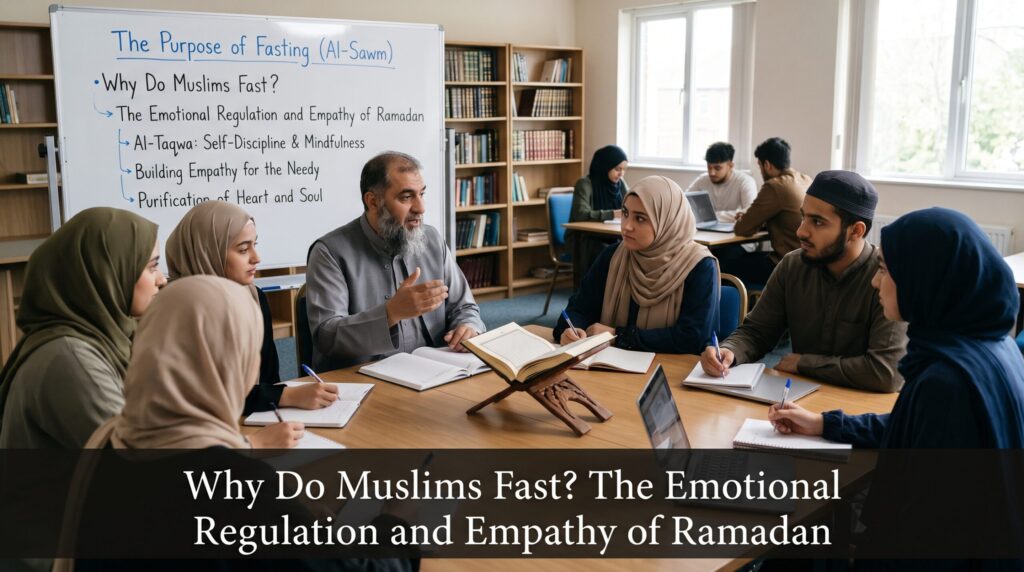
Why Do Muslims Fast: To an outside observer, fasting for an entire month from dawn until sunset might look like a grueling physical hardship or an ancient, unexplainable ritual. Why would a merciful Creator ask millions of people to voluntarily endure hunger and thirst? According to the deep insights found in the document “Humanity By Quran,” fasting in Islam (Sawm) is not a punishment, nor is it a transaction to appease a demanding deity. Instead, the month of Ramadan is a profound, divine masterclass in emotional regulation, self-control, and social empathy. In this post, we will explore the true psychological and social purposes of fasting, discovering how abstaining from food and drink transforms the human ego, purifies the mind, and binds humanity together through shared compassion.
Inhoudsopgave
| Sectietitel | Belangrijke vragen beantwoord |
|---|---|
| Beyond Starvation: The True Purpose of Fasting | Is fasting just a physical ritual, or does it have a deeper psychological goal? |
| Emotional Regulation: Taming the Ego and Desires | How does abstaining from food help us control anger and bad habits? |
| The Great Equalizer: Building Genuine Empathy | How does fasting bridge the gap between the rich and the poor? |
| Restoring Health and Mental Clarity | What are the personal benefits of pausing our daily consumption? |
| Gratitude at Sunset: Balancing the Human Heart | How does the daily breaking of the fast teach us ultimate appreciation? |
Beyond Starvation: The True Purpose of Fasting
A common misconception about religion is that the Creator demands physical sacrifices because He needs to see human beings struggle. However, Islam explicitly rejects this idea. The Creator is completely free of all needs. He does not suffer from hunger, and our fasting does not increase His power or majesty.
As highlighted in “Humanity By Quran,” acts of worship in Islam are part of a comprehensive social system designed entirely for human benefit. Fasting (Sawm) is prescribed to regulate the human soul. The ultimate goal of fasting is not starvation; it is the attainment of Taqwa (righteousness, God-consciousness, and deep moral discipline).
“O believers, fasting is prescribed for you as it was prescribed for those before you, that you may become righteous.” (Surah Al-Baqarah 2:183)
When a person fasts, they are participating in an intense training program. By learning to say “no” to their most basic biological needs for a specified time, they train their mind to say “no” to greed, arrogance, and unethical behavior throughout the rest of the year.
Emotional Regulation: Taming the Ego and Desires
Human beings are uniquely gifted with intellect and free will, but we are also heavily influenced by our physical desires and emotions. When our desires run unchecked, they lead to selfishness, anger, and moral corruption.
“Humanity by Quran” explains that fasting is a profound discipline of emotional regulation. During Ramadan, a Muslim does not only abstain from food and water; they must also strictly restrain anger, arguments, backbiting, and foul language.
Think about the psychological mechanics of this: If you can discipline yourself to avoid lawful things (like a glass of water) when you are deeply thirsty because you know the Creator is watching, you are building immense willpower. This willpower makes it significantly easier to avoid unlawful things (like lying, cheating, or bursting into anger) when you are triggered.
Fasting tames the human ego. It proves to the individual that they are not a slave to their stomach, their habits, or their anger. It provides the mental space required to break negative emotional patterns and regain control over one’s own mind.
The Great Equalizer: Building Genuine Empathy
In our modern world, social and economic classes are heavily divided. A wealthy person can read statistics about global poverty, but reading about hunger is fundamentally different from feeling it in your own body.
Fasting serves as the great equalizer of humanity. “Humanity by Quran” points out that during Ramadan, the billionaire and the laborer experience the exact same hunger pangs. Fasting forces those who live in abundance to physically step into the shoes of those who live in poverty.
This shared physical experience strips away worldly status and builds deep, genuine empathy. It is impossible to ignore the plight of the poor when your own stomach is empty. This is why Ramadan is also the month of immense charity. The emotional regulation of fasting naturally cures the heart of greed, leading Muslims to give their wealth generously (Zakat and Sadaqah) to support the vulnerable, thereby balancing the economic structure of society.
Restoring Health and Mental Clarity
Islam is called the “Religion of Nature,” meaning its commands perfectly align with human biology and psychology. Long before modern science discovered the massive physiological benefits of intermittent fasting—such as cellular repair, detoxification, and reduced inflammation—the Qur’an established it as a mandatory annual reset.
Beyond the physical health benefits, “Humanity By Quran” notes that fasting purifies human thought. When the body is not constantly digesting heavy meals, and when the mind is pulled away from the endless chase of consumption, a profound mental clarity emerges.
This clarity allows a person to reflect on the true purpose of their life. It quiets the noise of worldly distractions and amplifies the inner conscience, making it the perfect time for deep prayer, seeking forgiveness, and reconnecting with the divine guidance of the Qur’an.
Gratitude at Sunset: Balancing the Human Heart
Every day during Ramadan, as the sun sets, Muslims break their fast (Iftar). The moment a fasting person takes their first sip of water or bites into a date, a powerful psychological shift occurs.
We take basic blessings for granted every single day. We rarely think about the miracle of clean water until we are deprived of it. “Humanity By Quran” emphasizes that true worship revolves around gratitude (Shukr). Fasting intentionally removes our blessings temporarily so that we can truly appreciate their immense value when they are returned.
This daily cycle of restriction and release teaches the heart profound gratitude. It prevents arrogance by reminding us of our fragility and absolute dependence on the Creator’s provision. A heart filled with gratitude is a heart at peace, immune to the whispers of greed and dissatisfaction.
Begeleidingssectie
| Onderwerp / Concept | Veel voorkomende misvatting of onwetendheid | De praktische waarheid (gebaseerd op richtlijnen uit de Koran) |
|---|---|---|
| The Purpose of Fasting | Fasting is just a way to make God happy by suffering and starving ourselves. | The Creator is free of all needs. Fasting is a divine discipline designed to build your willpower, emotional control, and moral righteousness. |
| Empathy and Poverty | We can understand poverty just by reading about it or watching the news. | True empathy requires shared experience. Fasting forces every class of society to physically feel hunger, directly curing greed and inspiring charity. |
| Emotional Control | Ramadan is only about avoiding food and drink; my behavior and speech don’t matter as long as I don’t eat. | Fasting from food is only the physical layer. True fasting requires emotional regulation—abstaining from anger, backbiting, and foul language to purify the mind. |
Vrijwaring
De inzichten die in deze blogpost worden gedeeld, zijn bedoeld voor educatieve en reflectieve doeleinden, waarbij gebruik wordt gemaakt van de concepten uit de aangeleverde kennisbestanden en de islamitische leer. Ze zijn gericht op het bevorderen van harmonie, logisch denken en morele verantwoordelijkheid. Lezers worden aangemoedigd om kennis te zoeken, na te denken over de natuur en gekwalificeerde wetenschappers te raadplegen voor diepere theologische studies.
Een oprechte uitnodiging
Echt begrip komt voort uit directe reflectie en een open hart. Wij nodigen u van harte uit om de Heilige Koran minstens één keer in uw leven te lezen, in een taal die u volledig begrijpt. Laat je eigen geest de wijsheid, logica en diepe vrede observeren die deze de mensheid biedt.
Veelgestelde vragen (FAQ's)
1. Why do Muslims fast during the month of Ramadan? Muslims fast to fulfill a divine commandment aimed at developing Taqwa (righteousness and self-discipline). It is a time to purify the soul, practice emotional regulation, and reconnect with the Creator by stepping away from worldly consumption.
2. Does fasting only mean not eating or drinking? No. While abstaining from food and drink from dawn to sunset is the physical requirement, the spiritual requirement is emotional regulation. A fasting person must also avoid anger, lying, gossiping, and all forms of unethical behavior.
3. How does fasting build empathy? By voluntarily experiencing hunger and thirst, people who normally have easy access to food physically feel what the poor endure daily. This shared experience breaks down arrogance and naturally motivates people to be more charitable and compassionate.
4. What does “Humanity By Quran” say about the benefits of fasting? It explains that fasting (Sawm) is a critical pillar for emotional regulation. It trains the mind to live with patience, restrains anger and ego, equalizes the rich and the poor, and ultimately purifies human thought and health.
5. How does breaking the fast teach gratitude? When you abstain from basic necessities all day, the first sip of water at sunset feels like a massive miracle. This stark contrast teaches the heart to stop taking daily blessings for granted and fosters deep, sincere gratitude to the Ultimate Provider.