Samenvatting van de inhoud
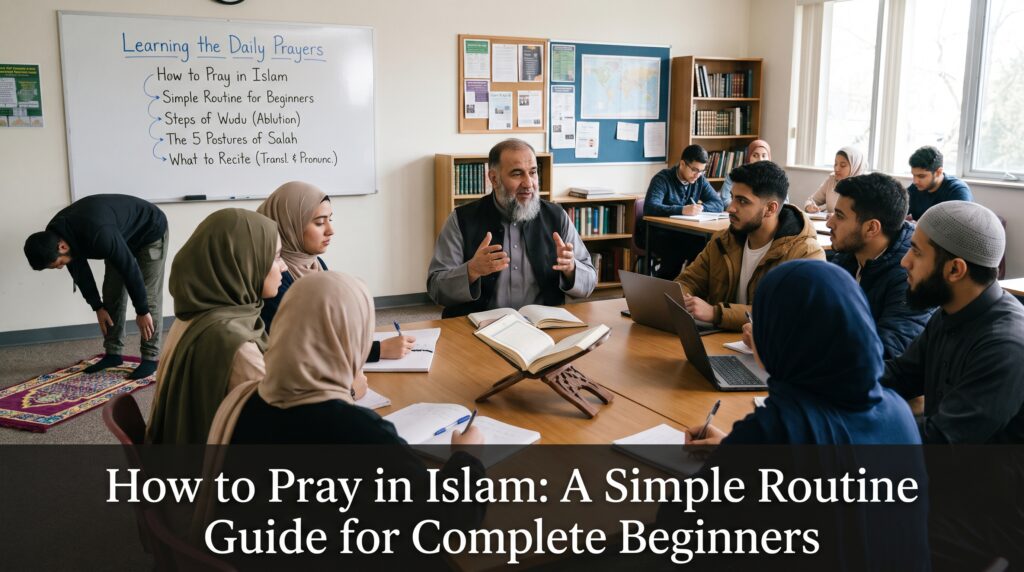
How to Pray in Islam: For a beginner stepping into the world of Islam, the concept of praying five times a day can initially seem overwhelming. How does one find the time? What is the purpose of this frequent worship? According to the profound and practical insights detailed in the document “Humanity By Quran,” prayer in Islam (Salah) is far more than a set of repetitive religious rituals. It is a brilliant, divine system designed to regulate human life, manage time, and build deep inner discipline. The Creator is completely free of all needs; He does not require our prayers to sustain His power. Instead, Salah is a gift to humanity. In this post, we will explore a simple, logical guide to prayer in Islam, uncovering how this daily routine syncs our lives with nature, reduces stress, and connects us directly to the One Unseen Creator.
Inhoudsopgave
| Sectietitel | Belangrijke vragen beantwoord |
|---|---|
| Understanding Salah: More Than Just a Ritual | Is prayer a transaction with God, or does it serve a practical human purpose? |
| The Direction of Unity: Why Muslims Face the Ka’bah | Do Muslims worship the Ka’bah, or is it just a symbol of alignment? |
| The Five Daily Prayers: Syncing Life with Nature | Hoe draagt elk specifiek gebed bij aan een gezonde dagelijkse routine? |
| The Inner Focus: Humility, Gratitude, and Forgiveness | How does the act of praying transform our mental and emotional health? |
| The Social Impact: Equality in the Congregation | What happens to social barriers when people pray together? |
Understanding Salah: More Than Just a Ritual
When people think of religious prayer, they often imagine a transaction—praising a higher power in exchange for worldly favors or trying to appease an angry deity. Islam completely rejects this notion.
As highlighted in “Humanity By Quran,” the Creator is absolutely independent. If every human on Earth stopped praying, it would not diminish His supreme power by a single atom. Therefore, the command to establish prayer (Salah) is not for the Creator’s benefit; it is entirely for ours.
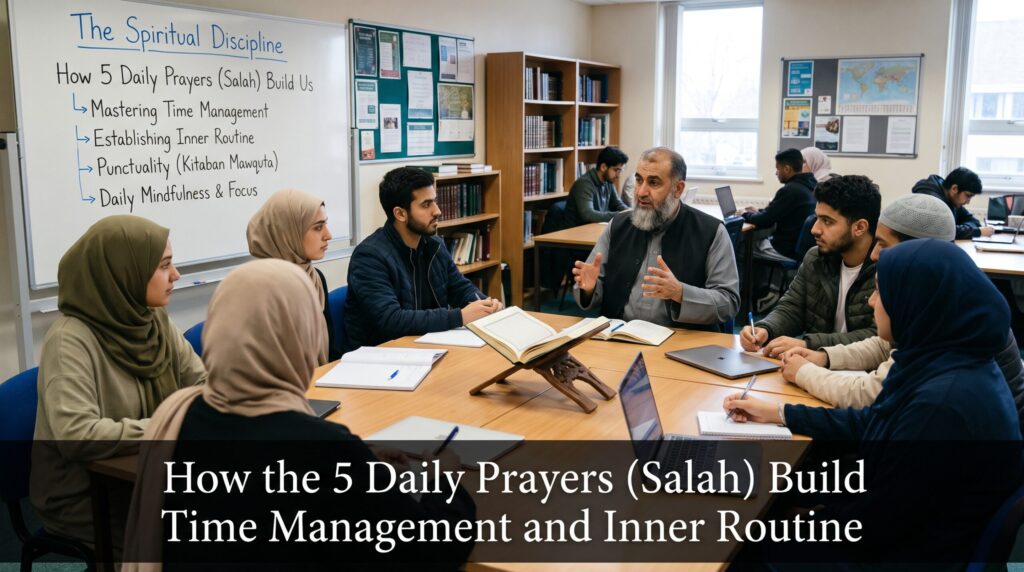
Salah is a “social system of discipline.” It acts as daily training in time management, patience, humility, and inner order. By forcing a person to pause their worldly chase, disconnect from their screens, and wash themselves (Wudu), prayer provides a mandatory physical and psychological reset. It keeps the human ego in check and serves as a powerful barrier against immoral behavior, reminding the believer of their ultimate accountability.
“…Inderdaad, gebed verbiedt immoraliteit en wangedrag….” (Soera Al-Ankabut 29:45)
The Direction of Unity: Why Muslims Face the Ka’bah
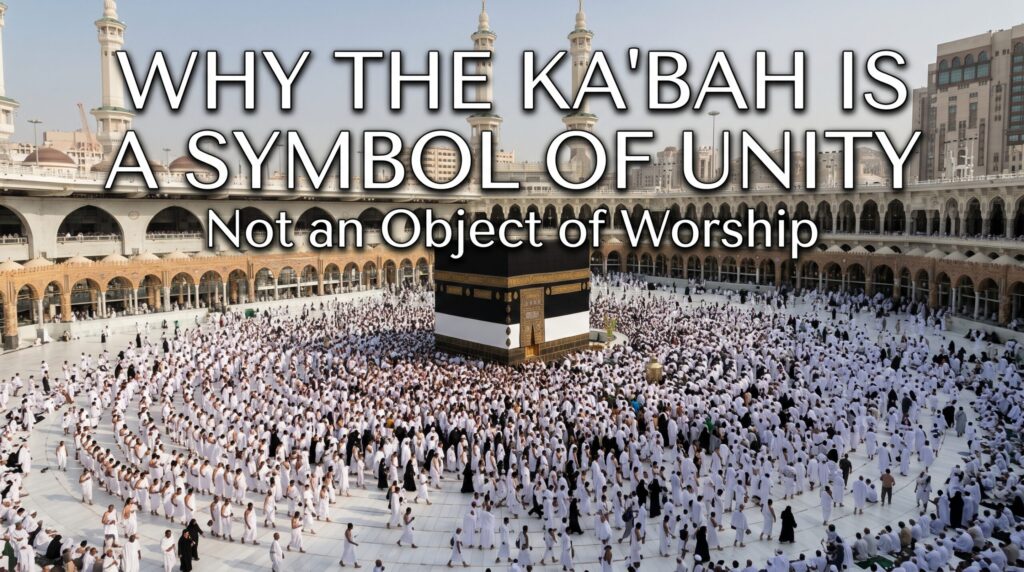
A common question from beginners observing Islamic prayer is why all Muslims across the globe face a singular direction—a cube-shaped building in Mecca known as the Ka’bah. Some mistakenly assume it is an idol or an object of worship.
“Humanity By Quran” clarifies this beautifully: Islam is founded on pure monotheism and strictly forbids the worship of any created object. The Ka’bah is simply the “direction of unity.”
Just as the planets revolve around a central sun in perfect harmony, the Ka’bah serves as a central point for human alignment on Earth. Built by Prophet Ibrahim (Abraham) to establish the worship of the One Unseen Creator, it unites millions of diverse worshippers. When a Muslim faces the Ka’bah during Salah, they are joining a global community, proving that all humanity revolves around the obedience of the Creator rather than their own selfish desires.
The Five Daily Prayers: Syncing Life with Nature
The most beautiful aspect of Salah is its schedule. Long before modern science recognized the importance of circadian rhythms, Islam established a daily routine perfectly synced with the natural cycles of the sun.
“Humanity By Quran” outlines how each of the five prayers serves a distinct psychological and practical purpose in a believer’s day:
- Fajr (Dawn): Performed from true dawn until before sunrise, Fajr builds the discipline of early rising. It requires immense self-control to wake up in the dark, providing a moment of deep, quiet reflection to set a focused intention before the chaos of the day begins.
- Dhuhr (Midday): Performed when the sun passes its peak. During the busiest hours of work, Dhuhr acts as a mandatory pause to reset focus, reduce stress, and prevent afternoon burnout.
- ‘Asr (Late Afternoon): As the afternoon shadows lengthen, ‘Asr serves as a psychological checkpoint. It reminds us that daylight is fading, urging us to complete our remaining duties with urgency and patience.
- Maghrib (Sunset): Performed immediately after sunset, Maghrib marks the transition from work to rest. It trains the heart to practice gratitude for the day’s provision, health, and opportunities.
- ‘Isha (Night): Performed in the complete darkness of the night, ‘Isha brings mental calm and spiritual settling. It clears the mind of worldly anxieties, preparing the body for a peaceful and restorative rest.
The Inner Focus: Humility, Gratitude, and Forgiveness
Prayer in Islam is a physical, mental, and spiritual exercise. It involves standing, bowing, and prostrating (placing the forehead on the ground). This physical act of prostration is the ultimate display of humility. It physically lowers the human ego, reminding the believer that despite their wealth, job title, or worldly power, they are ultimately dependent on the Creator.
Furthermore, “Humanity By Quran” emphasizes that true worship is rooted in two living qualities: Gratitude and Forgiveness.
During Salah, a Muslim repeatedly praises the Creator, fostering deep gratitude that cures arrogance. Simultaneously, prayer provides a daily mechanism to seek forgiveness for the inevitable mistakes we make as human beings. This constant cycle of acknowledging blessings and admitting faults keeps the human heart perfectly balanced and immune to despair.
“En zoek hulp door geduld en gebed, en inderdaad, het is moeilijk behalve voor de nederig onderdanige [aan Allah].” (Soera Al-Baqarah 2:45)
The Social Impact: Equality in the Congregation
While Salah can be performed individually at home or at work, Islam highly encourages performing it in congregation, particularly at the mosque. This communal aspect of prayer has a massive, transformative impact on society.
“Humanity By Quran” points out that congregational prayer actively destroys social, racial, and economic divisions. Inside the mosque, there are no VIP sections. The wealthy CEO, the daily laborer, the student, and the elderly all take off their shoes and stand shoulder-to-shoulder in straight rows.
This physical act of equality reinforces mutual respect. It proves practically, every single day, that worldly status is an illusion and that all human beings are absolutely equal before the Creator.
Begeleidingssectie
| Onderwerp / Concept | Veel voorkomende misvatting of onwetendheid | De praktische waarheid (gebaseerd op richtlijnen uit de Koran) |
|---|---|---|
| The Ka’bah | Muslims bow down to and worship the black box (Ka’bah) in Mecca during their prayers. | Islam strictly forbids worshipping objects. The Ka’bah is a symbol of central direction and global unity, representing humanity’s shared focus on the One Unseen Creator. |
| Purpose of Prayer | God demands our prayers because He needs our praise and worship to sustain His power. | The Creator is completely free of all needs. Salah is a divine gift designed to regulate human life, manage time, and protect our mental and spiritual health. |
| Tijdbeheer | Praying five times a day is a heavy burden that ruins a productive work schedule. | Salah provides structured, natural pauses (like Dhuhr and ‘Asr) that reset focus, prevent chronic burnout, and sync the human body with the natural environment. |
Vrijwaring
De inzichten die in deze blogpost worden gedeeld, zijn bedoeld voor educatieve en reflectieve doeleinden, waarbij gebruik wordt gemaakt van de concepten uit de aangeleverde kennisbestanden en de islamitische leer. Ze zijn gericht op het bevorderen van harmonie, logisch denken en morele verantwoordelijkheid. Lezers worden aangemoedigd om kennis te zoeken, na te denken over de natuur en gekwalificeerde wetenschappers te raadplegen voor diepere theologische studies.
Een oprechte uitnodiging
Echt begrip komt voort uit directe reflectie en een open hart. Wij nodigen u van harte uit om de Heilige Koran minstens één keer in uw leven te lezen, in een taal die u volledig begrijpt. Laat je eigen geest de wijsheid, logica en diepe vrede observeren die deze de mensheid biedt.
Veelgestelde vragen (FAQ's)
1. Do I have to pray in Arabic? The core recitations of the Salah, including chapters from the Qur’an, are performed in Arabic to maintain the pure, original, and unified preservation of the Creator’s words. However, your personal supplications (Dua) made during or after the prayer can be in any language you understand.
2. What does “Salah” actually mean? Salah is the Arabic word for the five mandatory daily prayers in Islam. As explained in “Humanity By Quran,” it acts as a daily regulation system that trains a person in time management, discipline, and humility.
3. Why do Muslims wash themselves before praying? This washing is called Wudu (ablution). It is a physical and spiritual preparation that involves washing the hands, face, arms, and feet. It symbolizes purity, helping the believer disconnect from worldly dirt and stress before standing before the Creator.
4. What if I am working and cannot make it to a mosque? While congregational prayer is highly encouraged, Islam is highly practical. You can perform Salah almost anywhere—in an office, at a park, or in your home—as long as the area is clean. The earth was made a place of prayer for the believers.
5. How does prayer help with mental health? Salah acts as a profound psychological reset. In a world full of anxiety and constant digital distraction, taking five structured breaks a day to disconnect from creation and connect with the Creator significantly reduces stress, grounds the ego, and brings deep inner peace.