内容概要
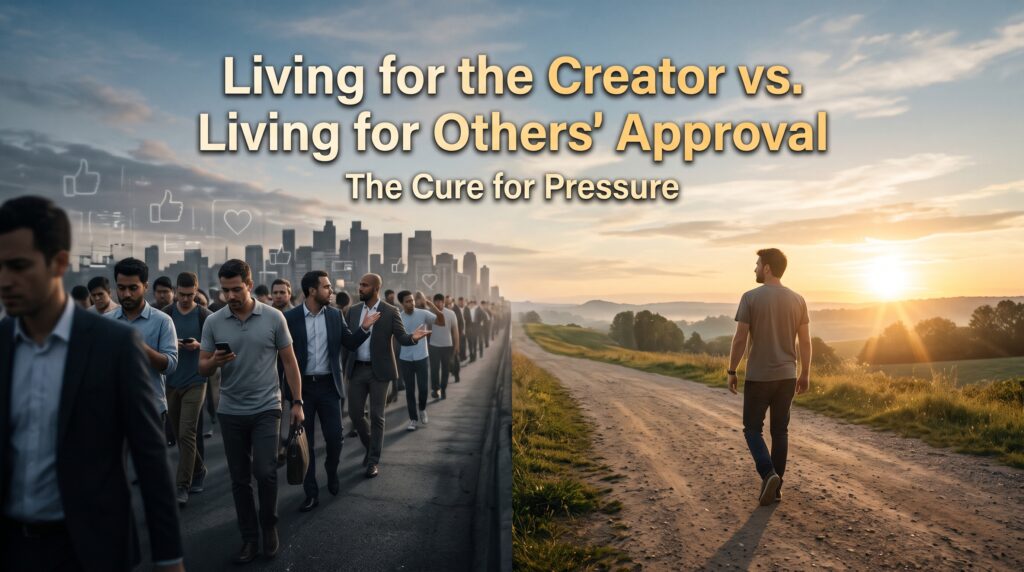
Living for the Creator vs. Living for Others’ Approval: The Ultimate Cure for Pressure: Constant worry about what people think is one of the heaviest mental burdens in modern life. When your self-worth depends on applause, trends, or social acceptance, anxiety and confusion naturally follow. This article explores the three emotional states of human living, why chasing human approval always fails, and how centering your life around the 一位看不见的创造者 brings lasting clarity, inner peace, and freedom from everyday pressure.
目录
| 章节标题 | 解决的关键问题 |
|---|---|
| Understanding the Root Cause of Modern Pressure | Why do humans feel pressured to please others, and what are the three ways people live? |
| Why Chasing People’s Approval Always Leads to Exhaustion | Why does living for human validation fail to bring peace, and how does it weaken your integrity? |
| How Living for the Creator Cures Anxiety and Pressure | How does focusing on 一位看不见的创造者 simplify decisions, build courage, and calm the heart? |
| Practical Steps to Shift Toward a Creator-Centered Life | What daily habits help you break free from people-pleasing and live with sincere intention? |
| Guidance: Common Misconceptions About Approval and Faith | What false beliefs about praise, culture, and self-worth keep people trapped in pressure? |
| 常见问题 (FAQ) | How do you balance kindness to people with independence from their opinions? |
Understanding the Root Cause of Modern Pressure
Human beings were created with two unique traits: a physically delicate body that requires cooperation to survive, and the gift of speech to share ideas, build families, and form communities. Because we naturally live together, caring about relationships and maintaining a good reputation is healthy.
However, pressure begins when healthy social awareness turns into emotional dependency. Instead of asking, “Is this action right and truthful?” we start asking, “Will people praise me, approve of me, or judge me?”
In reality, every person lives in one of three emotional states:
| Emotional State of Living | Primary Focus | Inner & Social Outcome |
|---|---|---|
| 1. Living for Others’ Approval | Public praise, social trends, and fear of criticism | Constant mental pressure, low self-worth, confusion, and vulnerability to unfair actions just to fit in. |
| 2. Living Only for Oneself | Personal desire, ego, and immediate pleasure | Short-term excitement followed by long-term emptiness, selfishness, anxiety, and inner guilt. |
| 3. Living for the Creator | Truth, sincere intention, justice, and accountability | Deep inner peace, clear boundaries, emotional resilience, and steady integrity regardless of public opinion. |
When you live for people’s approval, you hand over the steering wheel of your mind to dozens of different drivers, all pulling you in conflicting directions.
Why Chasing People’s Approval Always Leads to Exhaustion
Logically, trying to earn lasting peace through human approval is impossible for three clear reasons:
- Human Standards Never Stop Shifting: What society celebrates today, it criticizes tomorrow. If you shape your identity around changing opinions, you will never feel secure.
- Humans Only See the Surface: People judge based on appearances, wealth, status, or carefully curated words. They cannot see your hidden struggles or true intentions.
- Creation Is Just as Dependent as You Are: Every human being is limited, imperfect, and dependent on the Creator for every breath. Expecting dependent beings to give you complete emotional security is a trap.
The Quran highlights this fundamental reality of human dependency:
“O mankind, you are those in need of Allah, while Allah is the Free of need, the Praiseworthy.” — 法提尔古兰经 (35:15)
Furthermore, trying to perform for people creates inner stress because you constantly worry about hiding flaws. Yet nothing is ever hidden from the One who designed you:
“Say, ‘Whether you conceal what is in your breasts or reveal it, Allah knows it. And He knows that which is in the heavens and that which is on the earth. And Allah is over all things competent.'” — Surah Al-Imran (3:29)
Once you realize that people cannot grant ultimate security—and cannot see your true heart anyway—the race for their approval loses its power over you.
How Living for the Creator Cures Anxiety and Pressure
Centralizing the One Unseen Creator does not mean isolating yourself from society. Rather, it changes who you are ultimately answering to, which instantly removes unnecessary mental pressure.
1. One Audience, One Clear Standard
When you live for people, you must wear a different mask for every crowd. When you live for the Creator, you have only one audience, and His standard of truth, kindness, and justice never changes. Sincerity (伊赫拉斯) simplifies life:
“他们没有被命令,除了崇拜安拉,在宗教上真诚地忠于他,倾向于真理……”—— 巴伊那章 (98:5)
2. True Accountability Frees You from Social Fear
Life on earth is a temporary, purposeful test of choices and intentions. On the Day of Judgment, the crowd whose approval you chased will not stand in your place or carry your record. Knowing this frees you from fearing unfair criticism:
“Say, ‘Indeed, my prayer, my rites of sacrifice, my living and my dying are for Allah, Lord of the worlds.’ … And every soul earns not [blame] except against itself, and no bearer of burdens will bear the burden of another.” — Surah Al-An’am (6:162, 164)
“[他]创造了死亡和生命,来测试你们中谁的行为最好——他是至高无上的,是宽恕的。” — 穆尔克古兰经 (67:2)
3. Deep Peace Through Remembrance
Anxiety thrives when the heart feels alone against the expectations of the world. Connecting with the Creator through daily prayer, gratitude, and quiet reflection grounds your thoughts in certainty:
“Those who have believed and whose hearts are assured by the remembrance of Allah. Unquestionably, by the remembrance of Allah, hearts are assured.” — 古兰经 (13:28)
Whether people applaud your good deeds or overlook them, a Creator-centered person remains calm because their reward is already secure.
Practical Steps to Shift from People-Pleasing to Creator-Centered Living
Breaking the habit of living for others’ approval requires practical daily discipline:
- Pause and Check Your Intention: Before speaking, posting online, or making a major decision, ask yourself: “Am I doing this because it is right before my Creator, or because I want people to notice?” Remember that every word and action is recorded: “Man does not utter any word except that with him is an observer prepared [to record].” — 古兰经 (50:18)
- Return to Your Natural Compass (菲特拉): Every human is born with an inner sense of truth, fairness, and modesty. Peel away cultural pressure and blind imitation to reconnect with pure, natural living: “So direct your face toward the religion, inclining to truth. [Adhere to] the fitrah of Allah upon which He has created [all] people…” — 朗姆酒古兰经 (30:30)
- Be a Source of Safety, Not a Performer: Stop trying to impress people with status or arguments. Focus on ensuring that people’s dignity, mental health, wealth, and feelings are safe around you.
- Replace Comparison with Daily Gratitude: Comparing your life to others breeds pressure and envy. Thanking the Creator daily for your health, time, and abilities keeps you focused on your own path.
Guidance: Common Misconceptions About Approval and Faith
Many people remain trapped in social pressure because of cultural habits or misunderstandings about faith and self-worth. The table below clarifies these misconceptions:
| 常见的误解 | Root Cause (Purpose Ignorance / Cultural Habit) | True Quranic Perspective |
|---|---|---|
| “Good deeds only matter if people see and praise them.” | Confusing social recognition with spiritual success; performing rituals for public image. | True righteousness is rooted in sincere faith, integrity, and unseen generosity, not outward display (Surah Al-Baqarah 2:177). |
| “I must follow family or social customs even when they are unjust.” | Blind imitation and fear of social rejection overriding personal responsibility. | Every individual is accountable for seeking truth and standing for justice, even against social pressure (Surah Al-An’am 6:164). |
| “Not caring about people’s approval means being rude or selfish.” | Misunderstanding emotional independence as arrogance or lack of empathy. | Purifying the soul brings humility and kindness; you respect people’s rights while refusing to let their opinions control your values (Surah Ash-Shams 91:9-10). |
| “Using lucky charms, status symbols, or human intermediaries brings security.” | Seeking protection and validation from created objects or personalities instead of the Creator. | Peace and protection come solely from direct connection with the One Unseen Creator (Surah Ar-Ra’d 13:28). |
常见问题 (FAQ)
1. Is it wrong to want people to respect or like me? No. Wanting healthy relationships and a good reputation is completely natural. It only becomes harmful when fear of people’s opinions stops you from doing what is right or forces you to compromise your honesty and inner peace.
2. How do I stop overthinking after talking to people? Remind yourself that you are only responsible for speaking truthfully and kindly, not for controlling how others react. Once a conversation ends, entrust the outcome to the Creator and focus on your present duties.
3. What if living by truth and principles makes me feel lonely? Choosing integrity over popularity may occasionally distance you from superficial crowds, but it attracts trustworthy people and brings deep inner tranquility. Being at peace with your Creator is far better than feeling lonely inside a noisy crowd.
4. How does belief in the Day of Judgment reduce everyday stress? When you know that every unseen kindness, patient moment, and unfair criticism will be judged with complete fairness in the Hereafter, you no longer feel pressured to prove yourself or win every argument today.
5. Can I still accept constructive feedback from others if I live for the Creator? Yes. Living for the Creator makes you humble, not stubborn. You listen sincerely to helpful advice that improves your character, while letting go of toxic criticism meant only to control or belittle you.
6. What is the fastest daily habit to cure people-pleasing? Spend a few quiet minutes each morning and evening in sincere 杜阿 (personal prayer) and reflection. Reminding your heart that only the Creator holds your future instantly shrinks the fear of human judgment.

 English
 Bengali
 Chinese
 Dutch
 French
 German
 Greek
 Hindi
 Indonesian
 Italian
 Japanese
 Korean
 Marathi
 Latin
 Portuguese
 Russian
 Spanish
 Swahili
 Telugu
 Vietnamese