Tóm tắt nội dung
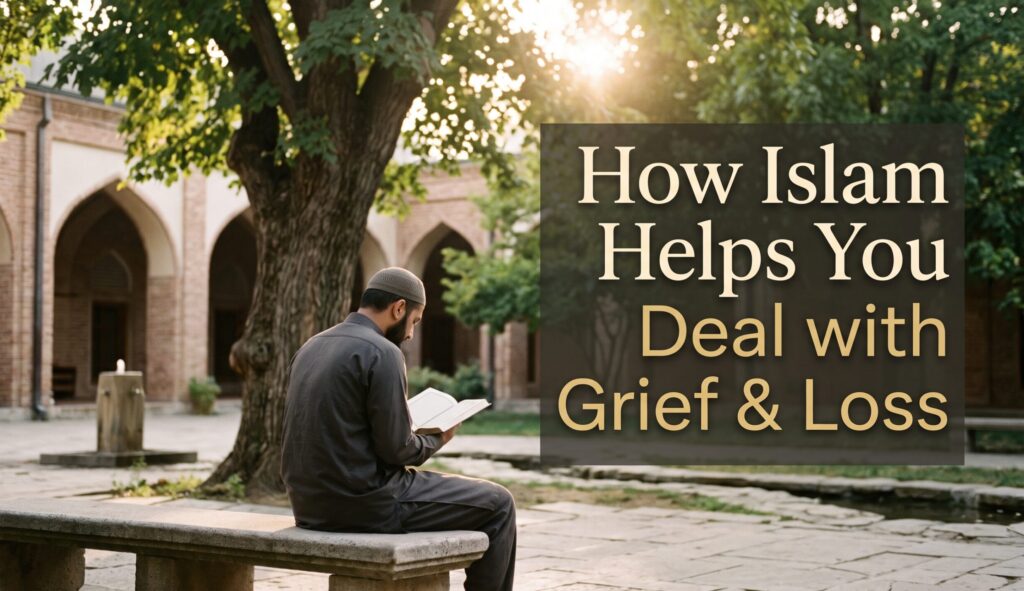
How Islam Helps You Deal with Grief and Loss: Losing a loved one, facing a life-altering setback, or experiencing deep heartbreak can leave you feeling overwhelmed and empty. Islam does not ask you to suppress your pain or pretend that loss does not hurt. Instead, it offers a compassionate, logical framework that validates human sorrow, reframes death as a temporary separation rather than permanent erasure, and guides you through practical steps toward healing and inner peace.
Mục lục
| Tiêu đề phần | Các câu hỏi chính đã được giải quyết |
|---|---|
| Why Grief Hurts: Understanding Loss Through Human Nature in Islam | Why does loss feel so painful, and how does knowing our ultimate return bring relief? |
| Is Crying or Feeling Sad a Sign of Weak Faith? | Did the Prophets grieve, and what is the difference between natural sadness and despair? |
| Practical Steps to Heal from Grief and Loss in Islam | What concrete actions can you take to process pain, practice patience, and find comfort? |
| Guidance Section: Common Misconceptions Around Grief | Are fixed mourning anniversaries part of Islam, and what cultural habits contradict the Sunnah? |
| Câu hỏi thường gặp (FAQ) | How long is the mourning period, how can you help deceased loved ones, and is therapy allowed? |
Why Grief Hurts: Understanding Loss Through Human Nature in Islam
Grief is the natural price of love. Human beings are created with deep emotional bonds, empathy, and the desire for permanence. When someone you love passes away—or when a cherished chapter of life ends—your mind struggles to accept the sudden absence.
From an Islamic perspective, life on earth is never meant to be permanent. Every breath, relationship, and blessing we enjoy is a temporary trust from the Một người sáng tạo vô hình, not our permanent possession. The Quran prepares the human heart for this reality with honesty and mercy:
“And we will surely test you with something of fear and hunger and a loss of wealth and lives and fruits, but give good tidings to the patient, who, when disaster strikes them, says, ‘Indeed we belong to Allah, and indeed to Him we will return.’ Those are the ones upon whom are blessings from their Lord and mercy. And it is those who are the [rightly] guided.” — Surah Al-Baqarah (2:155–157)
Nói “Inna lillahi wa inna ilayhi raji’un” (Indeed we belong to Allah, and indeed to Him we will return) is far more than a customary phrase spoken at funerals. Logically, it anchors your mind in two comforting truths:
- Ownership belongs to the Creator: Both you and your loved one belong to Allah, who is wiser and more merciful to them than even you could ever be.
- Separation is temporary: Death is not the end of existence; it is a doorway to the eternal hereafter where believers are reunited.
Is Crying or Feeling Sad a Sign of Weak Faith?
Many grieving Muslims carry unnecessary guilt, worrying that shedding tears means they are dissatisfied with Allah’s decree. Islam completely removes this burden. Feeling deep sorrow and crying are signs of a soft, merciful heart—not weak faith.
Even the greatest Prophets experienced profound grief. When Prophet Ya’qub (Jacob) lost his beloved son Yusuf, his sorrow was intense, yet he channeled his pain directly to his Creator rather than falling into hopelessness:
“He said, ‘I only complain of my suffering and my grief to Allah, and I know from Allah that which you do not know.'” — Surah Yusuf (12:86)
Similarly, when Prophet Muhammad (peace be upon him) held his dying infant son Ibrahim, tears flowed openly from his eyes. His words established the timeless balance between genuine human emotion and spiritual acceptance:
Narrated Anas bin Malik: The Prophet (peace be upon him) said, “The eyes shed tears and the heart grieves, and we will not say except what pleases our Lord. O Ibrahim! Indeed, we are grieved by your separation.” — Sahih al-Bukhari, Hadith 1303
Islam draws a clear, healthy boundary: sorrow of the heart and tears of the eye are completely natural, while screaming in rage, harming oneself, or questioning Allah’s justice is harmful to the soul.
Practical Steps to Heal from Grief and Loss in Islam
Healing from loss takes time, and Islam provides practical, structured habits that protect your mental and spiritual well-being while you grieve.
1. Anchor Your Shock in Patience (Sabre) and Acceptance
In Arabic, Sabre does not mean coldly suppressing your emotions. It means holding yourself steady so that grief does not push you into destructive words or actions. True patience begins at the initial moment of shock, when emotions run highest:
Narrated Anas bin Malik: The Prophet (peace be upon him) said, “The real patience is at the first stroke of a calamity.” — Sahih al-Bukhari, Hadith 1283
Allow yourself to feel the weight of the loss, breathe calmly, and consciously choose words of acceptance rather than bitterness.
2. Pour Your Pain Out Directly to Allah
You do not need to hide your vulnerability from your Creator. Talk to Allah privately in your own words, especially during quiet moments of prayer (lễ Salah) and late at night. The Quran pairs patience directly with prayer as the primary source of strength:
“O you who have believed, seek help through patience and prayer. Indeed, Allah is with the patient.” — Surah Al-Baqarah (2:153)
3. Benefit Your Loved One Through Ongoing Charity (Sadaqah Jariyah) in Islam
One of the hardest parts of grief is feeling helpless. Islam transforms that helplessness into meaningful action. Even after a person passes away, your sincere prayers (Dừa) for their forgiveness and charitable acts done on their behalf—such as feeding the hungry, funding clean water, or supporting useful knowledge—continue to benefit them in the next life.
4. Trust That Ease Always Follows Hardship
When grief feels suffocating, remember that Allah never places a weight upon a soul beyond what it can endure, and pain is never permanent:
“Allah does not charge a soul except [with that within] its capacity…” — Surah Al-Baqarah (2:286)
“Quả thật, có khó khăn [sẽ] dễ dàng. Quả thật, có khó khăn [sẽ] dễ chịu”. — Surah Ash-Sharh (94:5–6)
Guidance Section: Common Misconceptions Around Grief
Cultural traditions often mix with religious practice during times of mourning, sometimes adding financial and emotional pressure to grieving families. The table below clarifies common misconceptions against the Quran and authentic Sunnah:
| Quan niệm sai lầm phổ biến hoặc sự đổi mới | Why It Contradicts Quran & Sunnah | Correct Islamic Guidance |
|---|---|---|
| Believing that crying means a lack of patience (Sabre) | Tears and quiet sorrow are natural expressions of mercy practiced by the Prophets. Only wailing, slapping cheeks, or tearing clothes is forbidden (Sahih al-Bukhari, Hadith 1294). | Allow yourself to cry naturally while keeping your speech respectful and free of complaints against Allah. |
| Hosting fixed mourning feasts (such as 3rd-day or 40th-day Chehlum rituals) | Neither the Quran nor the authentic Sunnah prescribes specific anniversary mourning gatherings or requires the bereaved family to host feasts. | Neighbors and relatives should prepare food for the grieving family during the first days of loss so they are relieved of daily burdens. |
| Remaining in open-ended, paralyzing mourning for months or years | Prolonged despair prevents believers from fulfilling their living responsibilities and trusts. | Official mourning is limited to three days for relatives, and four months and ten days for a widow, after which healthy re-engagement with life is encouraged. |
| Asking deceased saints or intermediaries to relieve your grief | Directing prayers or pleas to anyone other than Allah contradicts pure monotheism (Tawhid). | Turn directly to the One Unseen Creator alone for comfort, healing, and mercy for your loved ones. |
Câu hỏi thường gặp (FAQ)
1. How long is the official mourning period in Islam? For the loss of any relative or friend, formal mourning in Islam is limited to three days. The only exception is a widow mourning her husband, whose prescribed waiting and mourning period (Iddah) is four months and ten days, unless she is pregnant, in which case it lasts until childbirth.
2. Can I still feel sad after the three-day mourning period ends? Yes. The three-day rule applies to outward mourning restrictions, not human emotions. Missing someone you love for months or years is completely natural; what Islam discourages is letting grief permanently stop you from living responsibly.
3. How can I continue helping a loved one who has passed away? You can regularly pray for Allah’s mercy and forgiveness upon them, give ongoing charity (Sadaqah Jariyah) in their name, pay off any debts they left behind, and maintain kindness toward their family and close friends.
4. Does Islam allow seeking therapy or grief counseling? Absolutely. Islam encourages seeking beneficial remedies for both physical and emotional pain. Talking to a qualified counselor alongside maintaining prayer and remembrance of Allah is a wise and practical step toward recovery.
5. Why does Allah allow painful losses to happen to good people? In Islamic wisdom, hardship is not a sign that Allah has abandoned you. Rather, tests purify the heart, elevate a believer’s spiritual rank, and remind us not to attach our ultimate hope to a temporary world.
6. What short supplication (Dừa) should I say when facing a loss? Recite the Quranic phrase “Inna lillahi wa inna ilayhi raji’un.” (Indeed we belong to Allah, and indeed to Him we will return), and ask Allah to reward you in your affliction and replace your loss with something better.

 English
 Bengali
 Chinese
 Dutch
 French
 German
 Greek
 Hindi
 Indonesian
 Italian
 Japanese
 Korean
 Marathi
 Latin
 Portuguese
 Russian
 Spanish
 Swahili
 Telugu
 Vietnamese