コンテンツの概要
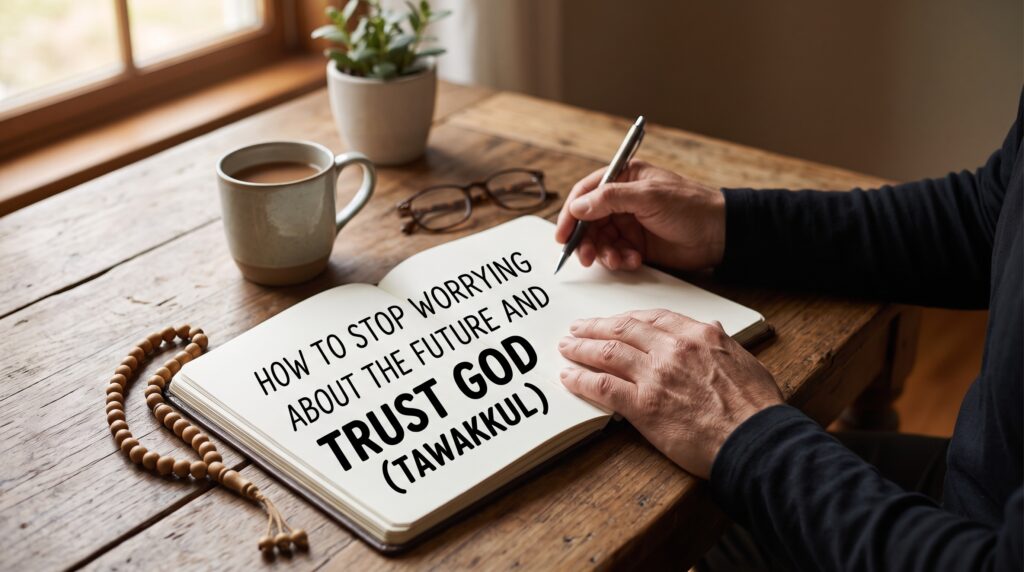
将来についての心配をやめてアッラーを信頼する方法: 明日のことを心配することは人間のストレスの最も一般的な原因の 1 つですが、人間には 1 秒たりとも未来を見通す力はありません。イスラム教では、この不確かさは人生の欠陥ではなく、私たちの地上の試練の意図的な部分です。このガイドでは、隠された未来の背後にある論理的な知恵を説明し、未来の本当の意味を明らかにします。 タワックル (誠実な努力と全面的な信頼を組み合わせることで、 アッラー)、考えすぎることを永続的な心の平和に置き換えるための実践的な毎日のステップを提供します。
目次
| セクションのタイトル | 解決された主な質問 |
|---|---|
| なぜ人間は将来のことをそれほど心配するのでしょうか | なぜ人間は明日を予測できないのか、そしてなぜすべての結果をコントロールしようとすることが不安を生み出すのか |
| 隠された未来の背後にある神の知恵 | もしアッラーがすべてをご存じなら、なぜ神は私たちから未来を隠しておいたのでしょう |
| 真のタワックルを理解する: 信頼と結びついた努力 | アッラーを信頼するとは受動的に待つことを意味するのでしょうか、それとも積極的な計画と努力が必要なのでしょうか? |
| 明日の考えすぎをやめる 5 つの実践的なステップ | 恐怖を静め、否定的なささやきを克服し、精神的な平穏を築くのに役立つ毎日の習慣は何ですか |
| ガイダンスセクション: 運命とタワックルに関するよくある誤解 | アッラーへの信者の信頼を歪める一般的な通説や未承認の慣習は何ですか |
| よくある質問 (FAQ) | 計画、経済的ストレス、遅延、日々のドゥアはアッラーへの信頼にどのように当てはまりますか |
なぜ人間は将来のことをそれほど心配するのでしょうか
人間は、過去の記憶、現在の認識、先を考える能力という独特の才能を持っています。計画を立てるのは健全ですが、自分ではコントロールできないことについて確実性を求めると不安が始まります。
論理的に言えば、宇宙のあらゆる出来事は無数の原因と結果の連鎖によってつながっているため、未来を確実に予測できる生き物は存在しません。主要なレースに向けてトレーニングをしているアスリートを想像してみてください。ジョギング中に野良犬が突然吠え、彼は驚いて怪我を負い、競技を欠場することになりました。その瞬間を予測するには、犬が吠えた理由、犬が以前に何を怖がらせたのか、犬を怖がらせた雷の背後にある気象パターン、その他相互に関連する何百万もの変数を誰かが知る必要があったでしょう。宇宙の創造者だけが、その現実の網全体を見て管理しています。
コーランは私たちに人間の限界とアッラーの完全な知識をはっきりと思い出させます。
“「確かに、アッラーはその時についての知識を持ち、雨を降らせ、子宮の中に何があるかをご存じである。そして、誰の魂も明日何を得るかを認識せず、どの魂がどの土地で死ぬかを認識しない。本当にアッラーは全知であり、精通しておられる。」 — スーラ・ルクマン (31:34)
“「そして、目に見えないものの鍵は彼とともにあります。彼以外には誰もそれを知りません。そして彼は陸と海の中にあるものを知っています。葉が一枚も落ちませんが、彼はそれを知っています。」 — スーラ アル アンアム (6:59)
明日は厳密にアッラーのものであることを受け入れるとき、私たちは心の中で宇宙全体を管理しようとする不可能な重荷から解放されます。
隠された未来の背後にある神の知恵
なぜアッラーは私たちの人生がどうなるのかを示さずに、私たちから未来を隠したのか疑問に思ったことはありますか?答えは人間の存在目的そのものにあります。
地球上の生命は、最終的な結果をもたらす場所として設計されているわけではありません。それは私たちの選択、意図、反応が記録される一時的で目的のある実験場です。あらゆる闘争の正確な結果をすでに知っているなら、忍耐には力は必要なく、誠実には勇気も必要なく、祈りは謙虚さを失うでしょう。今日は挫折のように見えても、明日は隠れた害からあなたを守ってくれるかもしれないし、簡単に得られるように見えても、困難な試練が待ち受けているかもしれない。
“「[彼]は、あなた方のうちどちらが行為において最も優れているかを試すために死と命を創造された方です。そして彼は力において高貴な御方であり、寛容な御方です。」 — スーラ・アル・マルク (67:2)
“「アッラーはいかなる魂にも、その能力を超えて負担を課すことはありません。」 — スーラ アル バカラ (2:286)
アッラーはあなたの力を超えた責任をあなたに課すことは決してないので、あらゆる不確実な状況は、パニックに陥るのではなく、誠実、忍耐、信仰を持って対応する機会となります。
真のタワックルを理解する: 信頼と結びついた努力
人々が心配事から抜け出せない主な理由は、誤解していることです タワックル (アッラーを信頼してください)。本当のタワクルは受動的希望的観測ではありません。それは、人間の能力の範囲内ですべてを行うことと、最終結果をすべての事柄を管理する者に委ねることとの間のバランスです。
宇宙は創造主によって確立された明確で公正な法則に基づいて運営されています。つまり、植えなければ収穫はなく、誠実な努力がなければ有意義な成長はありません。同時に、アッラーはすべてのものをペアで創造されました。つまり、あらゆる困難には、それに伴う救済の開口部が付いているということです。
“「そして、人間には努力すること以外に何も得られず、その努力が見られることになる。その時、人間はそれに対して最大限の報いを受けるだろう。」 — スーラ・アン・ナジム (53:39–41)
“「確かに、困難があれば[楽になる]からです。確かに、困難があれば[楽になります]。」 — スーラ・アッシュ・シャール (94:5–6)
“「そしてアッラーに頼る者には、彼だけで十分である。」 — スーラ・アット・タラク (65:3)
賢明に計画し、誠実に取り組み、その結果をアッラーの御手に委ねると、今日は生産的な行動をとり、明日の心配から精神的に自由になるという、両方の利点を得ることができます。
明日の考えすぎをやめる 5 つの実践的なステップ
慢性的な心配を克服するには、考え方と日常生活の両方を訓練する必要があります。心をグラウンディングするための実践的な原則を 5 つ紹介します。
1. 今この瞬間に自分を固定する
過去はすでに閉ざされており、未来はまだ到来していません。実際に選択をしたり、間違いを修正したり、良い種を蒔いたりできるのは、今だけです。自分自身に問いかけてください: 今日実行できる実践的なステップはありますか もしそうなら、知恵を持って受け入れてください。そうでない場合は、辛抱強く状況を受け入れ、手放してください。
2. 恐怖とパニックの原因を認識する
将来の貧困、失敗、損失への恐怖は、シャイタンが信者の自信を弱め、軽率な決断に駆り立てるために使用する主なツールの1つです。しかし、彼の影響力は単なるささやきにすぎません。アッラーにしっかりと根を下ろしている心に対して、彼は何の権限も持っていません。
“「サタンはあなたたちを貧困で脅し、不道徳を命じる一方、アッラーはあなたたちに赦しと恩恵を約束する。」 — スーラ アル バカラ (2:268)
“「確かに、主を信じて頼る者たちに対して、彼には何の権威もありません。」 — スーラ・アン・ナール (16:99)
3. ドゥアと追悼を日課にする
Dua は緊急時の最後の手段ではありません。散らばった思考を安定させるのは、創造主との毎日の会話です。一人で重荷を背負っているとストレスが倍増します。それらをアッラーに誠実に分かち合うとき、あなたの心は明晰さを取り戻します。
“Unquestionably, by the remembrance of Allah, hearts are assured.” — スーラ・アル・ラド (13:28)
4. 感謝を通じて平和を守る(シュクル)
心配は明日起こるかもしれないことに完全に焦点を当てており、今日すでにうまくいっていることに目が見えなくなります。感謝の気持ちは、あなたが現在持っている祝福、つまり健康、精神、家族、機会に焦点を戻し、アッラーの継続的なサポートを招きます。
“「そして、あなたの主がこう宣言されたときのことを[思い出してください]、『あなたが感謝しているなら、私は必ずあなたに[好意を]与えます…」 - スーラ・イブラヒム (14:7)
5. 外部の結果ではなく、創造主のために生きる
世俗的な評価や他人の承認だけを求めて生きている人は、状況や意見が常に変化するため、常に不安の中で生きています。正直で倫理的な行動を通じてアッラーを喜ばせることが主な目標であれば、外部の計画が成功するか方向性が変わるかに関係なく、あなたの内なる平安は損なわれません。
ガイダンスセクション: 運命とタワックルに関するよくある誤解
運命や信頼についての誤解が原因で、多くの人が不安に苦しんだり、非イスラム的な習慣に陥ったりしています。以下の表は、コーランの原則を使用して一般的な誤解を明確にしています。
| 誤解または実践 | なぜ欠陥があるのか | 真のコーランの導き |
|---|---|---|
| 受動的タワックル(働かずに待つ) | アッラーを信頼するということは、計画を立てたり、節約したり、努力をしたりすることを避けることを意味すると仮定すると、無視され避けられる困難が生じます。 | アッラーは信頼とともに誠実な努力を命じられます。アッラーが結果を管理する間、あなたの努力は報われます(スーラ・アン・ナジム53:39)。 |
| 星占い、手相、占い師をチェックする | 星座、手相、予言を読んで不安を軽減しようとすることは、推測と心理操作に依存します。 | 目に見えないものの知識は厳密にアッラーのみに属しており、占いを求めることは禁じられています(スーラ・アル・ジン 72:26; スーラ・アル・マイダ 5:3)。 |
| “「すべては書かれているので、私の選択は重要ではありません。」” | アッラーの予知を自由意志の欠如と混同すると、個人の責任がなくなり、絶望につながります。 | 出来事はアッラーの知る範囲内ですが、あなたの意図と努力は自由に選択され、責任を負うために記録されます。 |
| お守り、物品、または人間の仲介者に依存する | 指輪、石、シンボル、神殿が将来の幸運を確実なものにしてくれると信じると、信頼が創造主から遠ざかってしまいます。 | 真の信者は、仲介者を通さずに直接アッラーに尋ねます。アッラーだけが神のしもべにとって十分であることを知っています(スーラ・アト・タラク 65:3)。 |
よくある質問 (FAQ)
1. タワックルとは簡単に言うとどういう意味ですか?
タワックルとは、アッラーがあなたに与えてくださった知識、スキル、リソースを使って、現時点で正直に最善を尽くし、最終的な結果、つまりそれがあなたの望み通りになるか、あるいは別の道を歩むかについては、アッラーの知恵を完全に信頼することを意味します。
2. 不安を感じたり、将来の計画を立てたりするのは信仰の欠如ですか?
いいえ、人間としての自然な配慮を経験し、家族、健康、経済について責任を持って計画を立てることは賢明であり、推奨されます。不安が有害になるのは、恐怖によって行動が麻痺したり、アッラーの慈悲や配慮を疑ったりする場合だけです。
3. 経済的またはキャリア上の不確実性に直面したときに、考えすぎるのをやめるにはどうすればよいですか
自分がコントロールできるものとコントロールできないものを分けてください。スキルを更新し、機会に応募し、支出を賢明に管理し、心から祈りましょう。日々の努力を終えたら、糧は単一の雇用主や市場によってではなく、アッラーによって保証されていることを思い出してください。
4. なぜアッラーは信者たちを遅らせたり苦難を与えたりするのでしょうか?
遅れや困難はアッラーがあなたを見捨てたという兆候ではありません。むしろ、それらはあなたの忍耐力を磨き、誠実さを深め、目に見えない方法であなたを傷つける可能性のある道からあなたをそらすことがよくあります。
5. イスラム教では、占星術や未来予測をして準備ができていると感じることができますか?
いいえ、占星術、星占い、タロットカード、占いはイスラム教では拒否されています。なぜなら、目に見えないものについての知識を持っている被造物はいないからです。そのような主張に頼ると、実際的な推論やアッラーへの真の信頼から心が逸れてしまいます。
6. 毎日のドゥアは明日への不安を和らげるのにどのように役立ちますか
デュアは心配という重荷を肩から下ろします。自分が全知で最も慈悲深い創造主に依存していることを認めることによって、神経系の速度が下がり、思考がより明瞭になり、絶望が希望に置き換わります。

![Why is Life Not Perfect? Understanding the Design of Effort and Growth 5 Why is Life Not Perfect? Understanding the Design of Effort and Growth Content Summary Many people wonder why life is filled with challenges, limitations, and unanswered questions instead of effortless perfection. Through simple logic, observation of human nature, and timeless Quranic wisdom, this article explains that life on Earth was never meant to be a finished paradise. Instead, it is an intentional testing ground where human limitations, uncertainty, and daily effort work together to build character, resilience, cooperation, and lasting spiritual growth. Table of Contents Section Title Key Questions Addressed The Purpose Behind an Imperfect World Why isn't life on Earth effortlessly perfect? What is the true purpose of human existence? How Human Design Sparks Cooperation and Innovation Why were humans created physically weaker than many animals? How do our limitations drive growth? Why Uncertainty and Hardship Are Essential for Growth Why is the future hidden from us? How do struggles and changing circumstances shape human character? The Law of Effort, Intention, and Daily Habits How does sincere striving lead to success? What role do gratitude and repentance play when we make mistakes? Guidance: Common Misconceptions About Life's Struggles What common myths distort how people view hardship, mistakes, and an uncertain future? Frequently Asked Questions (FAQs) Clear answers to common questions about destiny, hardship, effort, and inner peace. The Purpose Behind an Imperfect World Almost every human being asks the same question at some point: If a Wise and Merciful Creator designed this universe, why is life so full of struggle, loss, and imperfection? The answer becomes clear when we look at what Earth is actually designed to be. Life in this world is not a final destination of endless comfort; rather, it is a temporary, purposeful testing ground. If life were completely painless, predictable, and effortless, human beings would never have a reason to think deeply, choose between right and wrong, show compassion, or develop inner strength. In the Quran, the Creator clearly explains the reason behind life and death: "He who created death and life to test you as to which of you is best in deed—and He is the Exalted in Might, the Forgiving." — Surah Al-Mulk (67:2) Imperfection in our surroundings is not a flaw in creation—it is the exact condition required for moral choice. Furthermore, human life is inherently tied to exertion and perseverance from beginning to end: "We have certainly created man in hardship." — Surah Al-Balad (90:4) When we stop expecting this temporary world to function like eternal paradise, our perspective shifts. Challenges stop looking like random accidents and start making sense as opportunities to prove our sincerity, patience, and integrity. How Human Design Sparks Cooperation and Innovation If you observe nature closely, you will notice something remarkable. Almost every animal enters the world equipped with everything it needs to survive in its environment. A cat does not need shoes, woven clothing, shelter-building tools, or cooked meals to endure the weather. Animals rely primarily on built-in physical strength and instinct. Human beings, however, were designed differently. Compared to many creatures, humans enter the world physically vulnerable and require years of care just to stand on their own. The Quran highlights this intentional aspect of our creation: "Allah wants to lighten for you [your difficulties]; and mankind was created weak." — Surah An-Nisa (4:28) Yet alongside this physical vulnerability, humans were given an extraordinary gift that no other earthly creature possesses: "He created man, [and] taught him speech." — Surah Ar-Rahman (55:3-4) Why Weakness Plus Speech Creates Growth This combination—a physically dependent body paired with advanced speech, memory, and reasoning—is the secret behind human civilization: Vulnerability creates interdependence: Because we cannot survive alone in harsh environments, we need families, communities, trade, shelter, and mutual support. Speech enables shared learning: Unlike animals that rely on short-term sensory instinct, humans attach words to experiences, store complex thoughts, write knowledge down, and pass wisdom to future generations. Necessity drives invention: Every tool, home, medicine, and technology exists because human beings had to overcome a limitation through thought and teamwork. If humans had been created physically invincible and completely self-sufficient, there would be no reason to cooperate, invent, teach, or care for one another. Our physical limits are the very sparks that ignite human intelligence and social unity. Why Uncertainty and Hardship Are Essential for Growth Another reason life feels imperfect is that we have zero control over tomorrow. No matter how much technology or data humanity gathers, no person knows what will happen in the next minute. The Quran reminds us of this universal boundary: "No soul knows what it will earn tomorrow, and no soul knows in what land it will die." — Surah Luqman (31:34) This hidden future is essential for real growth. If you already knew the exact outcome of every choice, courage, trust, and patience would lose all meaning. Because tomorrow is unseen, every decision you make today genuinely reflects your character and intentions. Ease and Difficulty Work in Pairs Life moves through changing seasons—youth and old age, health and illness, gain and loss. Both comfort and struggle serve as examinations of the human heart: "Every soul will taste death. And We test you with evil and with good as a trial. And to Us you will all return." — Surah Al-Anbiya (21:35) Crucially, hardship is never meant to crush the human spirit. Every difficulty is measured against our inner capacity, and relief is woven directly alongside struggle: "Allah does not burden any soul beyond its capacity." — Surah Al-Baqarah (2:286) "So surely, with hardship comes ease. Indeed, with hardship comes ease." — Surah Ash-Sharh (94:5-6) When you face an obstacle calmly, your mind learns problem-solving, your ego softens into humility, and your heart discovers resilience you never knew you had. The Law of Effort, Intention, and Daily Habits In a world designed for growth, wishful thinking alone produces nothing. Human progress operates on a clear, fair law of cause and effect: you receive the fruit of what you sincerely work toward. "And that man will have nothing except what he strives for, and his effort will be seen, then he will be fully rewarded for it." — Surah An-Najm (53:39-41) Practical Principles for Navigating an Imperfect Life Focus on Intention Over Outcomes: You cannot always control external results, but you have complete control over why you act. Events test your circumstances, while your intention defines your moral worth. Plant Good Daily Seeds: Every small action is like a seed. Repeated honesty, patience, and kindness grow into strong, rooted character, just as good words bring lasting benefit: "Have you not considered how Allah presents an example: a good word is like a good tree—its root firm and its branches in the sky. It gives its fruit at all times by the permission of its Lord." — Surah Ibrahim (14:24-25) Protect Blessings Through Gratitude: Health, time, intelligence, and opportunities grow when appreciated and used responsibly, while carelessness causes them to fade: "...If you are grateful, I will surely increase you..." — Surah Ibrahim (14:7) Learn From Mistakes Without Despair: Because humans enter the world without innate knowledge and learn step by step, making mistakes is natural. Imperfection does not mean hopelessness; sincere correction turns past errors into future wisdom: "Except for those who repent, believe, and do righteous deeds—for them Allah will replace their bad deeds with good deeds. And Allah is ever Forgiving, Merciful." — Surah Al-Furqan (25:70) Guidance: Common Misconceptions About Life's Struggles When people misunderstand why life is imperfect, they often fall into despair, blame, or unhelpful habits. The table below clarifies common misconceptions using Quranic wisdom and practical logic. Common Misconception / Ignorance Quranic Reality & Logical Truth "Hardship means the Creator is angry with me or has abandoned me." Both ease and hardship are natural tests of character (Surah Al-Anbiya 21:35). Struggles build patience, clarify priorities, and unlock hidden ease (Surah Ash-Sharh 94:5-6). "True success means achieving a problem-free, effortless life on Earth." Earth is a temporary testing ground for effort and moral growth (Surah Al-Mulk 67:2). Complete, effortless perfection belongs only to the eternal Hereafter. "Consulting horoscopes, palmists, or fortune-tellers can remove life's uncertainty." No created being knows tomorrow (Surah Luqman 31:34). Relying on guesswork distracts from practical planning, sincere effort (Surah An-Najm 53:39), and prayerful trust. "If I make repeated mistakes, I am permanently ruined and cannot change." Humans are lifelong learners who naturally stumble. Sincere repentance and corrected action wipe away past stains and transform character (Surah Al-Furqan 25:70). Frequently Asked Questions (FAQs) 1. Why didn't the Creator make human beings physically stronger like other animals? Humans were created physically dependent so they would rely on cooperation, family bonds, and intelligence rather than brute force. Combined with the gift of speech and reasoning, this vulnerability motivated humanity to build communities, invent tools, and share knowledge across generations. 2. If everything is known by the Creator, why does my daily effort still matter? While the Creator has complete knowledge of all things, the future remains hidden from you. Because you do not know tomorrow, your choices, intentions, and efforts today are completely real and voluntary. You are judged by how sincerely you strive within your knowledge and capacity, not by outcomes beyond your control. 3. Does experiencing pain or delay mean I am failing in life? No. Delays, obstacles, and pain are natural parts of human growth—just as muscles only strengthen under resistance. In Quranic wisdom, hardship is always paired with ease and serves to purify your intentions, teach patience, and prepare you for greater responsibility. 4. How should I respond when I feel overwhelmed by life's problems? Start by focusing on the present moment rather than replaying past regrets or worrying about an unknown future. Break the problem into what is within your control, take practical steps with patience, ask the Creator for guidance through sincere prayer (Dua), and trust that no soul is burdened beyond what it can bear. 5. Why do good people also face difficult trials? Trials are not exclusively punishments; they are often instruments of elevation and purification. Even the greatest prophets and most righteous people faced severe hardships so their patience, gratitude, and trust in truth could shine as examples for others. 6. What is the single best mindset for living peacefully in an imperfect world? Live with gratitude for what you have, sincerity in what you do today, kindness toward others, and humility when you make mistakes. When you view every situation—good or difficult—as an opportunity to do what is right, inner peace replaces frustration.](https://islamforeveryone.org/wp-content/uploads/2026/11/Why-is-Life-Not-Perfect-Understanding-the-Design-of-Effort-and-Growth-1024x572.jpg)