Content Summary
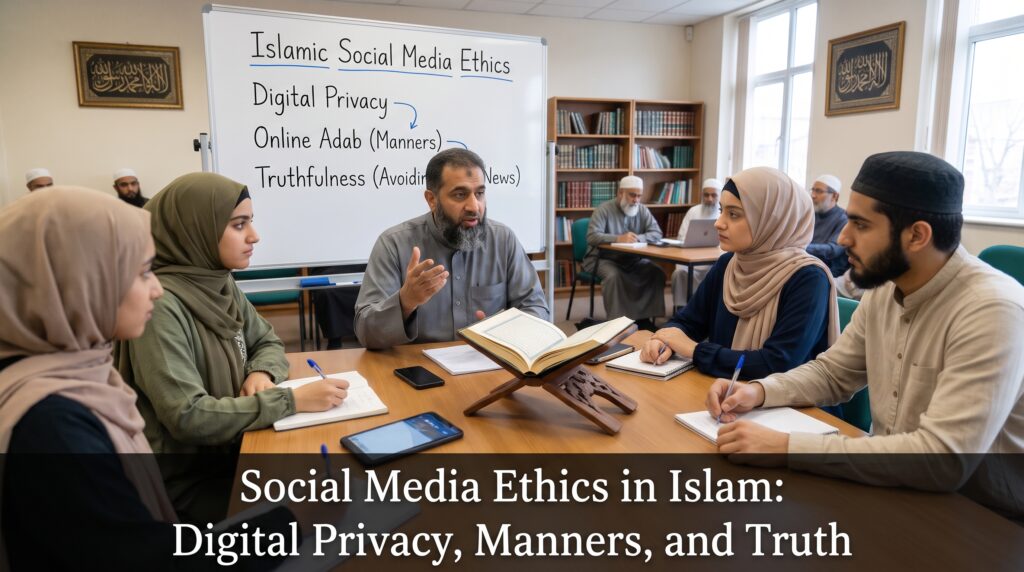
Social Media Ethics in Islam: In today’s hyper-connected world, social media has transformed how we communicate, learn, and build relationships. With a single tap, our words and images can reach thousands of people across the globe. However, this immense digital power comes with profound moral responsibility. The screens we use daily often create a false sense of anonymity, leading many to abandon their manners, invade others’ privacy, and spread unverified information. By exploring the timeless wisdom found in the document “Humanity By Quran,” we discover that Islamic ethics provide a perfect, practical framework for navigating the digital age. In this post, we will explore how Islam views digital privacy, online manners, and the strict duty to uphold truth on social media.
Table of Contents
| Section Title | Key Questions Addressed |
|---|---|
| The Digital Tongue: Why Online Words Matter | Do the words we type carry the same moral weight as the words we speak? |
| The Duty to Verify: Stopping the Spread of Fake News | How does Islam guide us in handling viral posts and forwarded messages? |
| Digital Privacy and the Danger of Assumptions | Why is stalking profiles and making assumptions considered harmful? |
| Online Manners: Ending Cyberbullying and Mockery | What is the Islamic stance on trolling, insults, and leaving harsh comments? |
| Modesty on the Screen: Lowering the Digital Gaze | How do we maintain respectful and modest interactions online? |
| Guidance Section | How do practical Quranic truths counter modern digital misconceptions? |
The Digital Tongue: Why Online Words Matter
When we type a comment on a post, send a quick text, or share a status update, it is easy to forget that these digital texts are extensions of our speech. According to the insights in “Humanity By Quran,” the human ability to communicate is a divine superpower and a profound trust.
Because we cannot physically see the person we are typing to, the screen often acts as a shield, making people feel bold enough to say things they would never say in person. But in Islam, the physical absence of a person does not remove our accountability. Every keystroke, comment, and shared post is recorded in our permanent spiritual record.
“Not a word does he utter but that there is an observer near him ready [to record].” (Surah Qaf 50:18)
Our digital footprint is not just stored on servers; it is documented by angels. Therefore, the ethics of communication apply just as strictly to our online behavior. Before we hit “send” or “post,” a conscious believer must ask: Is this true? Is this kind? Does this bring value, or does it cause harm?
The Duty to Verify: Stopping the Spread of Fake News
Social media is designed for speed. Platforms encourage us to share, retweet, and forward information instantly. Unfortunately, this speed is often weaponized to spread fake news, rumors, and panic.
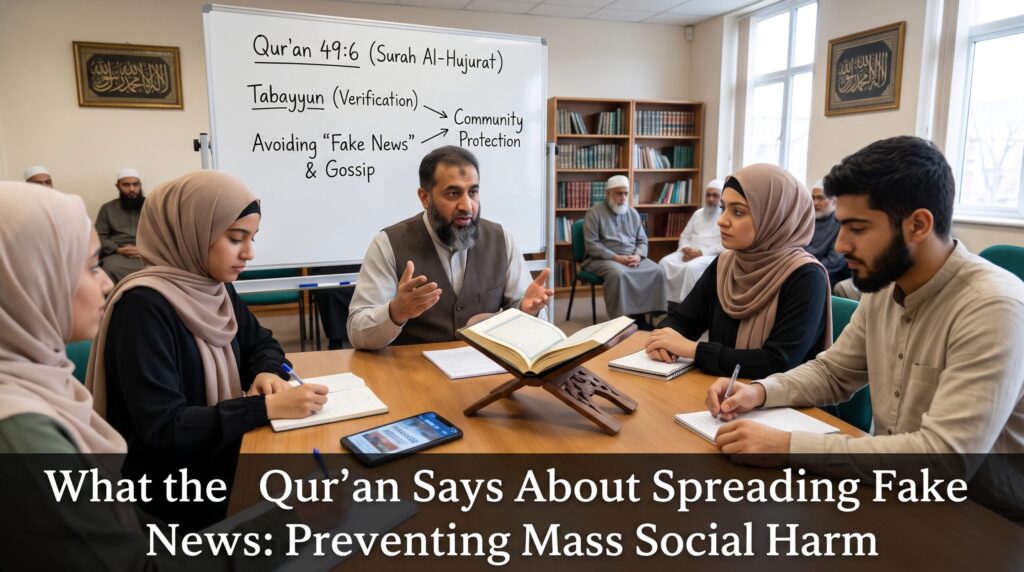
“Humanity by Quran” emphasizes that words have the ability to “fly in a powerful way,” capable of destroying society’s foundational trust. Forwarding a fabricated quote, an unverified video, or a false accusation can ruin an innocent person’s reputation or incite community violence. To prevent this mass social harm, the Qur’an established the ultimate journalistic standard over 1,400 years ago:
“O you who have believed, if there comes to you a disobedient one with information, investigate, lest you harm a people out of ignorance and become, over what you have done, regretful.” (Surah Al-Hujurat 49:6)
In the digital age, this means we must verify the source of a viral post before sharing it. If we cannot confirm its absolute truth, the most ethical choice is to remain silent. Spreading unverified news makes us active participants in whatever injustice that news causes.
Digital Privacy and the Danger of Assumptions
Social media often blur the lines between public life and private boundaries. It is incredibly easy to spend hours silently watching someone else’s life, analyzing their photos, and making assumptions about their wealth, happiness, or character.
Islam places a massive emphasis on respecting human privacy and thinking well of others. Constantly monitoring someone’s online activity (digital stalking) and drawing negative conclusions based on fragmented posts are toxic behaviors that destroy inner peace and community trust.
“O you who have believed, avoid much assumption. Indeed, some assumption is sin. And do not spy or backbite each other…” (Surah Al-Hujurat 49:12)
We must respect digital boundaries. What people choose not to share is just as important as what they post. We are commanded to avoid “spying” on others’ faults and to give our brothers and sisters the benefit of the doubt, protecting our own hearts from jealousy and unwarranted suspicion.
Online Manners: Ending Cyberbullying and Mockery
The internet can often feel like a harsh environment. “Cancel culture,” cyberbullying, trolling, and leaving cruel comments have become normalized forms of entertainment. People often band together to mock an individual’s appearance, mistakes, or opinions.
“Humanity By Quran” highlights that society survives on trust, justice, and the protection of human dignity. Stripping someone of their dignity through online mockery is a severe moral violation.
“Let not one person mock another person… and do not insult one another nor call each other by offensive nicknames…” (Surah Al-Hujurat 49:11)
Furthermore, if we face harshness online, Islam teaches us the power of emotional discipline. Instead of fighting fire with fire in the comment section, a believer is encouraged to respond with peace or simply ignore the ignorance. Repelling online toxicity with patience and a better word is a sign of immense strength and emotional maturity.
Modesty on the Screen: Lowering the Digital Gaze
Modesty (Haya) is not just about physical clothing; it is a comprehensive state of mind that governs how we interact with the world, including the digital one. Social media algorithms are designed to capture our attention, often promoting immodest or inappropriate content.
As highlighted in “Humanity By Quran,” the human brain records every experience, and exposure to indecency leaves lasting mental and emotional imprints. Islam commands both men and women to practice self-control and guard their modesty to maintain a pure and peaceful society.
“Tell the believing men to lower their gaze and guard their private parts. That is purer for them… And tell the believing women to lower their gaze and guard their modesty…” (Surah An-Nur 24:30-31)
Lowering the gaze applies directly to our screens. Scrolling past inappropriate content, avoiding illicit digital interactions, and maintaining respectful, professional boundaries in direct messages are modern applications of this timeless command. By protecting our digital gaze, we protect our mental health, our marriages, and our spiritual clarity.
Guidance Section
| Topic / Concept | Common Misconception or Ignorance | The Practical Truth (Based on Quranic Guidance) |
|---|---|---|
| Digital Accountability | What I do online isn’t “real life,” so the rules of manners and sin don’t apply to my anonymous comments. | Your digital actions are real actions. Every typed word and shared post is recorded by angels. You are fully accountable for your online behavior on the Day of Judgment. |
| Sharing Viral Posts | If everyone is sharing a piece of news, it is safe for me to forward it, even if I haven’t checked it. | Forwarding unverified news is dangerous and forbidden. The Qur’an commands us to investigate information to prevent harming innocent people out of ignorance. |
| Online Privacy | If someone has a public profile, it is my right to spy on their activity, judge their life, and spread assumptions. | Spying, digital stalking, and making assumptions are major sins that destroy trust. Islam demands we respect privacy and avoid searching for the faults of others. |
A Sincere Invitation
True understanding comes from direct reflection and an open heart. We warmly invite you to read the Holy Quran at least once in your lifetime, in a language you fully understand. Let your own mind observe the wisdom, logic, and profound peace it offers to humanity.
Frequently Asked Questions (FAQs)
1. Are online comments considered “speech” in Islam? Yes. In Islam, any method of communicating a thought—whether spoken, written, or typed—carries the exact same moral weight. An online comment can be a source of great reward or a recorded sin, depending on its content.
2. What is the Islamic view on cyberbullying? Islam strictly prohibits cyberbullying. Mocking others, calling them offensive nicknames, or ganging up to humiliate someone online directly violates the commands found in Surah Al-Hujurat, which protect human dignity.
3. Am I responsible for the fake news I forward? Absolutely. If you share or forward unverified information that turns out to be false and harms someone, you share in the moral burden of that lie. We are commanded to investigate news before spreading it.
4. How does “lowering the gaze” apply to social media? Lowering the gaze means immediately scrolling past or clicking away from inappropriate, immodest, or unlawful content on your screen. It is a necessary practice to protect your mind, your spiritual purity, and your moral boundaries.
5. How should I respond to a “troll” or someone insulting me online? Islam advises responding to ignorance with peace. You can repel evil with a kind word, or, if the person is merely seeking a fight, the wisest choice is to disengage, block them, and walk away to preserve your own peace.