内容概要
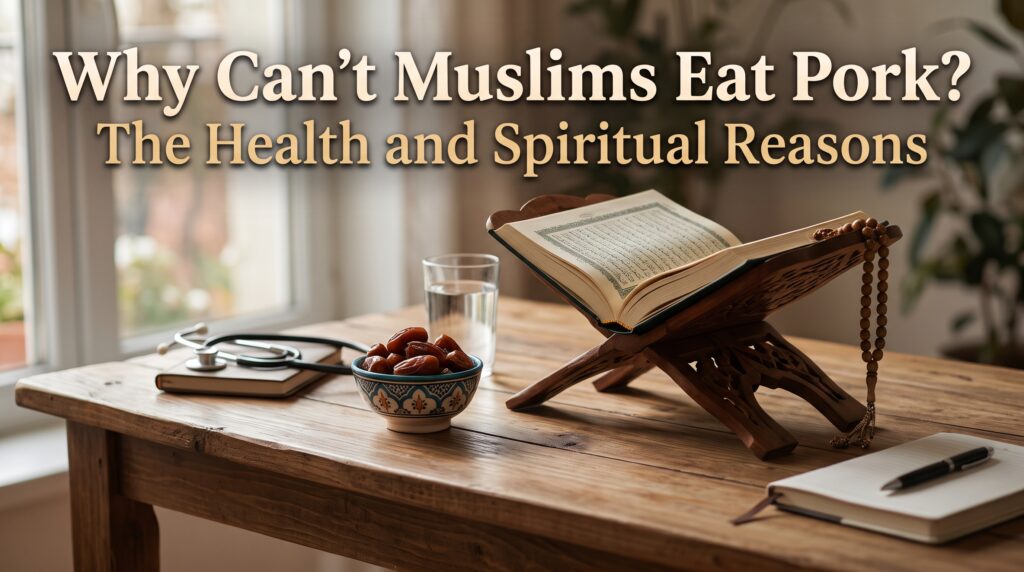
Why Can’t Muslims Eat Pork?: For millions of people around the world, one of the most recognizable aspects of the Islamic lifestyle is the avoidance of pork. While many associate this rule strictly with hygiene or ancient health concerns, Islam views dietary laws through a much deeper lens. In the Quran, avoiding pork is primarily an act of conscious obedience to the One Creator, designed to purify both the human body and soul while protecting physical well-being. This guide explores the spiritual wisdom, Quranic foundations, and practical health reasons behind why Muslims do not eat pork.
目录
| 章节标题 | 解决的关键问题 |
|---|---|
| Understanding the Core Reason: Obedience to the Creator | What is the primary reason Muslims avoid pork? Does God need our obedience, or are dietary laws made for human benefit? |
| Spiritual Reasons Behind the Prohibition of Pork | How does food affect spiritual purity? What does the Quran say about self-discipline, human nature (菲特拉), and life-threatening emergencies? |
| Practical Health and Biological Reasons | What are the biological and medical concerns linked to pork? How do a pig’s diet, parasites, and fat profile affect human health? |
| Guidance Section: Common Misconceptions vs. Quranic Reality | Do Muslims hate pigs? Is the rule outdated because of modern farming? What happens if a Muslim is starving? |
| 常见问题 (FAQ) | Do other religions forbid pork? Is pork gelatin or lard allowed? What happens if a Muslim eats pork by mistake? |
Understanding the Core Reason: Obedience to the Creator
When people ask why Muslims do not eat pork, the simplest and most honest answer is because the Creator commanded it in the Holy Quran.
In Islam, life on Earth is understood as a temporary, purposeful test of human choices, self-control, and accountability. Every human being is given free will and reason to choose between what is beneficial and what is harmful. The Creator does not set boundaries to restrict human joy, nor does He gain anything from our obedience—He is completely free of all need. Instead, every divine instruction is designed to safeguard human health, dignity, and inner peace.
“人类啊,你们是需要安拉的人,而安拉是免于一切需要的,是值得赞美的。” — 法提尔古兰经 (35:15)
In the Quran, the prohibition of pork is stated clearly and directly alongside a few other harmful substances:
“He has only forbidden to you dead animals, blood, the flesh of swine, and that which has been dedicated to other than Allah. But whoever is forced [by necessity], neither desiring [it] nor transgressing [its limit], there is no sin upon him. Indeed, Allah is Forgiving and Merciful.” — Surah Al-Baqarah (2:173)
Notice how specific and limited this list is. Out of the vast variety of foods available on Earth, only a tiny fraction is restricted. For a Muslim, following this instruction is a daily reminder that human wisdom is limited, whereas the Creator’s knowledge encompasses everything.
Spiritual Reasons Behind the Prohibition of Pork
To understand Islamic dietary laws, it helps to look at how Islam connects physical habits with inner spiritual growth.
1. Purifying the Body and Soul (Tayyib 与. Rijs)
The Quran consistently encourages human beings to eat food that is not only lawful (清真) but also pure, clean, and wholesome (Tayyib). What we put into our bodies influences our physical vitality, mental clarity, and spiritual receptivity.
“O mankind, eat from whatever is on earth [that is] lawful and good (halalan tayyiban) and do not follow the footsteps of Satan. Indeed, he is to you a clear enemy.” — Surah Al-Baqarah (2:168)
When describing pork, the Quran uses the Arabic word rijs, which refers to something inherently impure, unclean, or harmful to human nature:
“Say, ‘I do not find within that which was revealed to me [anything] forbidden to one who would eat it unless it be a dead animal or blood spilled out or the flesh of swine—for indeed, it is impure (rijs)—or it be [that slaughtered in] disobedience, dedicated to other than Allah…'” — Surah Al-An’am (6:145)
Islam teaches that humans are born upon a pure natural disposition (菲特拉), and true success comes from keeping both the body and soul clean from physical and moral impurities.
“Whoever purifies his soul succeeds, and whoever corrupts it fails.” — 沙姆斯古兰经 (91:9-10)
2. Mastering Desires Through Self-Discipline
Human beings are physically fragile compared to many animals, yet we are honored with intellect, speech, and moral responsibility. If a person follows every physical impulse without restraint, desires begin to control the mind. By willingly giving up certain foods solely out of respect for the Creator’s command, a believer builds inner strength, mindfulness, and self-mastery—the same discipline cultivated during fasting.
3. Divine Mercy Over Rigid Ritualism
A remarkable feature of the Quran is its practicality and mercy. Islam never demands self-destruction in the name of ritual rules. As mentioned in Surah Al-Baqarah (2:173), if a person is facing starvation in an emergency and no other food is available, eating pork is completely permitted to preserve human life. Saving a human life always takes priority.
Practical Health and Biological Reasons
While spiritual obedience is the primary reason Muslims avoid pork, the Creator of nature designs laws that align with human biology. When we observe nature and medical science, several practical health concerns explain why pork is considered harmful to the human body.
Scavenging Diet and Toxin Accumulation
Unlike grazing animals such as cows, sheep, or goats—which eat grass, grains, and plants—pigs are natural omnivorous scavengers. In nature, they consume almost anything, including decaying matter, waste, and carrion. Biologically, a pig digests food rapidly (often within four hours), leaving little time for its body to filter out toxins. Additionally, pigs possess very few functional sweat glands, meaning more metabolic waste and environmental toxins remain stored inside their fatty tissues.
Parasites and Foodborne Pathogens
Medical history and modern food safety studies show that pork carries a notably higher risk of transmitting parasites and pathogens to humans if undercooked or improperly handled:
- Trichinosis: Caused by the roundworm Trichinella spiralis, which embeds in pig muscle tissue and can migrate to human muscles, causing fever, muscle pain, and heart or nervous system complications.
- Pork Tapeworm (Taenia solium): Ingesting larval cysts can lead to intestinal tapeworms or neurocysticercosis, a serious condition where larvae travel to the human brain and trigger seizures.
- Viral and Bacterial Infections: Pork has been linked to higher rates of Hepatitis E transmission, Yersinia enterocolitica, 和 Salmonella contamination.
High Saturated Fat and Cardiovascular Strain
Pork products are typically dense in saturated fats and cholesterol compared to leaner meats. Overconsumption of heavy, toxin-retaining animal fats places extra strain on human digestion and cardiovascular health.
| 方面 | Wholesome Diet (Halal & Tayyib) | Pork Consumption |
|---|---|---|
| Spiritual Impact | Strengthens self-discipline, gratitude, and alignment with human nature (菲特拉). | Violates clear Quranic guidance unless consumed under life-threatening necessity. |
| Animal Diet & Biology | Herbivorous livestock with slower digestion that filters toxins effectively. | Scavenging omnivore with rapid digestion and minimal sweat glands, retaining toxins in fat. |
| Health & Hygiene Risk | Lower parasitic load when properly prepared and ethically sourced. | Higher susceptibility to parasites (Trichinella, tapeworms) and pathogens like Hepatitis E. |
Guidance Section: Common Misconceptions vs. Quranic Reality
Many misunderstandings surround why Muslims avoid pork. The table below clarifies common myths using direct Quranic principles.
| 常见的误解 | Purpose Ignorance or Myth | Clear Quranic & Practical Reality |
|---|---|---|
| “Muslims hate pigs and view them as evil.” | Assuming dietary prohibition equals hatred or cruelty toward an animal. | Pigs are part of the Creator’s creation. Islam forbids eating their flesh while strictly forbidding cruelty to any living creature. |
| “Modern farming and cooking make the ban outdated.” | Believing the rule existed only because ancient people lacked refrigerators or meat thermometers. | While modern cooking lowers some parasite risks, the Quranic command is a timeless spiritual boundary and holistic health safeguard for all eras. |
| “A Muslim must starve rather than eat pork.” | Viewing Islamic law as harsh or inflexible during survival situations. | The Quran explicitly allows eating pork in life-threatening emergencies when no lawful food exists (Surah Al-Baqarah 2:173). |
| “Avoiding pork is the only rule for Halal food.” | Reducing Islamic dietary ethics to merely skipping one type of meat. | Islam requires food to be both 清真 (lawful) and Tayyib (clean, healthy, ethically sourced, and purchased with honest earnings). |
| “Only Muslims are forbidden from eating pork.” | Thinking this dietary restriction was newly invented in Islam. | Earlier scriptures revealed to Prophets Moses and Jesus also prohibited eating swine, showing continuity in divine guidance. |
常见问题 (FAQ)
1. Do other religions also forbid eating pork?
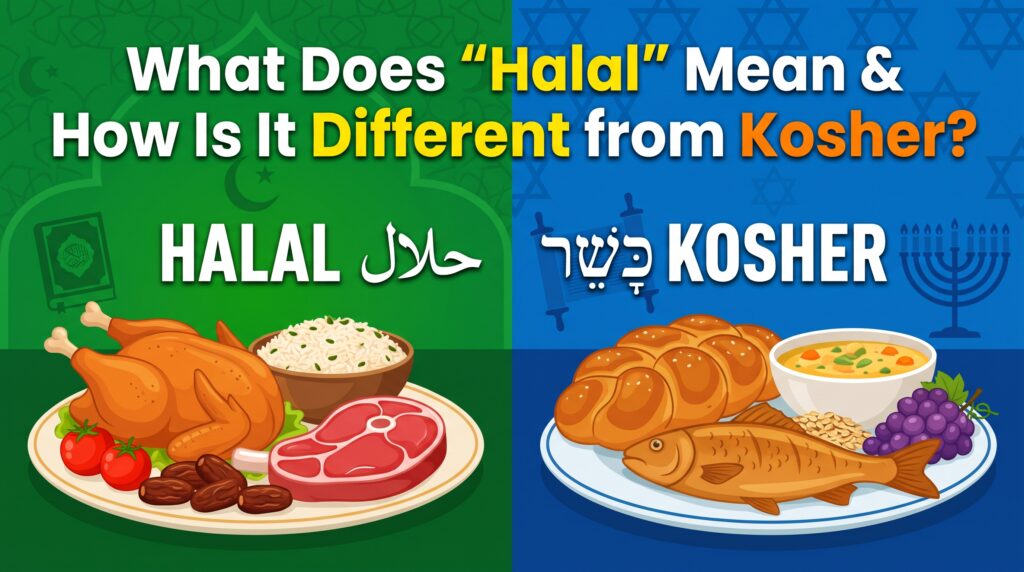
Yes. Judaism strictly prohibits pork under Kosher dietary laws, and the Old Testament (such as Leviticus 11:7 and Deuteronomy 14:8) clearly forbids eating swine. Many early Christian communities also abstained from pork, following the teachings of previous Prophets.
2. Why did God create pigs if humans are not supposed to eat them?
Every creature on Earth plays a role in the natural ecosystem—not everything is created for human consumption. Pigs act as natural scavengers that clean up waste in the environment, much like vultures or hyenas, which humans also do not eat.
3. Can Muslims eat pork if they are starving and have no other food?
Yes. In Islam, preserving human life is paramount. If someone is in a life-or-death situation with no lawful food available, the Quran (Surah Al-Baqarah 2:173) permits eating just enough to survive without any sin.
4. What happens if a Muslim accidentally eats pork?
If a Muslim eats pork unknowingly or by mistake, there is no sin upon them. Once they realize it, they simply stop eating it and seek Allah’s forgiveness. Accountability in Islam is based on conscious intention and choice.
5. Are pork byproducts like gelatin, lard, and enzymes also forbidden?
Yes. Because the flesh and fat of swine are prohibited, Muslims also avoid ingredients derived from pigs, such as pork gelatin (often used in candies and capsules), lard (used in baking), and pork-based enzymes.
6. Is touching a pig a sin in Islam?
Touching a pig is not a sin, though its saliva and waste are considered physically impure (najis), meaning a Muslim simply washes the area thoroughly with water before praying. Eating its meat, however, is strictly forbidden.


 English
 Bengali
 Chinese
 Dutch
 French
 German
 Greek
 Hindi
 Indonesian
 Italian
 Japanese
 Korean
 Marathi
 Latin
 Portuguese
 Russian
 Spanish
 Swahili
 Telugu
 Vietnamese