Tóm tắt nội dung
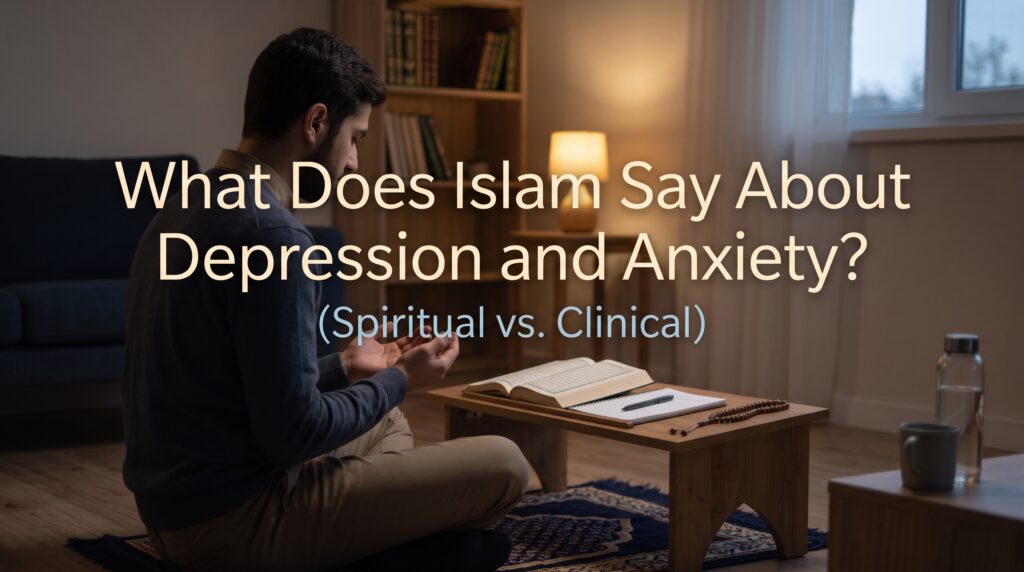
What Does Islam Say About Depression and Anxiety: Depression and anxiety affect millions of people worldwide, yet many believers struggle to understand whether their pain is a clinical health condition or a spiritual test. In Islam, human beings are understood as a balanced combination of physical design and spiritual purpose. Because our bodies and minds are subject to the natural laws of creation, clinical conditions require medical care and therapy, while spiritual unrest calls for inner alignment, patience, and remembrance of the Người sáng tạo. This guide clarifies the difference between spiritual and clinical mental health, shares practical Quranic wisdom for emotional resilience, and addresses common cultural misconceptions.
Mục lục
| Tiêu đề phần | Các câu hỏi chính đã được giải quyết |
|---|---|
| Understanding Human Design: Why Do We Feel Sadness and Fear? | Why did the Creator make humans emotionally sensitive? Does feeling sad or anxious mean a person has weak faith? |
| Clinical vs. Spiritual: Two Sides of Mental Well-Being | How does Islam view clinical brain health compared to spiritual emptiness? When should you seek medical help versus spiritual reflection? |
| Practical Quranic Wisdom for Overcoming Anxiety and Despair | How do Quranic principles help calm overthinking about the future, overcome past regrets, and counter hopelessness? |
| Common Misconceptions About Mental Health in Islam | What cultural myths, spiritual innovations, and harmful stigmas surround depression and anxiety? |
| Câu hỏi thường gặp (FAQ) | Can a devout Muslim experience clinical depression? Does taking medication contradict trust in Allah? |
Understanding Human Design: Why Do We Feel Sadness and Fear?
To understand mental health in Islam, we must first look at how human beings are designed. Unlike other creatures that rely purely on instinct, humans were created with deep emotional awareness, free will, and physical vulnerability. The Quran openly acknowledges this natural human fragility:
“Allah wants to lighten for you [your difficulties]; and mankind was created weak.” — Surah An-Nisa (4:28)
“We have certainly created man in hardship.” — Surah Al-Balad (90:4)
Life on Earth is not designed to be a place of constant comfort or perfection; rather, it is a temporary testing ground filled with alternating seasons of ease and struggle. Fear, grief, loss, and emotional weight are built into the human experience so that we learn patience, empathy, and resilience.
“And we will surely test you with something of fear, hunger, and loss of wealth, lives, and fruits. But give good news to those who are patient.” — Surah Al-Baqarah (2:155)
Experiencing sadness or worry is not a sign of failure or a lack of faith. Even the most righteous individuals in history felt profound grief and distress during overwhelming trials. Islam recognizes these emotions as natural responses to life’s pressures while guiding us on how to manage them constructively.
Clinical vs. Spiritual: Two Sides of Mental Well-Being
One of the most helpful steps toward healing is recognizing that human well-being has both a physical (clinical) dimension and an inner (spiritual) dimension. Confusing the two often delays recovery.
The Clinical Dimension: The Brain as a Physical Organ
Just like the heart, lungs, or digestive system, the human brain is a physical organ governed by the natural laws that the Creator placed in the universe. The brain records every sensory experience and memory, and prolonged stress, trauma, genetics, or biological imbalances can disrupt how it regulates mood and fear.
When these biological systems become overwhelmed, a person may experience clinical depression or an anxiety disorder. Islam encourages humans to study nature, value medical science, and seek practical cures for physical ailments. Consulting a qualified doctor, therapist, or psychiatrist is an act of wisdom and stewardship over the body entrusted to you.
The Spiritual Dimension: Inner Purpose and Peace
Alongside physical health, every human possesses an inner self (nafs) and a natural disposition (fitrah) that seeks meaning, justice, and connection with the One Unseen Creator. When a person lives solely for the approval of others, chases temporary material validation, or disconnects from moral accountability, a deep inner emptiness often follows.
“Whoever turns away from My remembrance will have a life of hardship…” — Surah Ta-Ha (20:124)
Conversely, grounding the heart in gratitude, sincere purpose, and connection with the Creator brings lasting inner stability even when external circumstances are difficult:
“Chắc chắn, khi tưởng nhớ đến Allah, trái tim sẽ tìm thấy sự bình yên.” — Surah Ar-Ra'd (13:28)
Comparing Clinical and Spiritual Distress
| Diện mạo | Clinical Depression & Anxiety | Spiritual Distress & Unrest |
|---|---|---|
| Primary Root | Biological factors, brain chemistry, genetics, chronic stress, or unresolved trauma. | Disconnection from purpose, living for others’ approval, unresolved guilt, or neglecting values. |
| Key Symptoms | Persistent fatigue, sleep/appetite changes, panic attacks, inability to feel joy, and brain fog. | Feeling purposeless, moral confusion, constant discontentment, and fear of the unknown. |
| Primary Remedies | Professional therapy, counseling, medical evaluation, medication, and healthy sleep/exercise. | Sincere prayer (Dừa), self-reflection, gratitude, repentance, and aligning daily habits with truth. |
| Islamic Perspective | Treated as a physical health condition; seeking medical treatment is strongly encouraged. | Treated as an awakening of the soul; resolved by returning to the Creator with humility and patience. |
In reality, both dimensions often interact. Physical exhaustion can make worship feel heavy, while spiritual hopelessness can worsen physical stress. Addressing both body and soul offers the most complete path to healing.
Practical Quranic Wisdom for Overcoming Anxiety and Despair
Whether you are navigating clinical treatment or everyday emotional stress, the Quran provides timeless, logical principles that protect the mind from spiraling into despair.
1. Live in the Present Instead of Fearing the Unknown
Anxiety thrives on trying to control tomorrow, while depression often traps the mind in the pain of yesterday. Islam teaches a balanced realism: human knowledge is limited, and no one knows what will happen in the next hour.
“…Không linh hồn nào biết ngày mai mình sẽ kiếm được gì, và không linh hồn nào biết mình sẽ chết ở vùng đất nào…” — Surah Luqman (31:34)
Instead of exhausting your mind over an unseen future, focus on what is within your control right now. Take practical steps toward solutions today, and entrust the final outcome to Allah (Tawakkul).
“And whoever relies upon Allah—He is sufficient for him…” — Surah At-Talaq (65:3)
2. Recognize Whispers of Hopelessness
In Islamic understanding, Shaytan (Satan) has no physical power over human beings; his only tool is whispering (waswasah) to amplify fear, insecurity, and despair. He tries to convince a struggling person that their situation will never improve or that they are beyond forgiveness.
“Satan threatens you with poverty and commands you to immorality…” — Surah Al-Baqarah (2:268)
The Quran counters these dark thoughts with three comforting truths: your Creator knows your exact limits, relief is paired with every struggle, and His mercy is always open.
“Allah không tạo gánh nặng cho bất kỳ linh hồn nào vượt quá khả năng của nó.” — Surah Al-Baqarah (2:286)
“Chắc chắn khó khăn sẽ tạo nên sự dễ dàng. Quả thực, có khó khăn sẽ tạo nên sự dễ dàng.” — Surah Ash-Sharh (94:5–6)
“Hãy nói, ‘Hỡi những tôi tớ của Ta, những người đã vi phạm chính mình [bằng cách phạm tội], đừng thất vọng về lòng thương xót của Allah. Quả thực, Allah tha thứ mọi tội lỗi. Quả thực, chính Ngài là Đấng Tha thứ, Đấng Khoan dung.'” - Surah Az-Zumar (39:53)
3. Anchor Your Day with Structure and Personal Prayer
Depression often disrupts daily routines, leading to isolation and irregular sleep. The five daily prayers (lễ Salah) gently structure the day around natural cycles—dawn, midday, afternoon, sunset, and night—providing physical movement, cleanliness, and quiet mental pauses.
“Và hãy tìm kiếm sự giúp đỡ bằng sự kiên nhẫn và cầu nguyện, và quả thực, điều đó thật khó khăn ngoại trừ những người khiêm tốn phục tùng [Allah].” — Surah Al-Baqarah (2:45)
Alongside formal prayer, daily Dừa (personal conversation with Allah) allows you to unload every unspoken fear, tear, and worry directly to the One who understands your heart completely.
Common Misconceptions About Mental Health in Islam
Cultural habits and misunderstandings sometimes prevent people from getting the help they need. The table below clarifies common myths using clear Quranic logic.
| Quan niệm sai lầm hoặc thực hành phổ biến | Tại sao nó sai | Authentic Islamic Guidance |
|---|---|---|
| “Depression only happens to people with weak faith.” | This ignores human biology and the reality that life is a test of hardship and ease for everyone. | Mental illness can affect any human body; faith provides resilience during the storm, not immunity from illness. |
| “Taking antidepressants or seeing a therapist shows a lack of trust in Allah.” | Refusing medical care ignores the natural laws and healing tools Allah placed in creation. | True trust (Tawakkul) combines taking practical medical steps with praying to Allah for recovery. |
| “Visiting fortune-tellers, wearing charms, or asking saints/graves will cure anxiety.” | Relying on superstitions, omens, or intermediaries contradicts pure monotheism and exploits vulnerable people. | Only Allah controls harm and benefit; seek help directly from Allah through prayer while using ethical medical care. |
| “You must hide your struggles and never admit you are hurting.” | Suffering in silence increases isolation and prevents families from offering compassionate support. | Islam values kindness, community care, and honesty; seeking wise counsel and support is healthy and encouraged. |
Câu hỏi thường gặp (FAQ)
1. Can a devout Muslim suffer from clinical depression or anxiety?
Yes. Clinical depression and anxiety are health conditions linked to brain chemistry, stress, and life circumstances. Being a sincere believer does not make a person immune to physical or mental illness, just as it does not make them immune to a broken bone or diabetes.
2. Is feeling depressed or anxious considered a sin in Islam?
No. Involuntary feelings of sadness, fear, or emotional heaviness are not sins. Allah judges human beings based on their sincere intentions and efforts within their capacity, not on emotional pain beyond their control.
3. Does Islam allow therapy and psychiatric medication?
Yes. Islam encourages seeking medical treatment for all health conditions. Working with licensed therapists, counselors, and doctors to restore mental balance aligns completely with Islamic principles of preserving life and well-being.
4. What is the difference between normal sadness and clinical depression?
Normal sadness is usually tied to a specific event and gradually eases with time, prayer, and support. Clinical depression is a persistent medical condition lasting weeks or months that impairs daily functioning, sleep, energy, and concentration, requiring professional care.
5. How does daily prayer (lễ Salah) help with anxiety?
lễ Salah interrupts cycles of anxious overthinking by anchoring the mind in the present moment five times a day. Its structured physical movements, calm recitation, and focus on humility help regulate breathing and remind the heart that Allah is in control.
6. Are intrusive, negative thoughts (Waswasah) held against a believer?
No. Unwanted thoughts that pass through the mind—especially when they cause distress—are not recorded as sins as long as a person does not act upon them. Recognizing them as temporary noise and shifting focus back to beneficial action weakens their hold.
7. What should I do if someone I love is struggling with depression?
Listen with patience and empathy without judging their faith. Encourage them gently to speak with a healthcare professional, help them with practical daily tasks, and remind them of Allah’s mercy and love.
 English
 Bengali
 Chinese
 Dutch
 French
 German
 Greek
 Hindi
 Indonesian
 Italian
 Japanese
 Korean
 Marathi
 Latin
 Portuguese
 Russian
 Spanish
 Swahili
 Telugu
 Vietnamese