Riepilogo dei contenuti
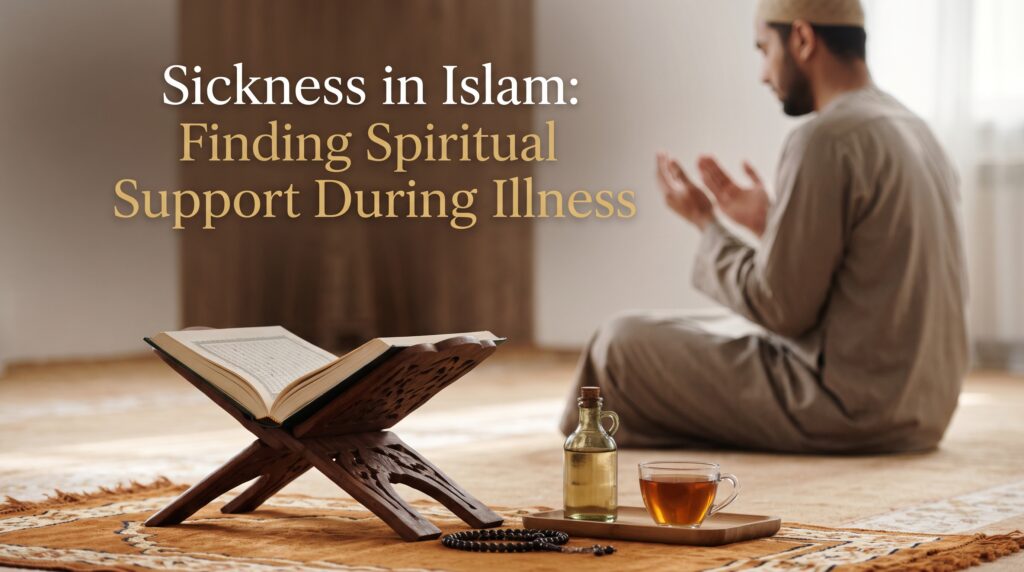
Sickness in Islam: Illness is one of the most challenging experiences any human being can face, often bringing physical pain alongside emotional stress and uncertainty. In Islam, sickness is not viewed as a random misfortune or a curse but as a natural part of human vulnerability and a purposeful test of faith, patience, and resilience. By understanding our human design, turning directly to Allah in prayer, and seeking proper medical care, believers can find deep inner peace, spiritual purification, and strength during times of physical hardship.
Sommario
| Titolo della sezione | Domande chiave affrontate |
|---|---|
| Understanding Human Design and Sickness | Why are humans physically vulnerable, and how does illness remind us of our dependence on the Creator? |
| Illness as a Purposeful Test, Not a Curse | How does Islam view suffering, and what spiritual rewards come from enduring sickness with patience? |
| Practical Steps for Spiritual and Physical Healing | How can a believer balance direct prayer (Dua), gratitude, and modern medical treatment during illness? |
| Guidance: Common Misconceptions About Illness | What cultural myths, superstitions, or un-Islamic practices should be avoided when seeking a cure? |
| Domande frequenti (FAQ) | What are the practical rules and spiritual answers to common questions about being sick in Islam? |
Understanding Human Design and Sickness
To understand how to cope with sickness spiritually, we must first look at how human beings are designed. Unlike animals that are born with thick fur, sharp claws, or natural armor to survive harsh environments, human beings were intentionally created with a physically delicate and vulnerable body. This vulnerability is not a flaw; rather, it is a deliberate part of our creation that teaches humility, encourages human cooperation, and reminds us that we are never truly self-sufficient.
The Quran highlights this fundamental reality of our physical nature:
“Allah wants to lighten for you [your difficulties]; and mankind was created weak.” — Sura An-Nisa (4:28)
When we are healthy, it is easy to feel independent and in complete control of our lives. However, a simple fever or sudden illness quickly reminds us of our limits. In Islam, recognizing this weakness is the first step toward spiritual strength. It shifts our focus away from worldly distractions and reconnects our hearts with the One who sustains every breath we take.
Illness as a Purposeful Test, Not a Curse
A common question people ask when struck by pain is, “Why is this happening to me?” Islam provides a clear, logical, and comforting answer: life on Earth is a temporary testing ground designed to measure our choices, intentions, and responses under changing conditions. Just as we are tested with wealth, health, and ease, we are also tested with hardship and physical pain.
The Quran explains this balance of life clearly:
“Ogni anima assaggerà la morte. E noi ti metteremo alla prova con il male e con il bene come prova, e a noi sarai restituito.” — Sura Al-Anbiya (21:35)
“E sicuramente ti metteremo alla prova con qualcosa di paura, fame e perdita di ricchezza, vite e frutti, ma daremo la buona novella al paziente.” — Sura Al-Baqarah (2:155)
Importantly, Allah never tests a person beyond what their soul can handle, and He never pairs a hardship without attaching relief and ease alongside it:
“Allah non addebita alcun costo ad un’anima se non [quella che rientra] nelle sue capacità”. — Sura Al-Baqarah (2:286)
“Infatti, nelle difficoltà [sarà] la facilità. In verità, nelle difficoltà [sarà] la facilità.” — Sura Ash-Sharh (94:5-6)
To help believers understand the hidden mercy behind this Quranic test, Prophet Muhammad (peace be upon him) explained how physical pain acts as a spiritual cleanser for the soul:
“No fatigue, nor disease, nor sorrow, nor sadness, nor hurt, nor distress befalls a Muslim, even if it were the prick he receives from a thorn, but that Allah expiates some of his sins for that.” — Sahih al-Bukhari (5641)
When a believer views sickness through this lens, pain stops feeling meaningless. Every moment of endurance becomes an opportunity for spiritual elevation and forgiveness.
Practical Steps for Spiritual and Physical Healing
Islam does not ask people to passively suffer; instead, it offers a balanced framework that nurtures both the soul and the body. True spiritual support during illness comes from combining inner connection with practical action.
1. Turning Directly to Allah Through Dua and Remembrance
In Islam, there are no barriers or intermediaries between a sick person and their Creator. You do not need a saint, a sacred object, or a special ritual to reach Allah. Whispering a sincere prayer from your hospital bed or home carries immense weight. Prophet Ibrahim (Abraham) demonstrated this pure reliance on Allah when he said:
“And when I am ill, it is He who cures me.” — Surah Ash-Shu’ara (26:80)
Making regular Dua (supplication) and engaging in the quiet remembrance of Allah calms anxiety and grounds the mind when physical pain feels overwhelming:
“E il tuo Signore dice: ‘Invocami; io ti risponderò.'” — Sura Ghafir (40:60)
“Sicuramente, nel ricordo di Allah i cuori trovano la pace.” — Sura Ar-Ra'd (13:28)
2. Practicing Patience (Sabr) and Gratitude (Shukr)
True worship in Islam is defined by praising the Creator with patience during hardship and gratitude during ease. Patience (Sabr) does not mean pretending that pain does not hurt; it means avoiding panic, despair, or bitterness while staying focused on the present moment.
“E cerca aiuto attraverso la pazienza e la preghiera, e in effetti, è difficile tranne che per chi è umilmente sottomesso [ad Allah]”. — Sura Al-Baqarah (2:45)
Even during severe illness, practicing gratitude (Shukr) for the blessings that remain—such as caring family members, access to medicine, or the ability to breathe and think—protects the heart from falling into depression.
3. Seeking Medical Treatment as a Responsibility
Physical health is a trust from Allah that sustains our ability to live responsibly and serve others. Studying medical science, visiting qualified doctors, and taking prescribed medication do not contradict faith; they are essential parts of trusting Allah (Tawakkul). True trust means taking every practical step within your reach while leaving the final outcome to the Creator.
Prophet Muhammad (peace be upon him) explicitly encouraged seeking medical cures:
“There is no disease that Allah has created, except that He also has created its treatment.” — Sahih al-Bukhari (5678)
Guidance: Common Misconceptions About Illness
Over time, cultural habits and superstitions have created several misunderstandings about sickness. The table below clarifies common misconceptions against the authentic teachings of the Quran and Sunnah.
| Idea sbagliata o pratica | Perché non è corretto | Authentic Islamic Guidance |
|---|---|---|
| Believing sickness is a curse or bad omen | Viewing disease as a supernatural curse or bad luck leads to fear, blame, and spiritual despair. | Sickness is a natural biological reality and a purposeful test from Allah designed to purify the soul and build resilience. |
| Seeking cures from graves, saints, or fortune-tellers | Calling upon the dead, saints, or astrologers compromises pure monotheism (Tawhid) and relies on creation rather than the Creator. | Direct your prayers solely to Allah, the only One who holds power over life, health, and healing. |
| Relying on charms, amulets, or superstitious objects | Hanging beads, strings, or unverified talismans for protection creates false dependency on physical objects. | Seek healing through direct Quranic supplication, remembrance of Allah, and proven medical science. |
| Refusing medical care in the name of “trusting Allah” | Neglecting physical health is a form of carelessness, as our bodies are a sacred trust we must protect. | Combine sincere prayer with practical medical treatment; effort and trust in Allah always go hand in hand. |
Domande frequenti (FAQ)
1. Is sickness always a punishment from Allah for past sins? No. While hardship can serve as a wake-up call to reflect on our lives, sickness is primarily a test of faith and patience. Even the most righteous Prophets experienced severe physical illnesses, proving that sickness is a means of spiritual elevation rather than a sign of Allah’s anger.
2. How should I pray (Salah) if I am too weak or bedridden? Islam is a religion of ease and practicality. If you cannot stand during prayer, you may pray sitting down. If you cannot sit, you may pray lying on your side or back, making gestures with your head or eyes. Allah never burdens a soul beyond its physical capacity.
3. Is it permissible to feel sad or cry when suffering from a painful illness? Yes. Feeling sadness, shedding tears, or expressing physical pain to your doctor or family is completely natural and human. Patience in Islam means avoiding anger toward Allah and refraining from destructive behavior, not suppressing natural human emotions.
4. Why doesn’t Allah always grant immediate physical recovery when we make Dua? Allah answers every sincere Dua in the way that is best for us. Sometimes He grants immediate physical healing; other times, He uses the ongoing trial to erase sins, strengthen our character, or reserve an even greater eternal reward in the Hereafter.
5. What is a Muslim’s responsibility toward someone who is sick? Visiting the sick, offering kind and comforting words, respecting their rest and privacy, and helping with their practical needs are deeply valued acts of worship in Islam. A believer’s presence should always be a source of safety, comfort, and hope for those who are suffering.
6. Should a sick person still fast during Ramadan? No. If fasting will worsen an illness, delay recovery, or cause severe physical harm, the Quran explicitly exempts the sick person from fasting. They can either make up the missed days once they recover or, if the illness is chronic and permanent, feed a needy person for each missed day.

 English
 Bengali
 Chinese
 Dutch
 French
 German
 Greek
 Hindi
 Indonesian
 Italian
 Japanese
 Korean
 Marathi
 Latin
 Portuguese
 Russian
 Spanish
 Swahili
 Telugu
 Vietnamese