Riepilogo dei contenuti
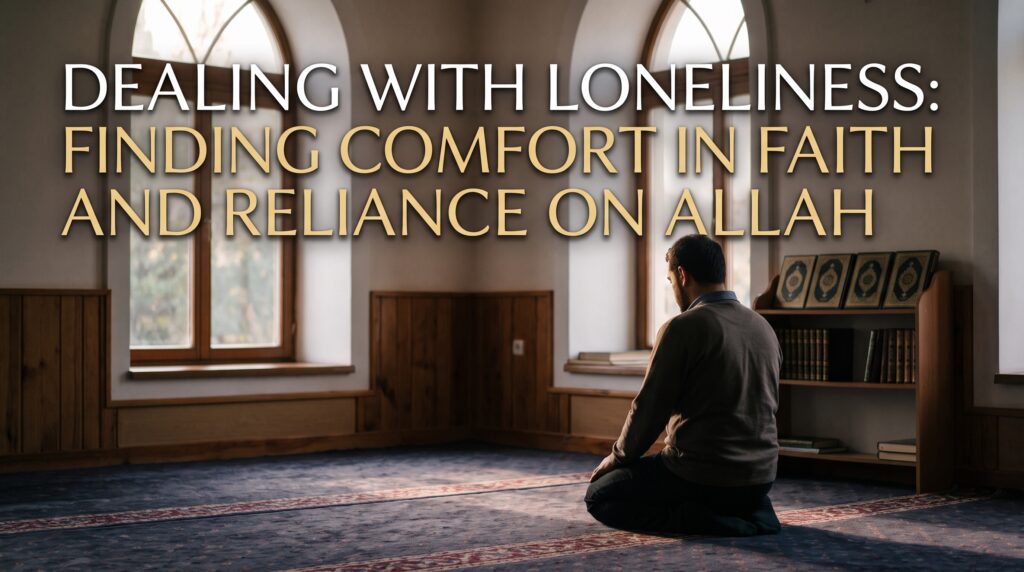
Dealing with Loneliness: Finding Comfort in Faith and Reliance on Allah: Loneliness is one of the most common emotional struggles in the modern world, affecting people even when they are surrounded by family, friends, or social media. From an Islamic perspective, feeling a longing for connection is not a flaw in faith; it is a natural result of how human beings were designed to depend on one another and on their Creatore. This guide explains why loneliness happens, why human relationships alone cannot fill every space in the heart, and how sincere reliance on Allah (Tawakkul), daily remembrance, and purposeful kindness bring lasting comfort and inner peace.
Sommario
| Titolo della sezione | Domande chiave affrontate |
|---|---|
| Why Do Human Beings Feel Lonely? Understanding Our Design | Why do humans naturally crave companionship? Is feeling lonely a sign of weak faith or a natural part of life’s test? |
| Why People Cannot Fill Every Space in the Heart | Why do we still feel empty when we live for others’ approval? How does centering life on the Creator bring emotional stability? |
| Finding True Comfort Through Reliance on Allah (Tawakkul) | How do Dua and remembrance calm a lonely heart? How can we protect our minds from whispers of despair and isolation? |
| Practical Steps to Overcome Loneliness in Daily Life | What daily habits, prayers, and acts of kindness help break emotional isolation and build meaningful connection? |
| Islamic Guidance: Common Misconceptions About Loneliness | What cultural myths and un-Islamic practices surround loneliness, and how does authentic Quranic wisdom correct them? |
| Domande frequenti (FAQ) | What is the difference between healthy solitude and harmful isolation? How do we handle loneliness late at night? |
Why Do Human Beings Feel Lonely? Understanding Our Design
To understand why loneliness hurts so deeply, it helps to look at how human beings were created. Unlike other creatures that rely purely on physical strength and instinct to survive alone, humans were intentionally created physically vulnerable and deeply social.
“Allah wants to lighten for you [your difficulties]; and mankind was created weak.” — Sura An-Nisa (4:28)
Because of this natural vulnerability, human beings were designed to live in pairs, families, and communities. We were given the gift of speech so we could share thoughts, express emotions, learn from one another, and build supportive societies.
“And among His signs is that He created for you spouses from among yourselves so that you may find tranquility in them, and He placed between you affection and mercy. Indeed, in that are signs for a people who reflect.” — Sura Ar-Rum (30:21)
“O mankind, indeed, we have created you from male and female and made you peoples and tribes that you may know one another…” — Sura Al-Hujurat (49:13)
When distance, loss, misunderstanding, or life changes interrupt those bonds, the heart naturally feels an ache. Recognizing this design removes unnecessary guilt: feeling lonely does not mean you are ungrateful or weak in faith. Life on Earth is a temporary journey filled with shifting seasons of companionship and solitude, ease and hardship, designed to test our patience and resilience.
“And we will surely test you with something of fear, hunger, and loss of wealth, lives, and fruits. But give good news to those who are patient.” — Sura Al-Baqarah (2:155)
Why People Cannot Fill Every Space in the Heart
While family and good friends are wonderful blessings, expecting human beings to completely cure loneliness often leads to deeper disappointment. Every human being has limited time, limited energy, and limited understanding. Even the people who love you most cannot read your unspoken thoughts or remain beside you in every moment of life.
In daily life, people generally fall into one of three emotional patterns:
- Living for others’ approval: Placing all emotional security in people’s attention or praise. When people become busy, distant, or critical, self-worth collapses and deep loneliness follows.
- Living only for oneself: Focusing strictly on personal desires and isolation, which creates temporary comfort but long-term emptiness.
- Living for the One Unseen Creator: Anchoring the heart in purpose, moral clarity, and connection with Allah, which brings inner stability whether people stand beside you or walk away.
Human beings are inherently dependent, whereas Allah alone is completely self-sufficient and eternal.
“O umanità, voi siete quelli che hanno bisogno di Allah, mentre Allah è Libero da ogni bisogno, il Degno di lode.” — Sura Fatir (35:15)
When your primary emotional anchor is Allah, human relationships become healthy blessings rather than desperate lifelines.
Finding True Comfort Through Reliance on Allah (Tawakkul)
True relief from loneliness begins when the heart realizes that being physically alone is never the same as being abandoned.
1. Recognizing That You Are Never Unseen
No matter how quiet your room is, your Creator knows every breath, tear, and silent thought passing through your mind.
“Vision perceives Him not, but He perceives all vision, and He is the Subtle, the All-Aware.” — Surah Al-An’am (6:103)
“Your Lord says: Call upon Me; I will respond to you…” — Sura Ghafir (40:60)
2. Turning Silence into Dialogue Through Dua and Remembrance
Consider two people experiencing the same season of isolation. One carries the entire emotional weight alone; their thoughts scatter, anxiety grows, and every small worry feels overwhelming. The other turns to Allah in sincere Dua (personal prayer), speaking openly about their pain and trusting His wisdom. Even before their external situation changes, their heart settles because they know they are heard and supported.
“Sicuramente, nel ricordo di Allah i cuori trovano la pace.” — Sura Ar-Ra'd (13:28)
“And whoever relies upon Allah—He is sufficient for him…” — Sura At-Talaq (65:3)
3. Rejecting Whispers of Hopelessness
Loneliness becomes dangerous when Shaytan (Satan) uses quiet moments to whisper self-pity, fear, and despair—convincing you that nobody cares or that things will never improve. In reality, Shaytan has no real power over a believer; his only tool is suggestion. When you respond to lonely thoughts by remembering Allah, those whispers lose their grip.
“He has no authority over those who believe and rely upon their Lord.” — Sura An-Nahl (16:99)
Practical Steps to Overcome Loneliness in Daily Life
Faith works best when paired with practical, steady action. Here are four simple steps to heal loneliness in everyday life:
- Anchor Your Day with the Five Daily Prayers (Salah): Loneliness often disrupts sleep and daily structure. The five daily prayers reconnect your day to natural rhythms—dawn, midday, afternoon, sunset, and night—offering moments of calm reflection and opportunities to stand alongside others in the mosque.
- Become a Source of Safety and Kindness for Others: One of the fastest ways to break out of loneliness is to stop waiting for someone to rescue you and instead become a source of goodness for someone else. A warm greeting, checking on a neighbor, helping someone in need, or speaking a gentle word plants a seed of connection. “…And speak to people good words…” — Sura Al-Baqarah (2:83)
- Live in the Present Instead of Replaying the Past: Loneliness grows heavier when the mind stays trapped in painful memories or worries about an unseen tomorrow. Focus on what good you can do today, knowing that every hardship is paired with relief. “So surely, with hardship comes ease. Indeed, with hardship comes ease.” — Sura Ash-Sharh (94: 5–6)
- Nurture Healthy, Values-Based Community: Surround yourself with people who value honesty, kindness, and mutual respect. Even one or two sincere friendships built on good character bring far more peace than a crowd of superficial acquaintances.
Islamic Guidance: Common Misconceptions About Loneliness
Cultural habits and misunderstandings sometimes push lonely people toward unhealthy mindsets or practices outside authentic Islamic teachings. The table below clarifies common misconceptions with clear Quranic guidance.
| Idea o pratica sbagliata comune | Perché è fuorviante | Autentica guida coranica |
|---|---|---|
| “Feeling lonely means Allah has forgotten or rejected you.” | Trials and seasons of solitude are natural parts of human testing, not proof of divine anger. | Allah tests believers through various losses and emotions to build patience, and His mercy and nearness remain constant. |
| “Using charms, horoscopes, fortune-tellers, or asking graves/saints will bring companionship.” | Relying on superstitions or intermediaries contradicts pure monotheism and exploits vulnerable hearts. | Only Allah controls benefit and harm; direct your prayers and hopes to Allah alone without intermediaries (Sura Yunus 10:18). |
| “Cutting off all family and social ties is a sign of high spirituality.” | Permanent isolation goes against human nature and neglects our responsibility to bring value and safety to society. | Islam encourages balanced worship alongside kindness to parents, relatives, neighbors, and those in need (Surah Al-Baqarah 2:177). |
Domande frequenti (FAQ)
1. Does feeling lonely mean my faith (Iman) is weak?
No. Humans were created with a natural need for companionship and emotional warmth. Feeling sad or lonely when you lack close company is a normal human emotion, not a sign of weak faith. Faith guides how you respond to that feeling with patience and trust in Allah.
2. What is the difference between healthy solitude and harmful isolation?
Healthy solitude is intentional quiet time used for prayer, self-reflection, gratitude, and resting the mind. Harmful isolation happens when despair or fear causes you to cut off beneficial relationships, neglect responsibilities, and drown in negative self-talk.
3. How can I feel closer to Allah when I am completely alone?
Start by speaking to Allah honestly in your own words during Dua, reciting or listening to the Quran with reflection on its meaning, and keeping your five daily prayers unhurried. Remembering that Allah hears every word transforms an empty room into a space of peace.
4. Why do I still feel lonely even when I am around family or friends?
Loneliness is often about feeling unseen or lacking shared purpose rather than physical proximity. When relationships focus only on surface-level matters or seeking approval, the heart still feels empty. Cultivating sincere conversations and grounding your identity in pleasing Allah restores inner fulfillment.
5. What should I do when lonely thoughts become overwhelming late at night?
Avoid spiraling into endless scrolling or overthinking. Wash up, pray two units of voluntary night prayer, pour your feelings out to Allah in Dua, and remind yourself that you do not have to solve tomorrow tonight. Rest your mind in trust that Allah is managing your affairs.
6. When should someone seek professional or community support for loneliness?
If chronic loneliness begins affecting your sleep, appetite, daily energy, or leads to persistent hopelessness, reach out both to trusted, supportive community members and a qualified counselor or healthcare professional. Seeking wise help is an encouraged, practical step toward well-being.



 English
 Bengali
 Chinese
 Dutch
 French
 German
 Greek
 Hindi
 Indonesian
 Italian
 Japanese
 Korean
 Marathi
 Latin
 Portuguese
 Russian
 Spanish
 Swahili
 Telugu
 Vietnamese