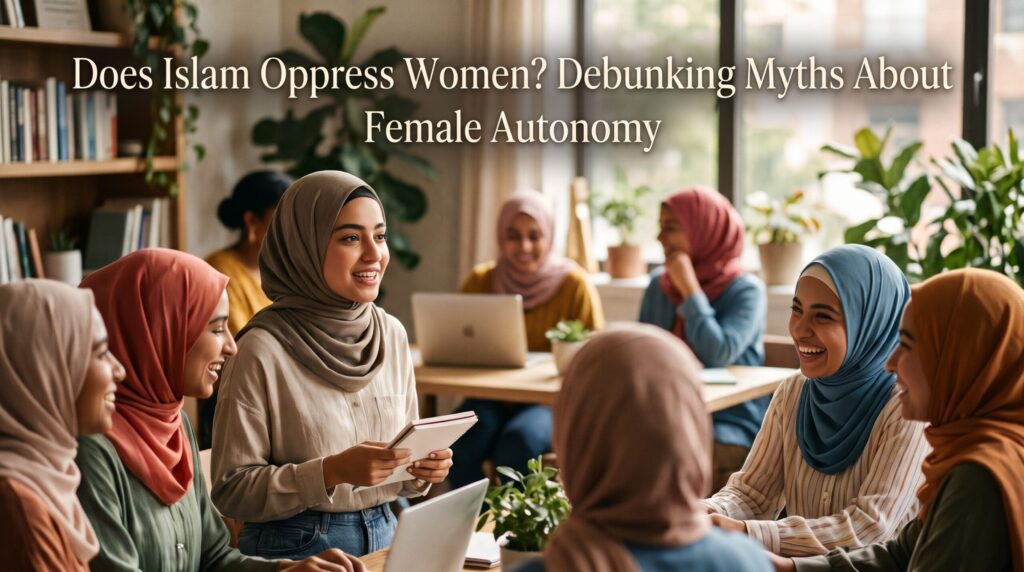
सामग्री सारांश
क्या इस्लाम महिलाओं पर अत्याचार करता है? महिला स्वायत्तता के बारे में मिथकों का खंडन: यह दावा कि इस्लाम स्वाभाविक रूप से महिलाओं पर अत्याचार करता है, समकालीन चर्चा में सबसे व्यापक गलतफहमियों में से एक है। यह ग़लतफ़हमी अक्सर क्षेत्रीय पितृसत्तात्मक रीति-रिवाजों को दैवीय रहस्योद्घाटन के साथ मिलाने से उत्पन्न होती है। वास्तव में, इस्लामी कानून ने चौदह शताब्दियों पहले व्यापक महिला कानूनी व्यक्तित्व, वित्तीय स्वतंत्रता, आध्यात्मिक समानता और प्रजनन अधिकारों की स्थापना की थी - उस समय जब विश्व स्तर पर महिलाओं को संपत्ति के रूप में माना जाता था। यह लेख कुरान के सिद्धांतों, जैविक वास्तविकताओं और सामाजिक संतुलन के लेंस के माध्यम से इस्लाम में महिला स्वायत्तता की जांच करता है, आम मिथकों को व्यवस्थित रूप से खारिज करता है और मानव गरिमा के लिए दिव्य खाका पर प्रकाश डालता है।
विषयसूची
| अनुभाग शीर्षक | मुख्य प्रश्न संबोधित |
|---|---|
| 1. पुरुषों और महिलाओं की आध्यात्मिक और नैतिक समानता | क्या इस्लाम महिलाओं को आध्यात्मिक रूप से पुरुषों से कमतर मानता है? कुरान सृष्टिकर्ता के समक्ष मानव मूल्य को कैसे परिभाषित करता है? |
| 2. कानूनी पहचान और पूर्ण वित्तीय स्वतंत्रता | क्या मुस्लिम महिला शादी के बाद अपनी कानूनी पहचान खो देती है? उसकी निजी संपत्ति और सम्पत्ति पर उसका क्या अधिकार है? |
| 3. सहमति, विवाह और तलाक के अधिकार में स्वायत्तता | क्या इस्लाम में किसी महिला की उसकी इच्छा के विरुद्ध शादी की जा सकती है? महिलाओं के लिए अव्यवहार्य विवाह को समाप्त करने के लिए कौन से कानूनी तंत्र मौजूद हैं |
| 4. प्रामाणिक ईश्वरीय कानून को सांस्कृतिक पितृसत्ता से अलग करना | स्थानीय सांस्कृतिक प्रथाओं को गलती से इस्लामी शिक्षाएँ क्यों समझ लिया जाता है? इस्लाम महिलाओं को शोषण से कैसे बचाता है? |
1. पुरुषों और महिलाओं की आध्यात्मिक और नैतिक समानता
इस्लाम के ख़िलाफ़ लगाया गया एक केंद्रीय आरोप यह है कि यह महिलाओं को आध्यात्मिक रूप से पुरुषों के अधीन मानता है। हालाँकि, कुरान की वस्तुनिष्ठ परीक्षा से आध्यात्मिक और नैतिक समानता का एक समझौता न करने वाला मानक सामने आता है।
इस्लाम में, आध्यात्मिक बड़प्पन का जैविक लिंग, सामाजिक पद या धन से कोई लेना-देना नहीं है। सृष्टिकर्ता के समक्ष श्रेष्ठता की एकमात्र कसौटी है तक्वा (ईश्वर-चेतना, धार्मिकता और नैतिक अखंडता):
“हे मानव जाति, वास्तव में, हमने तुम्हें नर और मादा से पैदा किया है और तुम्हारे लिए जातियाँ और जनजातियाँ बनाई हैं ताकि तुम एक दूसरे को जान सको। वास्तव में, अल्लाह की दृष्टि में तुममें से जो सबसे महान है, वह तुममें से सबसे अधिक धर्मी है। वास्तव में, अल्लाह जानने वाला और जानने वाला है।”
— सूरह अल-हुजुरात (49:13)
पुरुष और महिला दोनों के पास एक व्यक्तिगत आत्मा होती है (नफ्स), स्वतंत्र इच्छा, बौद्धिक एजेंसी, और व्यक्तिगत नैतिक जवाबदेही। कोई भी लिंग मानवता के मूल पाप को सहन नहीं करता है; कुरान में आदम और हव्वा को उनकी गलती के लिए संयुक्त रूप से जिम्मेदार बताया गया है, दोनों क्षमा मांग रहे हैं, और दोनों समान रूप से ईश्वरीय क्षमा प्राप्त कर रहे हैं।
इसके अलावा, दैवीय न्याय नेक कार्यों के लिए समान आध्यात्मिक पुरस्कार का वादा करता है:
“और जो कोई ईमान लाते हुए नेक काम करेगा, चाहे पुरुष हो या महिला, वह जन्नत में प्रवेश करेगा और उस पर खजूर के बीज के कण के बराबर भी अत्याचार नहीं किया जाएगा।”
— सूरह अन-निसा (4:124)
“ईमान वाले पुरुष और ईमान वाली औरतें एक दूसरे के सहयोगी हैं। वे सही का आदेश देते हैं और गलत का निषेध करते हैं और नमाज़ स्थापित करते हैं और ज़कात देते हैं और अल्लाह और उसके रसूल की आज्ञा का पालन करते हैं। अल्लाह उन पर दया करेगा। वास्तव में, अल्लाह शक्तिशाली और बुद्धिमान है।”
— सूरह अत-तौबा (9:71)
पुरुष और महिलाएं आध्यात्मिक सहयोगी हैं (औलिया), पृथ्वी पर नैतिक व्यवस्था के सह-प्रबंधक। सृष्टिकर्ता के समक्ष समानता के लिए प्रत्येक सांसारिक कर्तव्य में कार्यात्मक पहचान की आवश्यकता नहीं होती है, लेकिन यह मानवीय गरिमा और आध्यात्मिक क्षमता में पूर्ण समानता की गारंटी देती है।
2. कानूनी पहचान और पूर्ण वित्तीय स्वतंत्रता
कई पूर्व-आधुनिक और पश्चिमी कानूनी परंपराओं में, विवाहित महिलाओं को ऐतिहासिक रूप से के सिद्धांत के तहत नागरिक मृत्यु का सामना करना पड़ा आवरण-एक कानूनी स्थिति जहां एक महिला के कानूनी अधिकार और संपत्तियां उसके पति के अधीन शामिल हो जाती हैं। वह संपत्ति नहीं रख सकती थी, अनुबंध नहीं कर सकती थी, या अपना उपनाम बरकरार नहीं रख सकती थी।
इसके विपरीत, इस्लाम ने 1,400 साल पहले महिलाओं की पूर्ण कानूनी स्वतंत्रता को मान्यता दी थी।
धन का पूर्ण स्वामित्व
एक मुस्लिम महिला के पास अपने पिता, पति या भाई की अनुमति, निगरानी या हस्ताक्षर के बिना संपत्ति रखने, अनुबंध निष्पादित करने, वाणिज्यिक उद्यमों में निवेश करने और अपनी संपत्ति का निपटान करने का अपरिवर्तनीय अधिकार है।
कुरान स्पष्ट रूप से उसकी स्वतंत्र वित्तीय एजेंसी की रक्षा करता है:
“पुरुषों के लिए जो कुछ उन्होंने कमाया है उसका हिस्सा है, और महिलाओं के लिए जो कुछ उन्होंने कमाया है उसका हिस्सा है। और अल्लाह से उसकी कृपा के बारे में पूछो। वास्तव में, अल्लाह हर चीज़ को जानने वाला है।”
— सूरह अन-निसा (4:32)
वित्तीय सुरक्षा की विषमता
जबकि एक महिला को अपनी कमाई पर पूरा नियंत्रण प्राप्त है, इस्लामी कानून घरेलू रखरखाव का पूरा अनिवार्य वित्तीय बोझ डालता है (नफ़क़ाह) केवल आदमी पर:
“पुरुष महिलाओं के संरक्षक और संरक्षक हैं क्योंकि अल्लाह ने एक को दूसरे की तुलना में अधिक [शक्ति/उपकार] दिया है और क्योंकि वे उन्हें अपने धन से समर्थन देते हैं...”
— सूरह अन-निसा (4:34)
यह संरचनात्मक अंतर महिलाओं के लिए एक आर्थिक सुरक्षा जाल बनाता है:
- पति का पैसा: पत्नी और बच्चों के लिए आश्रय, भोजन, कपड़े, चिकित्सा देखभाल और शिक्षा प्रदान करने के लिए ईश्वरीय कानून द्वारा बाध्य।
- पत्नी का पैसा: 100% उनकी निजी संपत्ति बनी हुई है। यदि वह घरेलू खर्चों में योगदान देना चुनती है, तो इसे स्वैच्छिक दान के रूप में गिना जाता है (सदक़ा), लागू करने योग्य कानूनी कर्तव्य नहीं।
इसके अतिरिक्त, एक महिला शादी के बाद अपना पारिवारिक उपनाम बरकरार रखती है। वह अपने पति का नाम नहीं लेती, यह दर्शाता है कि वह एक स्वायत्त मानव इकाई है, अर्जित संपत्ति नहीं।
3. सहमति, विवाह और तलाक के अधिकार में स्वायत्तता
यह मिथक कि मुस्लिम महिलाओं को विवाह के लिए मजबूर किया जाता है या अपमानजनक संघों में बंदी बना लिया जाता है, सीधे तौर पर इस्लाम के मूलभूत कानूनी ग्रंथों का खंडन करता है।
Free Will and Consent in Marriage
In Islamic jurisprudence, a marriage (निकाह) is a formal civil contract based entirely on mutual consent. An essential legal condition (Shart) of a valid Islamic marriage is the explicit, voluntary agreement of the bride. Forced marriage is strictly prohibited and legally null and void.
The Prophet Muhammad ﷺ explicitly declared:
“A previously married woman shall not be married until she is consulted, and a virgin shall not be married until her consent is sought.” They said, “O Messenger of Allah, how is her consent?” He said, “Her silence [or spoken assent].”
— Sahih al-Bukhari (5136)
Whenever a woman reported to the Prophet ﷺ that she had been married off against her will by her guardians, he invalidated the marriage contract, establishing her absolute autonomy to choose her life partner.
The Bridal Gift (महर): An Unconditional Right
At the inception of marriage, the groom must deliver a mandatory marital gift (महर) directly to the bride:
“And give the women [upon marriage] their bridal gifts graciously. But if they give up willingly to you anything of it, then take it in satisfaction and ease.”
— Surah An-Nisa (4:4)
The महर is not a bride-price paid to her parents; it is an exclusive financial asset belonging solely to the woman, offering immediate economic security upon entering the covenant.
The Right to Dissolve an Unviable Marriage
Unlike religious philosophies that treat marriage as an indissoluble sacrament trapping individuals in misery, Islam provides clear, dignified exit mechanisms.
Just as a husband can initiate divorce (तलाक), a wife has the unhindered legal right to terminate an unhappy, unviable, or harmful marriage:
- Khula’ (Mutual Dissolution / Wife-Initiated Separation): A woman can initiate the dissolution of the marriage if she feels emotional aversion, neglect, or lack of compatibility, even without proving physical abuse, typically by returning the महर.
- Faskh (Judicial Annulment): An Islamic court dissolves the marriage if the husband is abusive, fails to provide basic financial maintenance, is imprisoned, or deserts the marital home.
The Qur’an mandates that if separation occurs, it must be executed with honor and grace:
“…Then, either keep [her] in an acceptable manner or release [her] with good treatment…”
— सूरह अल-बकराह (2:229)
4. प्रामाणिक ईश्वरीय कानून को सांस्कृतिक पितृसत्ता से अलग करना
A critical source of confusion regarding women’s autonomy in Islam is the widespread conflation of local tribal customs with authentic Islamic revelation.
Throughout history, patriarchal traditions in various regions have suppressed women by denying inheritance, blocking access to education, or forcing marriages. These oppressive practices do not originate from Islam; rather, they exist in direct defiance of Islamic law.
| Domain of Life | Authentic Islamic Law (Shariah) | Oppressive Cultural Practices |
|---|---|---|
| Education | Mandatory for every human being: “Seeking knowledge is an obligation upon every Muslim.” (Sunan Ibn Majah 224). | Restricting female schooling due to tribal jealousy, ignorance, or control. |
| Inheritance | Guaranteed legal shares for mothers, daughters, wives, and sisters (Surah An-Nisa 4:7, 4:11). | Pressuring women to forfeit their inheritance to male relatives to keep wealth within the paternal line. |
| Marriage Consent | Mutual consent is an absolute legal prerequisite; forced marriage is invalid. | Forced marriages arranged for tribal alliances, dowry negotiations, or family pride. |
| Marital Conduct | Demands kindness and mutual consultation (शूरा): “Live with them in kindness.” (Surah An-Nisa 4:19). | Domestic tyranny, emotional abuse, and treating wives as subordinate property. |
The Prophet Muhammad ﷺ repeatedly commanded men to treat women with exemplary care and honor:
“The most complete of believers in faith are those with the best character, and the best of you are the best to their women.”
— Sunan at-Tirmidhi (1162)
The historical reality is undeniable: the first person to accept Islam was a woman (Khadijah bint Khuwaylid, a successful businesswoman); one of the greatest jurists and transmitters of prophetic knowledge was a woman (Aisha bint Abi Bakr); and the founder of the world’s oldest continually operating university was a Muslim woman (Fatima al-Fihri).
Islam does not suppress female agency; it establishes a protective perimeter around women’s dignity, shields them from economic exploitation, and honors their indispensable role in shaping human civilization.
मार्गदर्शन अनुभाग: सामान्य ग़लतफ़हमियों को सुधारना
| ग़लतफ़हमी/सांस्कृतिक नवप्रवर्तन | इसके पीछे मूल अज्ञान | कुरानिक |
|---|---|---|
| “Islam permits honor killings to preserve family reputation.” | Conflating barbaric tribal customs with Islamic law; pride and cultural arrogance. | Murder is one of the gravest sins in Islam. Extrajudicial killings are strictly forbidden. The Qur’an condemns unjust killing as equivalent to slaughtering all of humanity (Surah Al-Ma’idah 5:32). |
| “A woman inherits half of a man’s share because she is worth half as much.” | Evaluating inheritance shares in isolation from mandatory financial duties. | In Islam, a man must use his inheritance to support his family, wife, children, and elderly relatives. A woman has zero financial duties toward anyone; her share is pure, untouched savings. In many scenarios, women inherit equally or more than men. |
| “Islamic law forbids women from working outside or running businesses.” | Mixing cultural isolationism with divine religion. | The Prophet’s ﷺ wife, Khadijah, was a prominent entrepreneur. Women in early Islamic society were merchants, educators, nurses, and market inspectors. Work is permissible as long as it is lawful (हलाल) and maintains moral dignity. |
| “The hijab is an enforced symbol of male ownership and subjugation.” | Believing physical exposure is the only metric of freedom; misunderstanding the purpose of modesty. | Hijab is an act of voluntary devotion to the Creator, liberating women from consumerist appraisal, sexual objectification, and predatory eyes, establishing respect based on character rather than skin. |
अस्वीकरण
This article is written for educational, philosophical, and moral clarification based on the Holy Qur’an and authentic prophetic teachings. It does not replace individualized legal decrees (fatwas) or legal counsel for marital disputes, divorce proceedings, or inheritance distribution, which require consultation with qualified Islamic jurists and local legal professionals.
चिंतन करने के लिए एक निमंत्रण
The Creator who engineered humanity fashioned men and women with equal spiritual dignity, distinct physiological gifts, and complementary societal duties. His laws were revealed not to crush human autonomy, but to liberate society from tyranny, exploitation, and the degradation of the vulnerable.
We invite every reader—regardless of your personal background, faith, or worldview—to pick up the Holy Qur’an and read it with reflection and an open heart at least once in your life in your own language. Examine its timeless legal protections, witness its revolutionary defense of female dignity, and experience the profound peace that arises when life is aligned with divine truth.
अक्सर पूछे जाने वाले प्रश्न (एफएक्यू)
1. Does a Muslim woman have to change her last name after marriage?
No. In Islam, a woman retains her maiden name and ancestral lineage throughout her life. Taking a husband’s surname is a foreign cultural practice that has no basis in Islamic jurisprudence. Retaining her father’s name signifies that her identity, legal personhood, and lineage remain independent.
2. Can a Muslim woman divorce her husband if she is unhappy?
Yes. A Muslim woman has the legal right to seek divorce through खुला’ (dissolution of marriage by mutual consent or judicial decree) or फस्ख (court annulment in cases of harm, abuse, neglect, or failure of maintenance). Islam does not trap women in unbearable or abusive marriages.
3. Why is seeking knowledge commanded for women in Islam?
The Prophet Muhammad ﷺ explicitly stated: “Seeking knowledge is an obligation upon every Muslim” (Sunan Ibn Majah 224), which encompasses both men and women. Historically, Muslim women excelled as scholars of Qur’an, Hadith, mathematics, medicine, and linguistics, actively contributing to public and intellectual life.
4. What is the significance of the mother in Islamic teachings?
Islam accords the mother the highest level of respect and devotion in the family structure. A famous prophetic tradition records a man asking the Prophet ﷺ: “Who among people is most deserving of my good companionship?” The Prophet ﷺ replied: “Your mother.” The man asked: “Then who?” He replied: “Your mother.” The man asked: “Then who?” He replied: “Your mother.” The man asked again: “Then who?” He replied: “Then your father.” (Sahih al-Bukhari 5971).
5. Does Islam allow a father to force his daughter to marry someone she dislikes?
No. A father or guardian does not have the authority to force a woman into marriage. If a marriage is contracted without the genuine, voluntary consent of the bride, the marriage is legally invalid under Islamic law and can be dissolved by an Islamic authority.
6. What does Islam say about domestic violence?
Islam strictly forbids domestic violence, cruelty, and emotional abuse. The Qur’an commands men to “live with them in kindness” (Surah An-Nisa 4:19). The Prophet Muhammad ﷺ never struck a woman or a servant, and he warned: “Do not strike the female servants of Allah” (Sunan Abi Dawud 2146), making gentle character and justice the hallmark of faith.
 English
 Bengali
 Chinese
 Dutch
 French
 German
 Greek
 Hindi
 Indonesian
 Italian
 Japanese
 Korean
 Marathi
 Latin
 Portuguese
 Russian
 Spanish
 Swahili
 Telugu
 Vietnamese