सामग्री सारांश
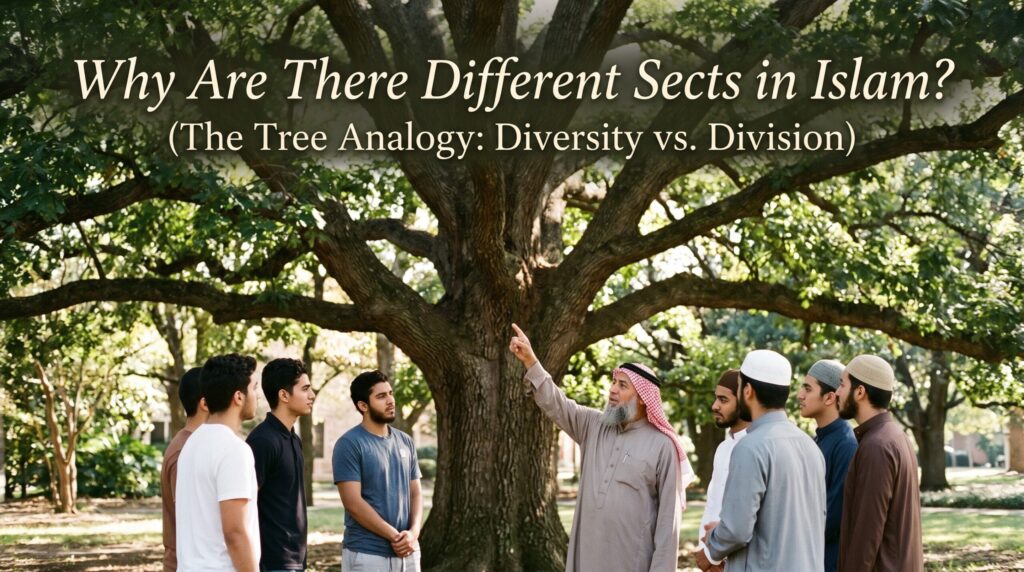
इस्लाम में अलग-अलग संप्रदाय क्यों हैं? (वृक्ष सादृश्य: विविधता बनाम विभाजन): मुसलमानों और गैर-मुसलमानों द्वारा समान रूप से पूछे जाने वाले सबसे अक्सर पूछे जाने वाले प्रश्नों में से एक है, “यदि।" इस्लाम एक एकल, पूरी तरह से संरक्षित पुस्तक - पवित्र कुरान - पर आधारित है - इतने सारे संप्रदाय, विचारधारा के स्कूल और आंतरिक विभाजन क्यों हैं?” प्रथम दृष्टया यह विखंडन विरोधाभासी लगता है। हालाँकि, बारीकी से जांच करने पर प्राकृतिक, स्वस्थ बौद्धिक विविधता के बीच एक महत्वपूर्ण अंतर का पता चलता है (इख्तिलाफ) और विनाशकारी, अहंकार से प्रेरित सांप्रदायिक विभाजन (तफ़रीक़ा). गहन का उपयोग करना वृक्ष सादृश्य, यह मार्गदर्शिका बताती है कि कैसे शाखाएँ स्वाभाविक रूप से एक जीवित तने से निकलती हैं, विद्वतापूर्ण विविधता एक आशीर्वाद क्यों है, कौन सी लाल रेखाएँ एक शाखा को जड़ से अलग कर देती हैं, और कैसे कुरान मानवता को आवश्यक एकता की ओर वापस बुलाता है।
विषयसूची
| अनुभाग शीर्षक | मुख्य प्रश्न संबोधित |
|---|---|
| 1. मौलिक विरोधाभास: एक किताब, विविध समझ | जब कुरान का पाठ 1,400 वर्षों से एक जैसा है तो अलग-अलग व्याख्याएँ क्यों मौजूद हैं |
| 2. वृक्ष सादृश्य: बीज, तना और जीवित शाखाएँ | एक पेड़ का दृश्य मॉडल मूल आस्था और माध्यमिक विचारधारा के बीच संबंध को कैसे स्पष्ट करता है |
| 3. प्राकृतिक विविधता बनाम विनाशकारी विभाजन | वैध बौद्धिक अन्वेषण और पापपूर्ण सांप्रदायिक गुटबाजी के बीच महत्वपूर्ण अंतर क्या है? |
| 4. विविध विद्यालयों के ऐतिहासिक और व्यावहारिक कारण | भूगोल, भाषाई बारीकियों और सांस्कृतिक विस्तार ने स्वाभाविक रूप से विभिन्न न्यायशास्त्रीय परंपराओं को कैसे जन्म दिया |
| 5. कोई शाखा कब टूटती है? अस्वीकार्य लाल रेखाएँ | कौन से विशिष्ट धार्मिक भ्रष्टाचार - जैसे शिर्क, झूठी भविष्यवाणी और धार्मिक नवाचार - ने एक समूह को इस्लाम से अलग कर दिया |
| 6. एकता के लिए कुरान का आह्वान: रस्सी को एक साथ पकड़ना | भाईचारे को बढ़ावा देने और सांप्रदायिक पूर्वाग्रह को दूर करने के लिए सामान्य विश्वासियों को क्या व्यावहारिक कदम उठाने चाहिए |
1. मौलिक विरोधाभास: एक किताब, विविध समझ
कई ऐतिहासिक ग्रंथों के विपरीत, जो कई प्रतिस्पर्धी पांडुलिपियों और अनुवादों में मौजूद हैं, पवित्र कुरान को इसके बेजोड़ संरक्षण के लिए सार्वभौमिक रूप से मान्यता प्राप्त है। पश्चिमी अफ़्रीका में पढ़ी जाने वाली प्रतिलिपि शब्द-दर-शब्द, अक्षर-दर-अक्षर, दक्षिण-पूर्व एशिया या अरब के रेगिस्तान में पढ़ी जाने वाली प्रतिलिपि के समान होती है। चौदह शताब्दियों के लाखों विश्वासियों ने इसकी सटीक अरबी शब्दावली को स्मृति में अंकित कर लिया है (हिफ़्ज़).
यह वास्तविकता एक स्वाभाविक प्रश्न पैदा करती है: यदि स्रोत पाठ एक है, तो मुसलमान विभिन्न संप्रदायों और समूहों में क्यों विभाजित हैं
इसका उत्तर मानव अनुभूति की प्रकृति और दैवीय उद्देश्य को समझने में निहित है। कुरान को मनुष्यों को रोबोटिक एकरूपता में स्वचालित करने के लिए नहीं भेजा गया था। यह जीवित, विचारशील व्यक्तियों के लिए प्रकट हुआ जो तर्क, विशिष्ट भाषाई स्वभाव और जीवन के अनुभव के विभिन्न स्तरों से संपन्न थे।
सृष्टिकर्ता हमें स्पष्ट रूप से बताता है कि मानव विविधता उसकी रचना का एक जानबूझकर, मूलभूत संकेत है:
“और उसकी निशानियों में से आकाशों और धरती की रचना और तुम्हारी भाषाओं और तुम्हारे रंगों की विविधता है। वास्तव में, उसमें ज्ञान वालों के लिए निशानियाँ हैं।”
— सूरह अर-रम (30:22)
जबकि आस्था के मूल सिद्धांत (अक़ीदा)—जैसे ईश्वर की एकता (तौहीद), पैगंबर मुहम्मद की भविष्यवाणी की अंतिमता, और न्याय के दिन की निश्चितता - बिल्कुल स्पष्ट है और असहमति के लिए कोई जगह नहीं छोड़ती है, आवेदन के माध्यमिक मामले, प्रशासनिक न्यायशास्त्र और कानूनी तर्क को अलग-अलग समय, भूगोल और संस्कृतियों के अनुकूल बनाने के लिए डिज़ाइन किया गया था।
2. वृक्ष सादृश्य: बीज, तना और जीवित शाखाएँ
यह समझने के लिए कि इस्लाम में एकता और विविधता कैसे सह-अस्तित्व में हैं, एक के दृश्य मॉडल पर विचार करें जीवित वृक्ष:
लगभग 1,400 साल पहले, कुरान के अंतिम रहस्योद्घाटन और पैगंबर मुहम्मद के जीवित मॉडल के माध्यम से ग्रह पृथ्वी पर एक दिव्य बीज बोया गया था। जैसे ही वह बीज अंकुरित हुआ, उसने एक विशाल, अचल रूप धारण कर लिया तना.
         [शाखा ए: शफ़ीई] [शाखा बी: हनफ़ी]
                   \ /
         [शाखा सी: मलिकी] [शाखा डी: हनबली]
                     \ /
                      \ /
                       [ ट्रंक ]
               - एक अदृश्य रचयिता पर विश्वास
               - कुरान का संरक्षित पाठ
               - मुहम्मद ﷺ अंतिम मुहर के रूप में
               - पुनरुत्थान का दिन
सादृश्य का पुनर्निर्माण:
- जड़ और तना (अपरिवर्तनीय कोर): ट्रंक इस्लाम की गैर-परक्राम्य नींव का प्रतिनिधित्व करता है: शुद्ध एकेश्वरवाद, पांच दैनिक प्रार्थनाएं, उपवास, जकात, हज, नैतिक शालीनता और कुरान के प्रति पूर्ण समर्पण। हर ईमानदार मुसलमान यहीं पर टिका हुआ है।
- शाखाएँ (प्राकृतिक विविधीकरण): जैसे-जैसे पेड़ महाद्वीपों में बढ़ता गया - अरब से फारस, उत्तरी अफ्रीका, मध्य एशिया और उससे भी आगे - इसकी स्वाभाविक रूप से शाखाएँ विकसित हुईं। ये कानूनी विचारधारा के वैध विद्यालयों का प्रतिनिधित्व करते हैं (माधब) और दार्शनिक परंपराएँ (जैसे हनफ़ी, मलिकी, शफ़ीई और हनबली)।
- पत्तियाँ और फूल (प्रासंगिक अभ्यास): प्रत्येक शाखा अपनी जलवायु और पर्यावरण के अनुकूल पत्तियां उगाती है, जो अद्वितीय स्थानीय चुनौतियों का समाधान करती है और उसी तने से अपना जीवनदायी पानी खींचती है।
जब तक एक शाखा मजबूती से तने से जुड़ी रहती है और जड़ से अपना पोषण प्राप्त करती है, तब तक यह पेड़ के समग्र जीवन की एक स्वस्थ, महत्वपूर्ण अभिव्यक्ति है। यह अन्य शाखाओं का शत्रु नहीं है; यह एक ही रस, एक ही ज़मीन और एक ही आकाश को साझा करता है।
3. प्राकृतिक विविधता बनाम विनाशकारी विभाजन
अरबी भाषा और इस्लामी न्यायशास्त्र में, दो अवधारणाओं के बीच गहरा अंतर है जो अक्सर भ्रमित होती हैं: इख्तिलाफ (विद्वानों की राय में विविधता) और तफ़रीक़ा (सांप्रदायिक विखंडन और कलह)।
1. इख्तिलाफ (स्वस्थ विविधता)
जब योग्य विद्वान आधुनिक परिस्थितियों के लिए व्यावहारिक दिशानिर्देश निकालने के लिए किसी पाठ की जांच करते हैं, तो स्वाभाविक रूप से अलग-अलग दृष्टिकोण सामने आते हैं। यह प्रोसेस (इज्तिहाद) इस्लाम में स्वागत और पुरस्कृत किया जाता है।
पैगंबर मुहम्मद ﷺ ने स्पष्ट रूप से इस बौद्धिक दया की पुष्टि की:
“यदि कोई न्यायाधीश अपना सर्वश्रेष्ठ प्रयास करते हुए कोई फैसला देता है और सही होता है, तो उसे दो पुरस्कार मिलते हैं; और यदि वह अपना सर्वश्रेष्ठ प्रयास करते हुए और गलतियाँ करते हुए कोई फैसला देता है, तब भी उसे एक पुरस्कार मिलता है।”
— सहीह अल-बुखारी (हदीस 7352), सहीह मुस्लिम (हदीस 1716)
स्वस्थ विविधता चिंतन को प्रोत्साहित करती है, धार्मिक कठोरता को रोकती है, और विविध जीवन परिस्थितियों का सामना करने वाले मनुष्यों के लिए व्यावहारिक समाधान प्रदान करती है।
2. तफ़रीक़ा (पापी संप्रदायवाद)
इसके विपरीत, विभाजन तब होता है जब मानवीय अहं, राजनीतिक वंशवाद, अहंकार और ईर्ष्या धर्म पर कब्ज़ा कर लेते हैं। सांप्रदायिक विभाजन तब होता है जब कोई समूह दावा करता है: “केवल हमारी विशिष्ट शाखा ही पूरे पेड़ का प्रतिनिधित्व करती है, और अन्य सभी शाखाओं को शाप दिया जाना चाहिए, बहिष्कृत किया जाना चाहिए, या काट दिया जाना चाहिए।”
कुरान इस विभाजनकारी मानसिकता की कड़ी निंदा करता है:
“वास्तव में, जिन लोगों ने अपने धर्म को विभाजित कर दिया है और संप्रदाय बन गए हैं - आप, [हे मुहम्मद], उनके साथ किसी भी तरह से संबंधित नहीं हैं। उनका मामला केवल अल्लाह के साथ है; फिर वह उन्हें सूचित करेगा कि वे क्या करते थे।”
— सूरह अल-अनआम (6:159)
अल्लाह संप्रदायवाद की मनोवैज्ञानिक जड़ को सत्य की खोज के रूप में नहीं, बल्कि इसकी पहचान करता है ईर्ष्यालु शत्रुता और अभिमान:
“और वे तब तक विभाजित नहीं हुए जब तक कि उन्हें ज्ञान प्राप्त नहीं हुआ - आपस में ईर्ष्यालु शत्रुता के कारण...”
— सूरह अश-शूरा (42:14)
“...और उन लोगों में से मत बनो जो दूसरों को अल्लाह के साथ जोड़ते हैं - उन लोगों में से जिन्होंने अपने धर्म को विभाजित कर दिया है और संप्रदाय बन गए हैं, प्रत्येक गुट जो कुछ उसके पास है उस पर खुशी मना रहा है।”
— सूरह अर-रम (30:31-32)
तुलना मैट्रिक्स: विविधता बनाम विभाजन
| पहलू | स्वस्थ विविधता (इख्तिलाफ) | विनाशकारी प्रभाग (तफ़रीक़ा) |
|---|---|---|
| मूल प्रेरणा | सत्य और लाभकारी अनुप्रयोग की ईमानदार खोज। | अभिमान, सांस्कृतिक अहंकार, ईर्ष्या और सांप्रदायिक वर्चस्व। |
| अन्य विश्वासियों का दृश्य | भाई-बहन अलग-अलग न्यायिक दृष्टिकोण के साथ एक ही लक्ष्य की ओर प्रयास कर रहे हैं। | पथभ्रष्ट, पाखंडी, या शत्रुओं पर बहस, अपमान, या बहिष्कृत किया जाना। |
| स्रोतों से संबंध | कुरान और प्रामाणिक सुन्नत में निहित। | व्यक्ति पूजा, पार्टी निष्ठा, या असत्यापित सांस्कृतिक नवाचारों में निहित। |
| सामाजिक परिणाम | पारस्परिक सम्मान, व्यापक सामाजिक अनुकूलनशीलता और करुणा। | टूटे हुए परिवार, बहिष्कार, घृणा, हिंसा और आस्था के प्रति सार्वजनिक बदनामी। |
4. विविध विद्यालयों के ऐतिहासिक और व्यावहारिक कारण
सबसे पहले शाखाएँ क्यों निकलीं? इतिहास से पता चलता है कि विभिन्न विचारधाराओं का विकास चार व्यावहारिक, तर्कसंगत वास्तविकताओं से प्रेरित था:
1. अरबी भाषा में भाषाई बारीकियाँ
कुरान की अरबी समृद्ध, स्तरित और संक्षिप्त है। एक ही शब्द अनेक सूक्ष्म अर्थों को अपने में समाहित कर सकता है। उदाहरण के लिए, जब अल्लाह सूरह अल-माइदा (5:6) में शुद्धिकरण के दौरान विश्वासियों को आदेश देता है कि अनुष्ठान स्नान को क्या तोड़ता है (Wudu), वाक्यांश “या आप महिलाओं को छूते हैं” इमाम अश-शफ़ीई ने इसे शारीरिक त्वचा से त्वचा संपर्क के रूप में समझा था, जबकि इमाम अबू हनीफा ने इसे वैवाहिक अंतरंगता के रूपक के रूप में समझा था। दोनों विचार वैध अरबी भाषाई उपयोग पर आधारित हैं, जिससे किसी भी मौलिक विश्वास में बदलाव किए बिना अलग-अलग फैसले होते हैं।
2. हदीस का भौगोलिक प्रसार और पहुंच
पैगंबर ﷺ के निधन के बाद की शुरुआती पीढ़ियों में, उनके साथी स्पेन से भारत तक फैले भूभाग में चले गए। मदीना में विद्वानों (इमाम मलिक जैसे) को पैगंबर के शहर की जीवित परंपराओं और रीति-रिवाजों से दैनिक संपर्क था। इस बीच, कूफ़ा, इराक में विद्वानों (जैसे इमाम अबू हनीफा) ने जटिल, बहु-जातीय शहरी केंद्रों से निपटा, जिन्हें अनुरूप कटौती के व्यापक उपयोग की आवश्यकता थी (क़ियास) और अभूतपूर्व स्थितियों को संबोधित करने के लिए तार्किक तर्क।
3. भिन्न-भिन्न विद्वत्तापूर्ण पद्धतियाँ (उसुल अल-फ़िक्ह)
Scholars established varying principles for evaluating evidence. One jurist might prioritize a sound solitary Hadith over local custom, while another prioritized the established continuous practice of the people of Madinah (‘Amal Ahl al-Madinah). These methodological variations created diverse legal schools, functioning like distinct branches designed to serve different societal needs.
4. Cultural Adaptation Within Lawful Limits
Islam entered established civilizations—Persian, Roman, African, and South Asian—without destroying their benign customs. It purified what contradicted monotheism and preserved what was wholesome. This cultural diversity enriched the Muslim world, demonstrating that Islam is a global faith rather than a rigid cultural monolith.
5. कोई शाखा कब टूटती है? अस्वीकार्य लाल रेखाएँ
While Islam accommodates wide diversity in jurisprudence and personal practice, the tree analogy carries an essential warning: a branch that snaps off from the trunk dies.
Any movement, ideology, or sect that directly contradicts the foundational roots of Islam ceases to be an authentic branch. Islam does not own, endorse, or accept practices that violate the essential criteria of faith:
“Follow, [O mankind], what has been revealed to you from your Lord and do not follow other than Him any allies. Little do you remember.”
— सूरह अल-अराफ़ (7:3)
1. Associating Partners with the Creator (भागना)
The foundational root of Islam is pure Tawheed—direct, unmediated devotion to the One Unseen Creator. Any sect that introduces worship of saints, creates idols, prays to deceased mortals for unseen divine assistance, or claims that human beings share Allah’s supreme attributes has severed itself from the trunk.
2. Rejecting the Finality of Prophethood
Prophet Muhammad ﷺ is the final messenger sent to humanity. The Quran explicitly establishes this seal:
“Muhammad is not the father of [any] one of your men, but [he is] the Messenger of Allah and the Seal of the Prophets. And Allah is ever, of all things, Knowing.”
— Surah Al-Ahzab (33:40)
Any group that claims a new prophet has appeared after Muhammad ﷺ, or invents new mandatory holy scriptures beyond the Quran, is not an Islamic school of thought; it has severed its connection to the root.
3. Religious Innovations (बिदअह) and Altering the Sacred Text
Inventing arbitrary rituals of worship not grounded in revelation, altering the Quranic text, or claiming esoteric hidden knowledge that overrides the plain word of God corrupts the pure religion.
4. Unjust Violence, Terrorism, and Hasty Excommunication (Takfir)
Any sect that turns religion into an instrument of terror, slaughtering innocent human beings, declaring general Muslim populations to be “disbelievers,” or violating human dignity opposes the very objective of Islam, which was sent as a mercy to all creation (Surah Al-Anbiya 21:107).
6. एकता के लिए कुरान का आह्वान: रस्सी को एक साथ पकड़ना
How does the Quran instruct believers to conduct themselves amidst this landscape of diverse interpretations? It offers a permanent, unshakeable directive:
“And hold firmly to the rope of Allah all together and do not become divided. And remember the favor of Allah upon you—when you were enemies and He brought your hearts together and you became, by His favor, brothers…”
— Surah Ali ‘Imran (3:103)
The “Rope of Allah” is the Holy Quran. When individuals anchor themselves to human personalities, cultural factions, or sectarian badges, division is inevitable. But when they elevate the Quran as the final criterion (फुरकान), unity naturally returns.
Practical Steps for Everyday Believers:
- Learn the Core Before the Branches: Focus first on developing a strong personal relationship with the One Creator, mastering your daily prayer, purifying your speech, and practicing ethical integrity before jumping into heated theological debates.
- Eliminate Sectarian Name-Calling: Avoid using offensive labels, nicknames, or derogatory accusations against other Muslims who follow a different recognized school of thought.
- Practice Kind Communication: The Quran commands believers to “speak words of appropriate justice” (33:70) and to remember that harsh words function like destructive seeds, while kind words grow into enduring trees of peace.
- Distinguish Secondary Details from Primary Pillars: Recognize that how someone places their hands in prayer or slight differences in calculation methods are secondary juristic matters, whereas brotherhood and love among believers are primary obligations commanded by Allah.
मार्गदर्शन अनुभाग: सांस्कृतिक भ्रांतियाँ बनाम प्रामाणिक सुन्नत
| क्षेत्र | ग़लतफ़हमी/सांस्कृतिक आदत | सच्चा इस्लामी |
|---|---|---|
| The Nature of Differences | Believing that every legal disagreement among scholars is a sign of weakness, error, or corruption in the religion. | Legitimate scholarly diversity (इख्तिलाफ) in secondary matters is a natural mercy that enables Islamic law to address differing cultures, eras, and personal circumstances without rigidity. |
| Sectarian Exclusivity | Believing that one’s specific local cultural group or sect possesses exclusive monopoly over Paradise, while all others are damned. | Allah’s judgment is based on sincere faith, avoidance of Shirk, moral integrity, and righteous deeds (Surah Al-Baqarah 2:62). Arrogant claims of exclusivity reflect the exact tribalism condemned in the Quran. |
| Hasty Excommunication (Takfir) | Accusing another Muslim of being a disbeliever simply because they differ on a minor interpretation or belong to a different school of thought. | Strongly forbidden by the Prophet Muhammad ﷺ, who warned that whoever unjustly calls their brother a disbeliever, the accusation returns upon the accuser (साहिह अल-बुखारी 6104). |
| Intermediaries and Shrines | Believing that reaching Allah requires praying to deceased pious people, grave shrines, or holy intermediaries. | Pure monotheism demands direct communication with the Unseen Creator. The Quran states: “And when My servants ask you concerning Me, indeed I am near. I respond to the invocation of the supplicant when he calls upon Me” (Surah Al-Baqarah 2:186). |
| Blind Sectarian Loyalty | Defending one’s local sectarian leader even when their statements directly contradict a clear verse of the Holy Quran. | In Islam, absolute loyalty belongs solely to the Word of Allah and His Messenger ﷺ. Scholarly opinions are respected tools for understanding, but they must never supersede direct divine guidance. |
अस्वीकरण
This article is prepared solely for educational, historical, and spiritual reflection based on the Holy Quran and authentic Sunnah. Islamic jurisprudence and scholarly differences are expansive fields governed by rigorous academic principles (उसुल अल-फ़िक्ह). This publication does not constitute a formal legal ruling (फतवा), nor is it intended to pronounce individual theological judgments upon specific contemporary persons or organizations.
चिंतन करने के लिए एक निमंत्रण
The beauty of the Quran lies in its power to unite human hearts across every racial, linguistic, and national boundary under one universal message of peace, justice, and accountability. It is a Book designed not for sectarian division, but for human elevation. We warmly invite every reader, thinker, and seeker of truth to open the Holy Quran and read it with reflection in your own native language at least once in your life. Observe how its timeless principles sweep away manufactured divisions, ground your soul in pure monotheism, and restore clarity to your purpose on Earth.
अक्सर पूछे जाने वाले प्रश्न (एफएक्यू)
1. What does the famous Hadith about the Muslim community splitting into 73 sects mean?
The Prophet Muhammad ﷺ stated that this nation would divide into 73 sects, all of which are in the Fire except one: “Those who follow what I and my companions are upon” (Jami’ at-Tirmidhi 2641). Islamic scholars clarify that this Hadith is a warning against abandoning the core foundational path of the Prophet and his companions in favor of political extremism, philosophical deviation, and religious innovation. The “saved group” is not a political label or exclusive club; it consists of those who sincerely follow the preserved Quran and authentic Sunnah in belief, character, and practice.
2. Are the four Sunni schools of jurisprudence (Hanafi, Maliki, Shafi’i, Hanbali) separate sects?
No. The four Madhabs are not distinct sects; they are respected schools of legal interpretation (Fiqh). They share identical articles of faith (अक़ीदा), believe in the same Quran, pray toward the same Ka’bah, and respect one another as legitimate brothers in faith. Their differences pertain solely to the detailed application of secondary legal rulings, reflecting the rich intellectual heritage of Islam.
3. Can a person be just a “Muslim” without belonging to any specific sect?
Yes, absolutely. In fact, identifying purely as a Muslim is the standard established by the Quran. Allah states: “He named you ‘Muslims’ before [in former scriptures] and in this [revelation]” (Surah Al-Hajj 22:78). While studying under a recognized school of jurisprudence helps one learn practical worship systematically, a believer’s ultimate identity must remain rooted in Islam and the Quran, free from sectarian arrogance.
4. What makes a group officially outside the fold of Islam?
A group or individual places themselves outside Islam when they reject or deny an explicit, definitive pillar of faith established through clear revelation. This includes denying the Oneness of Allah, directing worship to creation (भागना), claiming that a new prophet has been sent after Muhammad ﷺ, rejecting the authenticity of the Quran, or denying the resurrection and final judgment.
5. Why do ordinary Muslims get confused by scholarly debates?
Confusion usually arises when laypeople without foundational training delve into complex, nuanced arguments of historical jurisprudence or speculative theology instead of focusing on what is essential: sincere prayer, moral speech, family stability, and honest livelihood. Scholars encourage ordinary believers to focus on practicing what is clear, seeking knowledge with humility, and avoiding contentious online debates that breed arrogance and ill will.
6. How should I respond when someone from another group insults my way of practice?
Follow the Quranic instruction on speech: “Repel evil with that which is better” (Surah Fussilat 41:34). Respond with calm dignity, avoid escalating arguments, and remember the Prophetic standard: “He who is deprived of kindness is deprived of all goodness” (Sahih Muslim 2592). Preserving brotherhood and exemplifying good character is far superior to winning an argument.
 English
 Bengali
 Chinese
 Dutch
 French
 German
 Greek
 Hindi
 Indonesian
 Italian
 Japanese
 Korean
 Marathi
 Latin
 Portuguese
 Russian
 Spanish
 Swahili
 Telugu
 Vietnamese