Content Summary
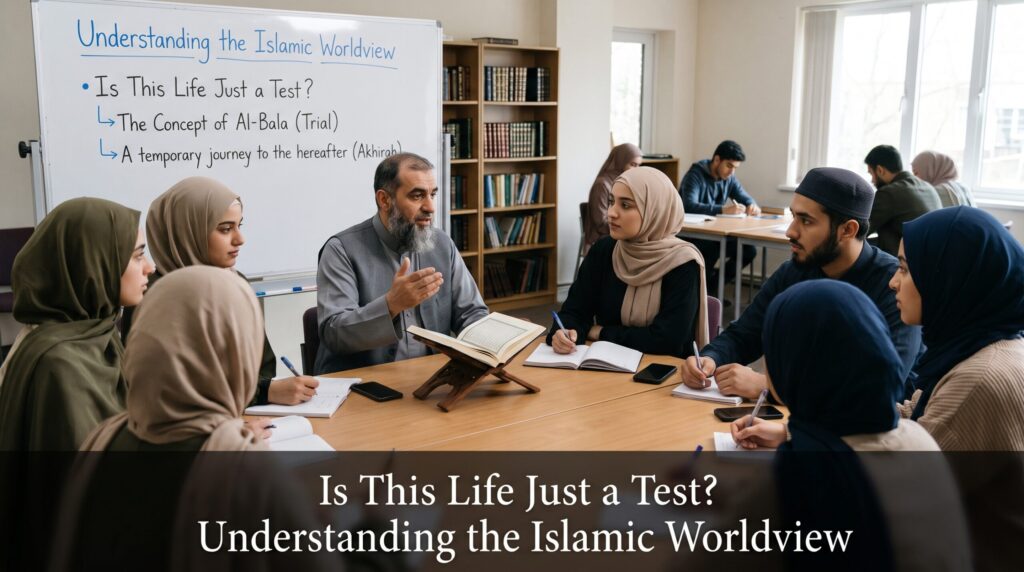
Is This Life Just a Test: Have you ever wondered why life is filled with such unpredictable highs and lows? Why do we experience moments of profound joy, followed by periods of deep struggle? For many, the complexity of human life can feel confusing or even random. However, according to the deep insights found in the document “Humanity By Quran,” human life on Earth is far from a cosmic accident. It is a highly organized, temporary testing ground. In the Islamic worldview, the fact that the future is hidden from us is exactly what makes our free will and daily choices meaningful. In this post, we will explore why life is considered a test, how our intentions shape our ultimate accountability, and what this means for our everyday actions.
Table of Contents
| Section Title | Key Questions Addressed |
|---|---|
| The Hidden Future and the Meaning of the Test | Why is the future kept secret from human beings? |
| Designed Within Limits: The Nature of Our Reality | Why is human life designed with weaknesses and stages? |
| Hardship and Ease: Two Sides of the Same Exam | Are difficulties punishments, or just another form of testing? |
| Intention: The Core of Moral Accountability | Why does the motive behind our actions matter so much? |
| The Final Result: The Day of Judgment | Why is the afterlife essential for ultimate justice? |
The Hidden Future and the Meaning of the Test
One of the greatest mysteries of the human experience is our complete inability to know what will happen tomorrow. We can plan, guess, and prepare, but the future remains entirely hidden. According to “Humanity By Quran,” this hiddenness is not a flaw in our design; it is the very feature that defines life as a test.
Fate and ultimate knowledge belong to the Creator alone. Humans are given awareness of the present moment and memories of the past—just enough to reflect, learn, and make conscious choices. If we knew the exact outcome of every action, our choices would be forced by guaranteed results, and free will would not truly exist.
“….No soul knows what it will earn tomorrow, and no soul knows in what land it will die….” (Surah Luqman 31:34)
Life is a test precisely because the future is unknown. When you choose to be honest even when lying seems easier, or when you choose to be patient when you are frustrated, your true character is revealed and recorded.
Designed Within Limits: The Nature of Our Reality
Human beings are incredibly unique. We possess advanced intellect, the power of speech, and deep moral awareness, yet we are created with limited physical strength and limited control over our environment. “Humanity By Quran” highlights that this balance of wisdom and weakness is intentional.
Life is not designed for perfection; it is designed for sincere effort. Every stage of life—childhood, youth, adulthood, and old age—arrives with changing environments, new emotions, and different responsibilities. We are meant to experience learning, growth, endurance, and conscious choice within these limits.
“Do people think they will be left alone because they say, ‘We believe,’ and will not be tested?” (Surah Al-‘Ankabut 29:2)
The fact that we make mistakes is part of the design. The test is not about living a flawless life but about how we respond to our mistakes through humility, learning, and seeking forgiveness.
Hardship and Ease: Two Sides of the Same Exam
A common misunderstanding is that wealth and ease are signs of divine love, while hardship and poverty are signs of punishment. The Islamic worldview completely shatters this assumption.
In Islam, both good and bad circumstances are simply different forms of the exact same test.
“Every soul will taste death. And we test you with evil and with good as a trial. And to us you will all return.” (Surah Al-Anbiya 21:35)
When a person experiences wealth, health, and success, they are being tested on their gratitude, humility, and generosity. Will they help the vulnerable, or will they become arrogant? Conversely, when a person faces fear, loss, or pain, they are being tested on their patience, emotional resilience, and trust in the Creator.
“And we will surely test you with fear, hunger, loss of wealth, lives, and fruits, but give glad tidings to the patient.” (Surah Al-Baqarah 2:155)
The hardship you face is not meant to break you; it is designed to build your inner strength and reveal your reliance on the Unseen Creator.
Intention: The Core of Moral Accountability
In the Islamic testing ground, actions are not judged merely by their outward appearance. The most critical element of human accountability is the intention (niyyah) behind the action.
“Humanity By Quran” explains that while events may be destined, our intention is freely chosen. Two people might give the same amount of money to charity. One does it to show off and gain society’s approval, while the other does it secretly to please the Creator and help a human in need. Outwardly, the action is identical, but internally, the records are entirely different.
“Say, each person acts according to his own disposition, and your Lord knows best who is most guided in the way.” (Surah Al-Isra 17:84)
The Creator does not just look at what happens to us; He looks at why we chose to respond the way we did. Destiny explains the events of our lives, but our hidden intentions determine our moral responsibility.
The Final Result: The Day of Judgment
If life is a deliberate test where every word and intention is meticulously recorded, there must be a final result. The belief in the Day of Judgment is the anchor that gives meaning to the struggles of this world.
If there were no afterlife, life would be profoundly unjust. The oppressors who escaped human laws would never face consequences, and the innocent people who suffered with patience would never see their reward. The Qur’an guarantees that absolute justice will be served.
“So whoever does an atom’s weight of good will see it, and whoever does an atom’s weight of evil will see it.” (Surah Az-Zalzalah 99:7-8)
Understanding that life is a temporary exam brings immense clarity. It stops us from expecting this world to be a perfect paradise. Instead, it motivates us to live responsibly, speak truthfully, and act with justice, knowing that our ultimate success lies in our return to the Creator.
Guidance Section
| Topic / Concept | Common Misconception or Ignorance | The Practical Truth (Based on Quranic Guidance) |
|---|---|---|
| The Nature of Life | Life is just a random series of events, and we should just try to maximize pleasure before we die. | Life is a highly organized, temporary testing ground where our moral choices and free will are continuously evaluated for the afterlife. |
| Hardship and Suffering | If bad things happen to me, it means the Creator is angry with me or punishing me. | Hardships (and blessings) are deliberate tests. They are designed to build patience, reveal true character, and measure our trust in the Creator. |
| Predicting the Future | We can use astrology, fortune-tellers, or certain sciences to know exactly what our future holds. | The future is exclusively known to the Creator. The future is intentionally hidden from humans so that our daily choices and faith remain a genuine test. |
Disclaimer
The insights shared in this blog post are intended for educational and reflective purposes, drawing upon the concepts from the provided knowledge files and Islamic teachings. They aim to promote harmony, logical thinking, and moral responsibility. Readers are encouraged to seek knowledge, reflect upon nature, and consult qualified scholars for deeper theological studies.
A Sincere Invitation
True understanding comes from direct reflection and an open heart. We warmly invite you to read the Holy Quran at least once in your lifetime, in a language you fully understand. Let your own mind observe the wisdom, logic, and profound peace it offers to humanity.
Frequently Asked Questions (FAQs)
1. Is this life just a test according to Islam? Yes. In the Islamic worldview, life on Earth is a temporary testing ground. The Creator designed life and death specifically to test which human beings are best in their deeds, intentions, and moral choices.
2. Why doesn’t the Creator just tell us our future? If humans knew the exact outcome of every event, free will would be compromised, and the test would lose its meaning. The hidden nature of the future forces us to use our intellect, trust the Creator, and make sincere moral choices in the present moment.
3. Are both good times and bad times considered tests? Absolutely. The Qur’an states that we are tested with both “evil and good as a trial.” Poverty tests patience and faith, while wealth tests gratitude, humility, and generosity.
4. How does intention affect the test of life? Intention is the core of moral accountability in Islam. You are judged not only by the physical actions you perform but by the sincere motives in your heart. A good deed done for selfish reasons loses its spiritual value.
5. What is the ultimate purpose of this test? The purpose of the test is to reveal our true character, purify our souls, and determine our place in the eternal afterlife. It is an opportunity to earn the Creator’s mercy and the ultimate reward of Paradise through sincere effort and justice.