Content Summary
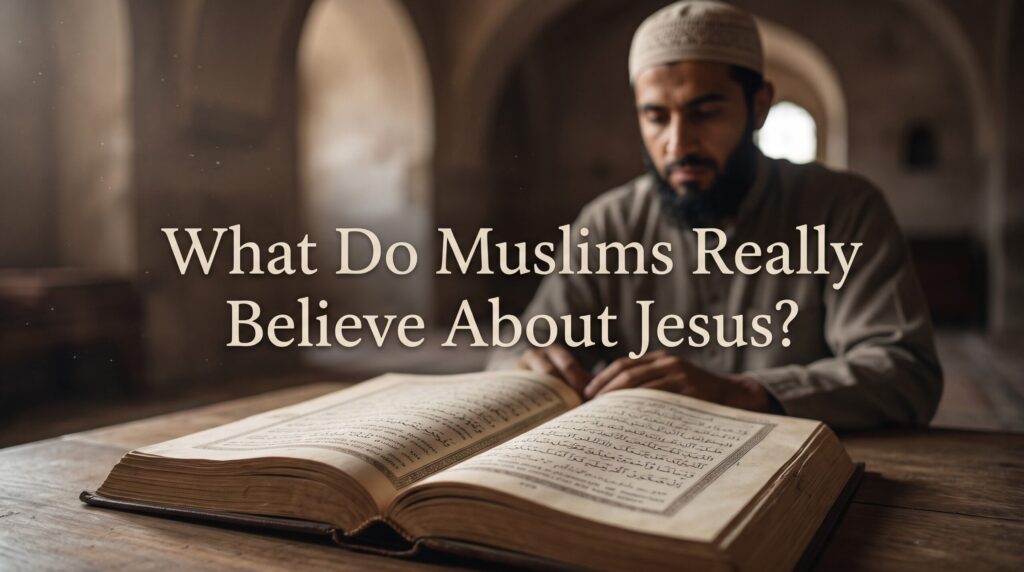
Many people are surprised to learn that Jesus is a central and deeply revered figure in Islam. A person cannot be a Muslim without believing in Jesus (‘Isa, peace be upon him). However, the Islamic perspective presents a clear, logical distinction between honoring him as one of God’s greatest prophets and worshipping him as divine. This article explores the Quranic narrative surrounding Jesus: his miraculous birth to the Virgin Mary, his life and miracles, his true message of pure monotheism, and the essential differences between Islamic and traditional Christian viewpoints.
Table of Contents
| Title | Key Questions Addressed |
|---|---|
| 1. Introduction: An Essential Pillar of Islamic Faith | Do Muslims believe in Jesus, and why is he so important in Islam? |
| 2. The Miraculous Birth: Maryam and the Word of God | How was Jesus born without a father, and what is Mary’s status? |
| 3. Miracles by Divine Permission (Bi-Idhnillah) | What miracles did Jesus perform according to the Quran? |
| 4. Honored Servant, Not the Son of God | Why does Islam reject divine sonship and the Trinity? |
| 5. The Crucifixion and Ascension: What Happened to Jesus? | Was Jesus crucified, and what is the Islamic view of his return? |
| 6. Guidance Section: Misconceptions vs. Quranic Reality | What are common myths about Jesus in Islam, and what is the truth? |
| 7. Frequently Asked Questions (FAQs) | What are the most common questions seekers ask about Jesus in Islam? |
1. Introduction: An Essential Pillar of Islamic Faith
A common misconception among many spiritual seekers is that Muslims reject Jesus. In reality, Islam requires every believer to love, honor, and believe in Jesus (‘Isa, peace be upon him). He is mentioned by name in the Holy Quran more times than Prophet Muhammad himself, described with immense honor, purity, and reverence.
Islam teaches that throughout history, the Creator sent chosen messengers to guide humanity back to the same fundamental truth: worshipping the One Unseen Creator without partners, practicing justice, and living with accountability. Jesus was not the founder of an entirely new religion; rather, he was a vital link in the prophetic chain that began with Adam and included Noah, Abraham, and Moses.
“Mankind was [of] one religion; then they differed. And Allah sent the prophets as bringers of good tidings and warners and sent down with them the Book in truth to judge between the people concerning that in which they differed…” — Surah Al-Baqarah (2:213)
To understand Jesus in Islam is to understand the balance of honoring a noble servant of God without attributing divinity to creation.
2. The Miraculous Birth: Maryam and the Word of God
In Islam, Jesus was born miraculously without a human father. His mother, Maryam (Mary), holds one of the highest spiritual ranks in Islamic history. An entire chapter of the Quran (Surah Maryam) is named after her, and the Quran honors her as a model of absolute purity, devotion, and modesty.
The Quran explains that an angel was sent to Maryam to announce the gift of a righteous son. When Maryam questioned how she could bear a child when no man had touched her, the divine answer was simple and absolute:
“He said, ‘Thus [it will be]; your Lord says, “It is easy for Me, and we will make him a sign to the people and a mercy from us. And it is a matter [already] decreed.”‘” — Surah Maryam (19:21)
The Logic of Creation: Comparing Jesus to Adam
Some argue that having no earthly father proves divine nature. The Quran addresses this point with pure logic. If birth without a biological father made a human divine, then Adam would have an even greater claim to divinity, as he had neither a father nor a mother:
“Indeed, the example of Jesus to Allah is like that of Adam. He created him from dust; then He said to him, ‘Be,’ and he was.” — Surah Ali ‘Imran (3:59)
The Creator brought humanity into existence through four different methods, demonstrating His absolute power:
- Adam: Created without a male or female.
- Hawwa (Eve): Created from a male without a female.
- Jesus: Created from a female without a male.
- All other humans: Created from both male and female pairs.
The birth of Jesus was not an act of biological reproduction by God but a demonstration of His creative command: “Be,” and it is.
3. Miracles by Divine Permission (Bi-Idhnillah)
Muslims believe wholeheartedly in the extraordinary miracles granted to Jesus. However, the Quran emphasizes an essential theological condition: every miracle Jesus performed occurred strictly by the permission and will of God (Bi-Idhnillah), not through his own independent divine authority.
The Quran highlights several miracles performed by Jesus:
- Speaking from the Cradle: Defending his mother’s honor as an infant when her community falsely accused her.
- Healing the Sick: Curing the blind and the leper through prayer and divine command.
- Breathing Life into Clay: Fashioning the shape of a bird from clay and blowing into it, bringing it to life by God’s leave.
- Raising the Dead: Bringing deceased individuals back to life by the power of the Creator.
- The Heavenly Table: Requesting a meal from heaven as a sign of reassurance for his disciples.
“[The Day] when Allah will say, ‘O Jesus, Son of Mary, remember My favor upon you and upon your mother when I supported you with the Pure Spirit and you spoke to the people in the cradle and in maturity; and [remember] when I taught you writing and wisdom and the Torah and the Gospel; and when you designed from clay [what was] like the form of a bird with My permission, then you breathed into it, and it became a bird with My permission…'” — Surah Al-Ma’idah (5:110)
These signs were given to prove his prophethood to the Children of Israel, demonstrating that the One true Creator backed his message.
4. Honored Servant, Not the Son of God
The primary theological difference between traditional Christianity and Islam lies in the nature of Jesus and the concept of God. Islam teaches pure, uncompromised monotheism (Tawhid). The Creator is One, uniquely transcendent, free from human needs, and completely beyond physical reproduction or division into persons.
Associating partners with the Creator (Shirk) is viewed in Islam as the greatest disruption of truth, as it reduces the Infinite Sustainer to the level of dependent creatures.
“Say, ‘He is Allah, [who is] One. Allah, the Eternal Refuge. He neither begets nor is born, nor is there to Him any equivalent.'” — Surah Al-Ikhlas (112:1-4)
The Quran clarifies that Jesus never claimed to be God or the literal “Son of God.” Instead, he directed all devotion exclusively to his Creator:
“They have certainly disbelieved those who say, ‘Allah is the Messiah, the son of Mary.’ But the Messiah said, ‘O Children of Israel, worship Allah, my Lord and your Lord.’ Indeed, whoever associates others with Allah—Allah has forbidden Paradise for him, and his refuge is the Fire.” — Surah Al-Ma’idah (5:72)
Why Divine Sonship Is Illogical
From a rational standpoint, biological terms like “father” and “son” belong to the realm of physical creatures designed for reproduction and survival. A dependent being requires food, sleep, and rest. The Quran points out this simple human reality:
“The Messiah, son of Mary, was not but a messenger; [other] messengers have passed on before him. And his mother was a supporter of truth. They both used to eat food. Look how we make clear to them the signs; then look how they are deluded.” — Surah Al-Ma’idah (5:75)
A being who eats, drinks, sleeps, and prays cannot logically be the self-sufficient Master of the universe. Calling Jesus the servant and messenger of God elevates his true dignity without compromising the absolute Oneness of the Creator.
5. The Crucifixion and Ascension: What Happened to Jesus?
Another major distinction concerns the end of Jesus’s earthly ministry. Mainstream Christian belief holds that Jesus died on the cross to atone for humanity’s sins. Islam presents a different account rooted in divine justice and protection.
In Islam, personal accountability is an unbending law: no soul bears the sins of another (Surah Al-An’am 6:164). Forgiveness does not require an innocent human sacrifice; rather, the Creator forgives directly out of His vast mercy whenever a person genuinely repents.
Furthermore, God does not abandon His noble prophets to public humiliation and defeat at the hands of corrupt schemers. The Quran states that those who conspired to kill Jesus failed; God protected His messenger and raised him bodily to the heavens:
“And [for] their saying, ‘Indeed, we have killed the Messiah, Jesus, the son of Mary, the messenger of Allah.’ And they did not kill him, nor did they crucify him; but [another] was made to resemble him to them. And indeed, those who differ over it are in doubt about it. They have no knowledge of it except the following assumption: they did not kill him, for certain. Rather, Allah raised him to Himself. And ever is Allah Exalted in Might and Wise.” — Surah An-Nisa (4:157-158)
The Second Coming of Jesus
Muslims also believe that Jesus is alive in the presence of God and will return before the Day of Judgment. When he returns, he will not establish a new religion or claim divinity. He will return as a just ruler and a follower of the final revelation (the Quran), breaking false symbols, putting an end to theological confusion, and restoring the original worship of the One Creator.
6. Guidance Section: Misconceptions vs. Quranic Reality
| Common Misconception | The False Assumption | Quranic & Prophetic Reality |
|---|---|---|
| “Muslims hate or reject Jesus.” | Assuming that because Muslims follow Muhammad, they deny earlier prophets. | Believing in Jesus as a mighty messenger of God is an obligatory article of Islamic faith; denying him takes one outside the fold of Islam. |
| “Jesus is divine because of his virgin birth.” | Assuming birth without a human father automatically implies divine paternity or nature. | Adam was created without a mother or father (3:59). God creates simply by declaring “Be,” and it is. Creation is a proof of God’s power, not His paternity. |
| “Jesus claimed to be the Son of God.” | Attributing divinity to Jesus based on later historical creeds and councils. | The Quran confirms Jesus explicitly declared his human servitude: “Indeed, I am the servant of Allah. He has given me the Scripture and made me a prophet” (19:30). |
| “Jesus died to pay for human sins.” | Assuming salvation requires vicarious atonement and the sacrifice of an innocent soul. | Islam rejects original sin. Every soul is accountable for its own deeds (6:164). God forgives sins directly through sincere repentance without human sacrifice. |
| “The Quran denies the miracles of Jesus.” | Believing Islam strips Jesus of his miraculous nature. | The Quran confirms his miracles in detail, including healing lepers, raising the dead, and speaking as an infant—clarifying that all occurred by God’s permission (5:110). |
7. Frequently Asked Questions (FAQs)
1. What does the name “Isa” mean in Islam?
“Isa” (عيسى) is the Quranic Arabic name for Jesus. The Quran also refers to him as Al-Masih (the Messiah), Kalimatullah (a Word from God, as he was created by the direct divine decree “Be”), and Ruhun Minhu (a spirit created by God).
2. Do Muslims believe Mary was a virgin when giving birth to Jesus?
Yes, absolutely. Islam upholds the virgin birth of Jesus. Maryam is celebrated in the Quran as one of the purest, most spiritually elevated women to have ever lived, chosen above all women of the worlds (Surah Ali ‘Imran 3:42).
3. Does Islam accept the original Gospel given to Jesus?
Yes. Muslims believe that God revealed a holy scripture to Jesus called the Injeel (the Gospel). It was a message of light, guidance, and monotheism for the Children of Israel. Muslims believe that over time, human interpretations and edits altered portions of the text, which is why the Quran was revealed as the final, perfectly preserved criterion (Furqan).
4. Why does Islam reject the Trinity?
Islam upholds pure monotheism (Tawhid). The Quran states that dividing God into three co-equal persons contradicts the simple reality of an absolute, indivisible Creator. God is entirely self-sufficient (As-Samad), having neither partners, equals, nor offspring.
5. Why do Muslims not believe Jesus died on the cross?
According to Surah An-Nisa (4:157-158), God saved Jesus from the plot of his enemies. He was neither killed nor crucified; instead, God raised him up to Himself. Islam views the preservation of Jesus from an ignominious death as an act of divine victory and honor.
6. Will Jesus return to Earth?
Yes. Authentic Islamic tradition affirms that Jesus will descend to Earth before the Day of Judgment. He will live as a righteous leader, follow the guidance of the Quran, dispel false claims made about his nature, establish universal justice, and eventually pass away naturally.
7. Can a Muslim go to Heaven without believing in Jesus?
No. Belief in all of God’s messengers—from Adam, Noah, Abraham, and Moses to Jesus and Muhammad (peace be upon them all)—is an essential requirement of Islamic faith. Rejecting Jesus disqualifies a person from being a believer in the sight of God.