Content Summary
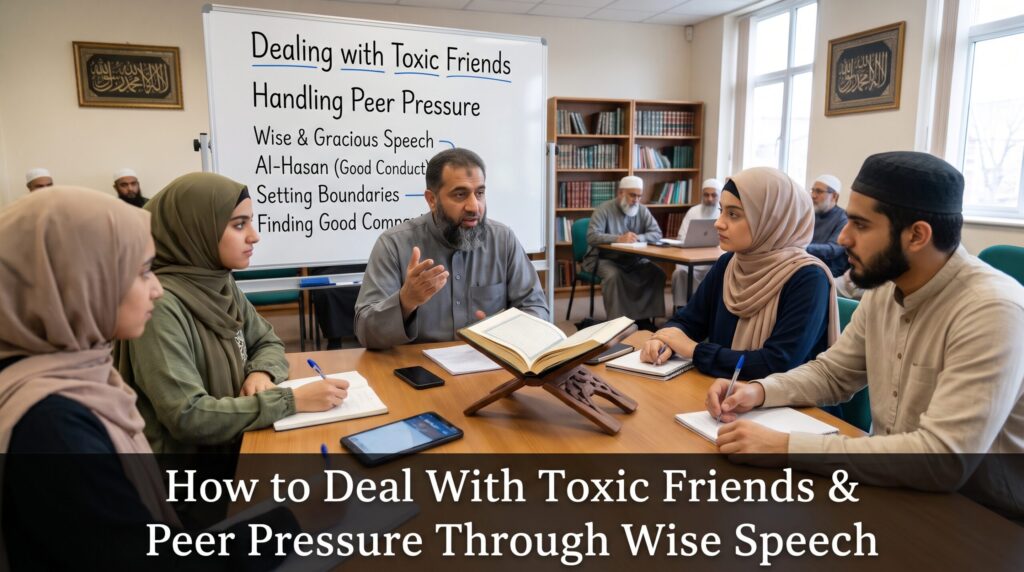
How to Deal With Toxic Friends: Human beings are naturally social creatures. We seek connection, friendship, and a sense of belonging. However, this deep need to fit in can sometimes lead us into toxic friendships and intense peer pressure, where we are pushed to compromise our values, speak harshly, or engage in harmful behaviors. Navigating these relationships can be incredibly difficult. Fortunately, the insights found in the document “Humanity By Quran.pdf” provide a profound and practical framework for handling social pressure. By mastering the ethics of communication, learning to set firm boundaries, and understanding personal accountability, we can protect our peace and deal with toxic influences using the power of wise speech.
Table of Contents
| Section Title | Key Questions Addressed |
|---|---|
| The Reality of Peer Pressure and Human Influence | Why do we feel so pressured to follow the crowd, even when they are wrong? |
| Identifying Toxic Friendships: When Words Become Weapons | How do negative friends misuse the gift of speech to create toxic environments? |
| Setting Boundaries: The Power of Walking Away | What is the Islamic approach to sitting with people who mock the truth? |
| Repelling Evil with Kindness: The Ultimate Defense | How can wise and gentle speech neutralize toxic behavior and peer pressure? |
| Accountability: Your Words Belong to You, Not Your Friends | Will my friends share the blame for the mistakes I make under their influence? |
| Guidance Section | How do practical Quranic truths counter modern misconceptions about friendship? |
The Reality of Peer Pressure and Human Influence
Because humans are born physically weak and dependent, we are naturally wired to build communities and rely on one another. This social interdependence is a beautiful part of our design, but it also makes us highly susceptible to the influence of those around us. We naturally want to be accepted by our peers.
However, when we surround ourselves with individuals who lack moral discipline, this desire for acceptance turns into peer pressure. We may find ourselves tempted to gossip, use bad language, or engage in harmful actions simply because “everyone else is doing it.” According to “Humanity By Quran.pdf”, this is a critical test of human free will. Life is a testing ground where our choices are constantly evaluated. Following the crowd blindly, without using our own intellect and moral compass, leads to a loss of identity and spiritual emptiness.
To survive peer pressure, we must shift our focus. Instead of living for the approval of people—which brings confusion and constant pressure—we must live for the Creator, which brings clarity, purpose, and inner peace.
Identifying Toxic Friendships: When Words Become Weapons
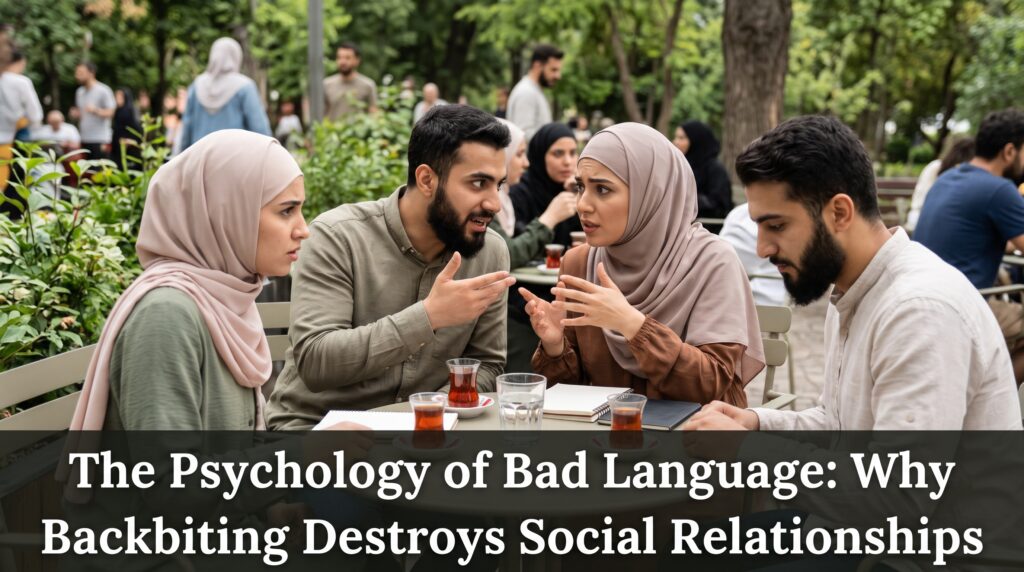
A toxic friendship is often most visible in how a person speaks. The gift of speech is a divine superpower intended to build trust, share knowledge, and establish justice. However, toxic friends misuse this gift. They build bonds through negativity, backbiting, mockery, and spreading rumors.
If your friends constantly pressure you to insult others, make fun of people, or use offensive nicknames, they are dragging you into a cycle of social destruction. “Humanity By Quran.pdf” highlights that words do not simply vanish; they act like seeds that leave lasting psychological scars.
“Let not one people mock another people…. and do not insult one another nor call each other by offensive nicknames….” (Surah Al-Hujurat 49:11)
When a friend pressures you to compromise your morals through bad language, they are not acting as a true friend. True friendship brings safety and value. If you feel that your dignity, your peace of mind, or your moral record is unsafe around certain people, it is a clear sign of a toxic environment.
Setting Boundaries: The Power of Walking Away
Dealing with toxic friends does not always mean engaging in a loud argument. Often, the wisest form of speech is silence and the establishment of firm boundaries. Islam teaches us that we absorb the energy and habits of the people we sit with.
If you are in a gathering where people are mocking the truth, backbiting, or pressuring you into unlawful actions, the Qur’an provides a clear and decisive boundary:
“….When you hear the signs of Allah being denied or mocked, do not sit with them until they change the subject; otherwise you will be like them….” (Surah An-Nisa 4:140)
This is a powerful psychological tool against peer pressure. You do not have to fight every battle; you simply have to refuse to participate. By physically walking away or changing the subject, you assert your independence. This wise action communicates that your values are not up for negotiation, often forcing toxic friends to respect your boundaries.
Repelling Evil with Kindness: The Ultimate Defense
Sometimes, setting a boundary triggers a negative reaction. A toxic friend might insult you, mock your choices, or try to provoke an emotional response. It is highly tempting to fight fire with fire and reply with an equally harsh insult.
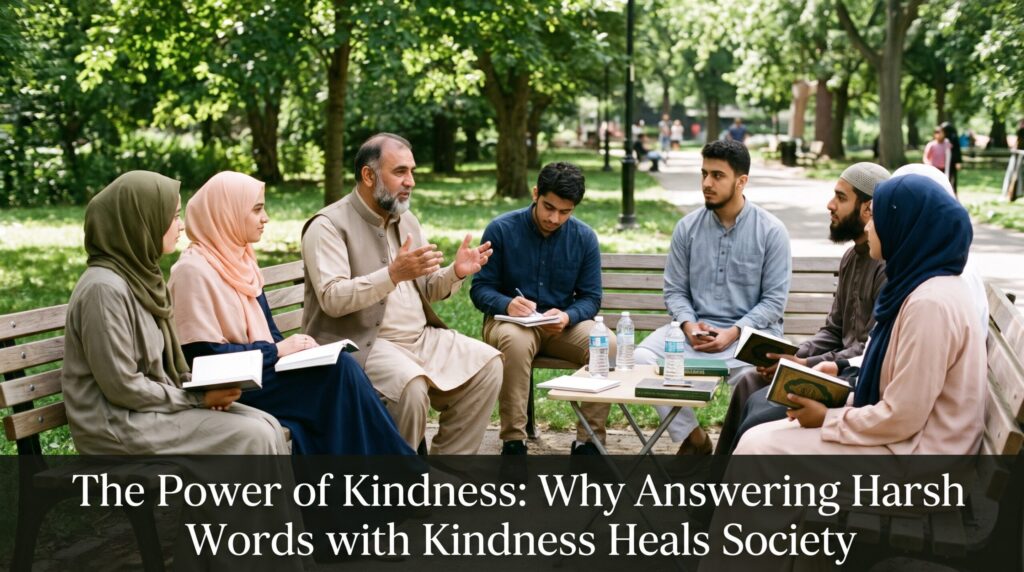
However, “Humanity By Quran.pdf” teaches a higher level of emotional intelligence: responding to bad words with better words. When you reply to toxicity with patience and kindness, you disarm the other person. You do not allow their negativity to pull you out of your character.
“Repel evil with what is better, and thereupon the one whom between you and him was enmity [will become as though he was a devoted friend].” (Surah Fussilat 41:34)
Wise speech is not about being weak; it is about having immense self-control. By speaking clearly, truthfully, and calmly, you protect your own heart from anger and prevent a toxic situation from escalating into a lasting conflict.
Accountability: Your Words Belong to You, Not Your Friends
The ultimate cure for peer pressure is the realization of absolute, individual accountability. When we are pressured by a group, the false sense of shared responsibility often makes us feel that our actions are less sinful because “we did it together.”
Islam shatters this illusion. On the Day of Judgment, the group will not stand together. You will stand alone. “Humanity By Quran.pdf” constantly reminds us that every single word and action is recorded by observing angels, and no soul will bear the burden of another.
“Not a word does he utter but that there is an observer near him ready [to record].” (Surah Qaf 50:18)
If you backbite someone to please your friends, your friends will not take the punishment for you. If you lie to fit in, the lie goes on your personal record. When you internalize this reality, peer pressure loses its power. The fear of divine accountability overrides the fear of social rejection, giving you the courage to speak wisely, act justly, and walk away from toxic environments.
Guidance Section
| Topic / Concept | Common Misconception or Ignorance | The Practical Truth (Based on Quranic Guidance) |
|---|---|---|
| Peer Pressure | I have to do what my friends do to fit in; it’s harmless if we all do it together. | Following the crowd blindly leads to a loss of identity. You are individually accountable for your choices, and life is a test of your personal moral courage. |
| Mockery and Gossip | Gossiping and making fun of others is just a way for friends to bond and joke around. | Mockery and backbiting are major sins that destroy social trust. Toxic bonding over others’ faults corrupts the heart and damages your spiritual record. |
| Handling Insults | If a friend insults me or pressures me, I must insult them back to prove I am strong. | True strength is emotional control. Repelling toxic words with patience and wise speech neutralizes the conflict and protects your own character. |
Disclaimer
The insights shared in this blog post are intended for educational and reflective purposes, drawing upon the concepts from the provided knowledge files and Islamic teachings. They aim to promote harmony, logical thinking, and moral responsibility. Readers are encouraged to seek knowledge, reflect upon nature, and consult qualified scholars for deeper theological studies.
A Sincere Invitation
True understanding comes from direct reflection and an open heart. We warmly invite you to read the Holy Quran at least once in your lifetime, in a language you fully understand. Let your own mind observe the wisdom, logic, and profound peace it offers to humanity.
Frequently Asked Questions (FAQs)
1. How does Islam define a good friend? A good friend in Islam is someone whose presence brings safety and value. They encourage you toward truth, justice, and patience, and they do not pressure you into backbiting, mockery, or unlawful behaviors.
2. What should I do if my friends gossip all the time? The Qur’an advises setting a firm boundary. You should politely change the subject or physically leave the gathering when backbiting begins. Participating or silently listening makes you a part of the sin.
3. Is it okay to cut off a toxic friend? If a relationship consistently harms your mental health, damages your faith, or pressures you into sin, it is permissible to distance yourself. You must protect your peace and accountability, though you should do so without causing unnecessary drama or holding grudges.
4. How can wise speech help with peer pressure? Wise speech allows you to communicate your boundaries clearly without starting a fight. Replying to pressure with a calm, polite, but firm “no,” or responding to an insult with a kind word, shows immense emotional strength and stops toxic behavior in its tracks.
5. Will Allah forgive me if I sinned because of peer pressure? Yes. The Creator’s mercy is infinite. If you recognize that you fell into bad habits due to negative influence, you can always repent, distance yourself from that toxic environment, and strive to make better choices moving forward.